Executive Summary
Nathan Meyerson of Cascade Craftworks asked me to analyze a new reflective fabric (DP VS75) he was considering offering as an option to aluminized Cuben V3. I had previously tested his aluminized Cuben V3 Here .
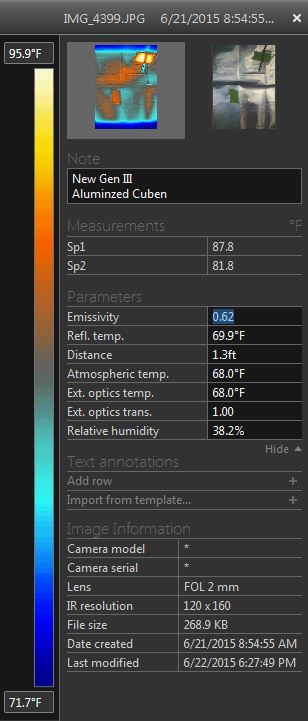
Subsequent to the above referenced forum post, I upgraded my test equipment and methods to conform to the emissivity testing procedure outlined in ASTM E1933 – 99a, Standard Test Methods for Measuring and Compensating for Emissivity Using Infrared Imaging Radiometers. I also retested an un-aged sample of aluminized Cuben V3 to compare with DP VS75 and other more common aluminized options.
Test Results
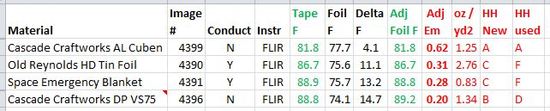
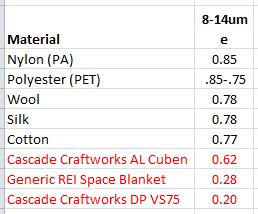
Reflectivity + Emissivity = 1; so the lower the emissivity, the more radiation is reflected away.
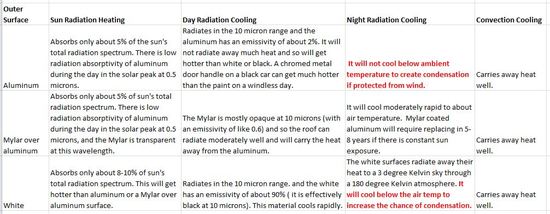
Different Solutions for Different Objectives
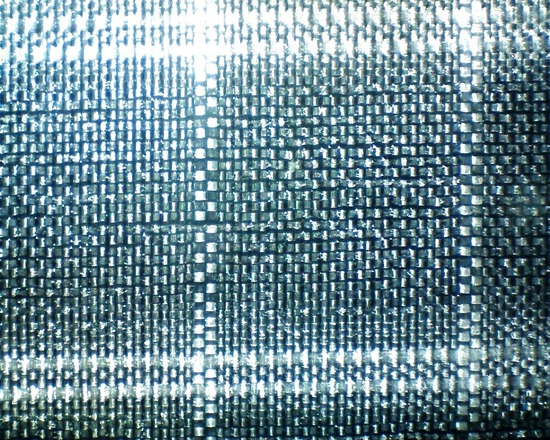
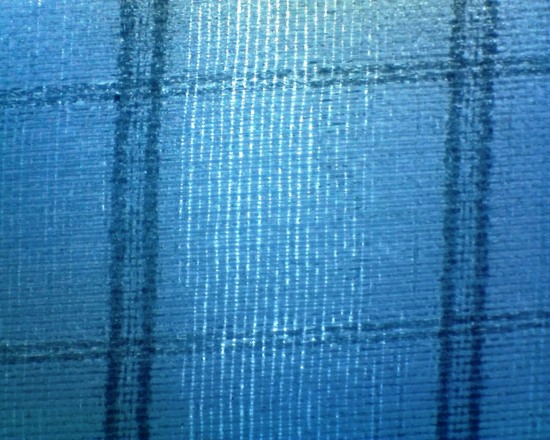
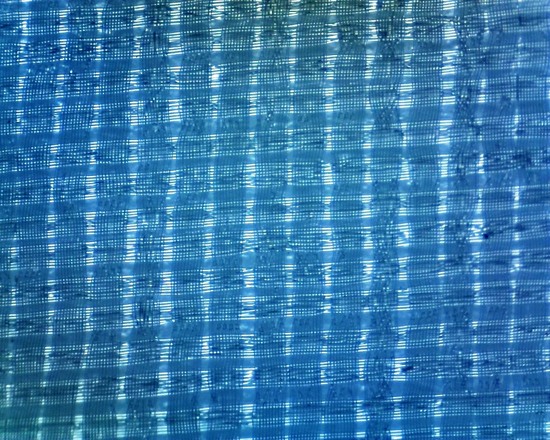
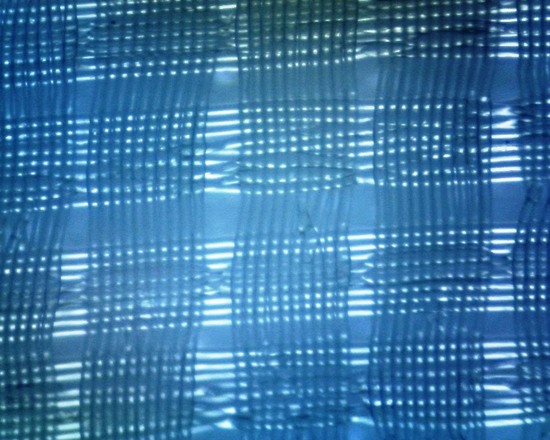
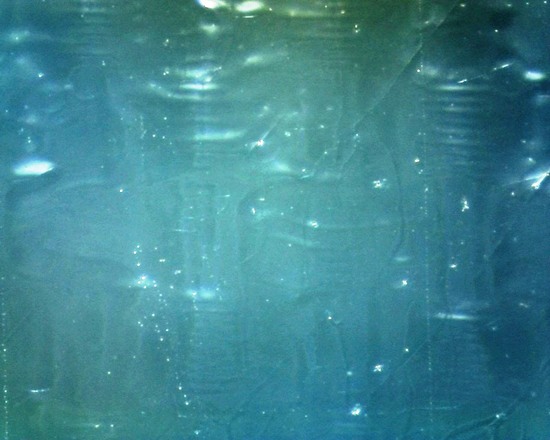
The DP VS75 has a new HH of 1,124.8 mm H20 (similar to the most common silnylon used by US cottage manufactures) use but, after only 5,400 Cubex cycles, the HH was reduced to 70.3 mm H2O. 5,400 Cubex cycles is roughly equivalent to about 7-10 days of heavy rain and wind. The product doesn’t delaminate; so, the emissivity stays low. It perforates as shown:
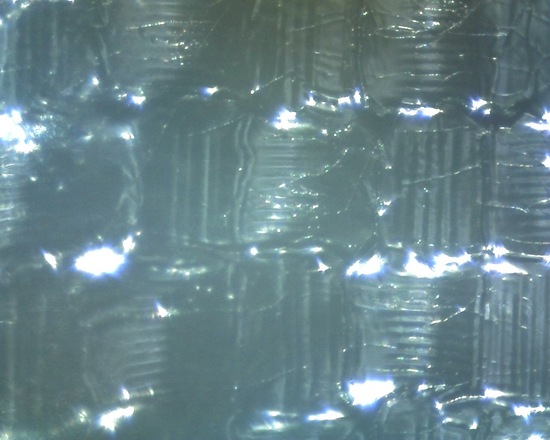
DP VS75 is not viable as a shelter but, its emissivity and durability make it an excellent product for non-shelter applications such as a VBL, hammock under insulation, cozy, thermal curtains, tent frost shield, etc.
In contrast, aluminized Cuben V1 delaminated at approximately 5,400 Cubex wet-flex cycles. After testing at fixed intervals up to 16,200 Cubex wet-flex cycles (3x the amount of wet-flexes needed to create a catastrophic failure in V1) V3 maintained >3,515 mm H20 HH and had zero signs of delamination.
Details That Will Only Be of Interest to the Technical Folks
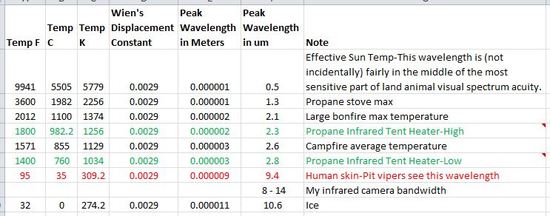
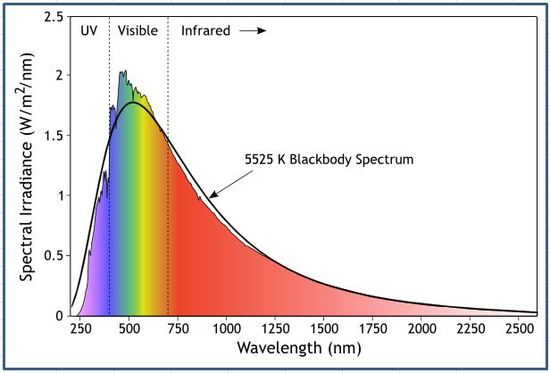
Wein’s Law
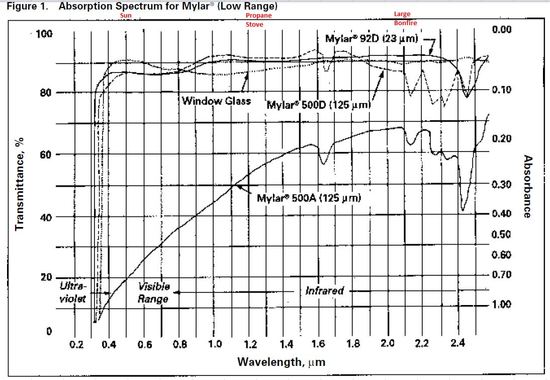
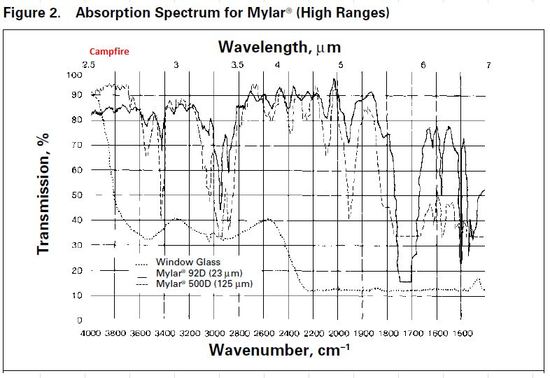
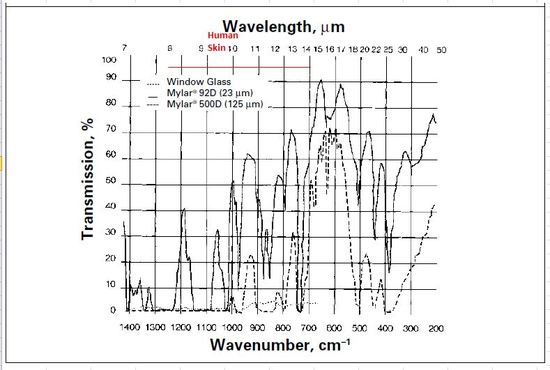
To determine if an aluminized product will match your requirements, you need to first determine what product durability you want and the peak IR radiation wave length you want to reflect. If you don’t cover the aluminum with a Mylar layer, light abrasion with remove the aluminized layer. The thicker the Mylar layer, the more durable the product but, it will become progressively more opaque in the IR peak wave length radiated from your skin.
Mylar IR Spectrometry
In IR spectroscopy we shine a sample with a broadband light source. We then collect the light that comes out of the sample and analyze its wavelength content. By comparing the light we've sent and the light we collect we can analyze the molecular content of the sample. The results also clearly show what frequencies of radiation are reflected, which are absorbed, and to what degree.
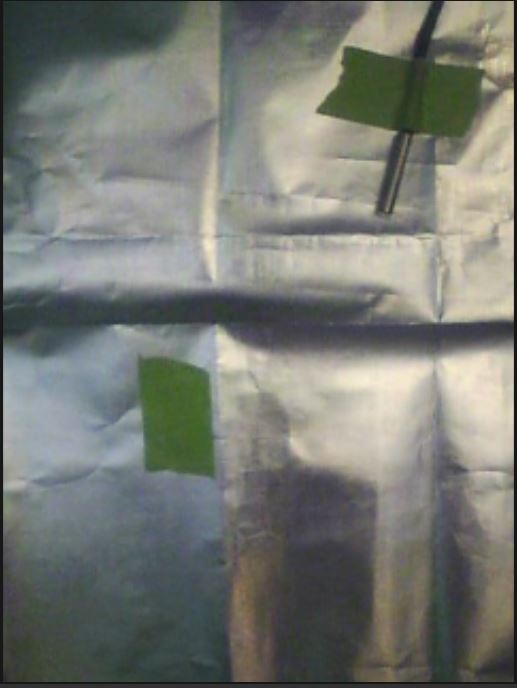
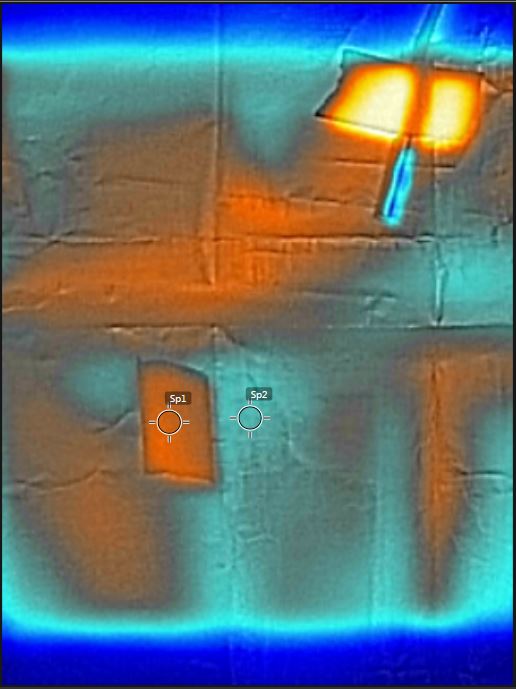
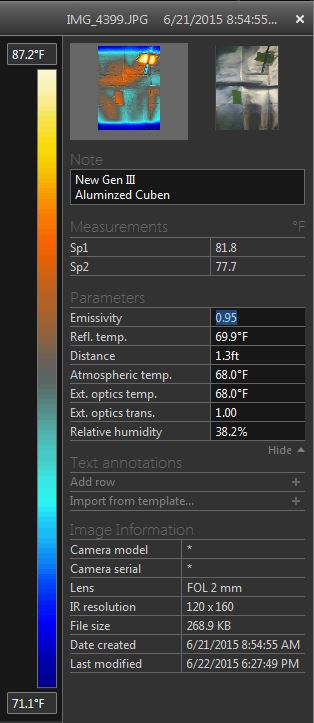
Aluminized Cuben V3 Emissivity Analysis
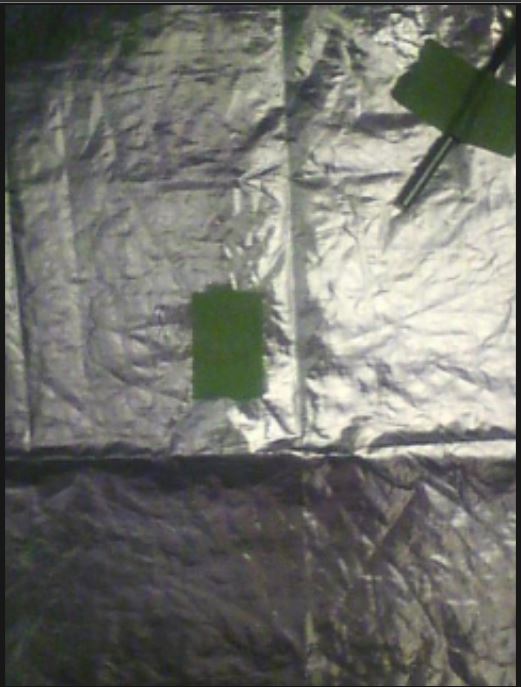
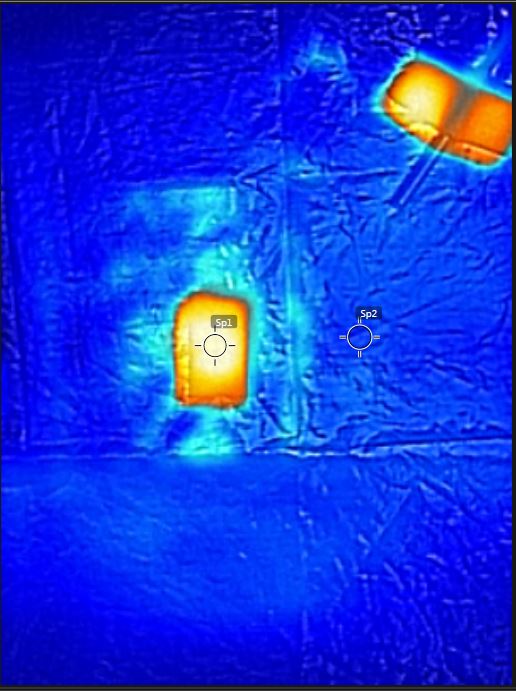
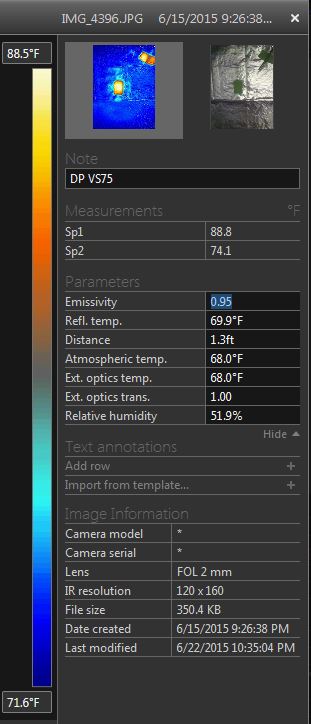
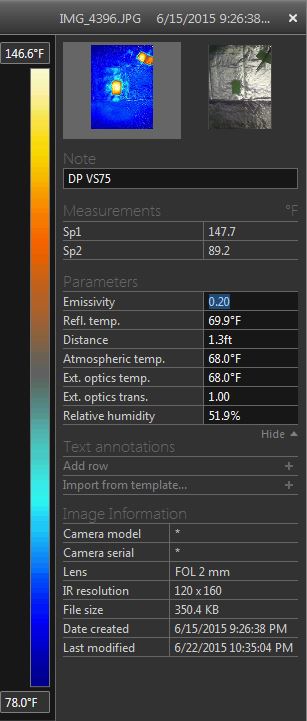
DP VS75 Emissivity Analysis