dont worry about having the "lightest" carabiners …
most of these UL carabiners have serious tradeoffs in size and durability (ibeams wear to a sharp edge faster when belaying)
i own and use neons, positrons, attache 3Ds, shadows, etc …
my suggestion is that unless yr doing the fastest and lightest alpine, is to
– keep 1 good old round stock biner for belaying …. it will last longer, be smoother in autoblock and you can munter easily in an emergency
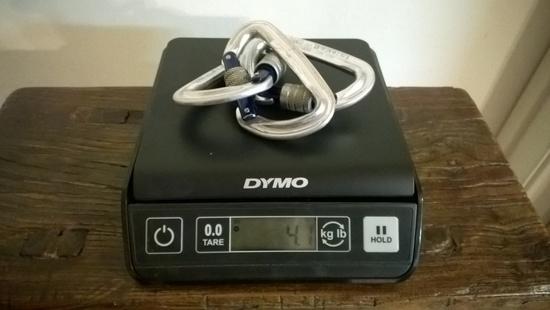
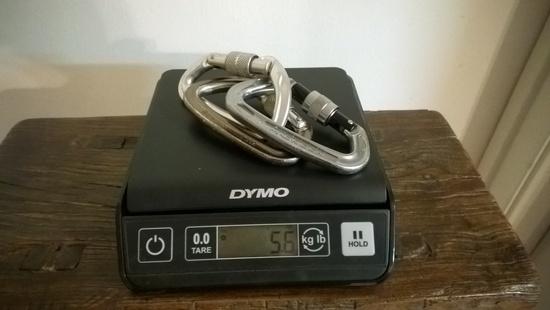
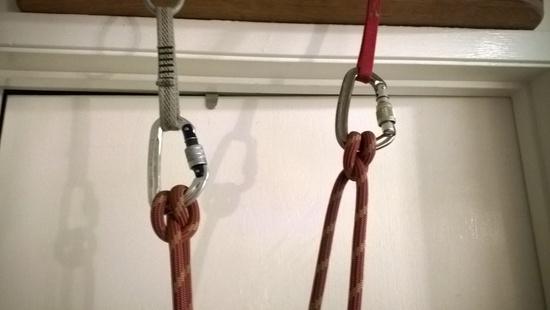
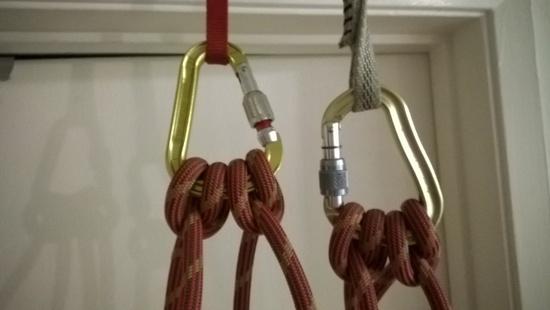
– keep 1-2 petzl attache 3D … 55g but its a real wide diameter biner (same as the normal attache) and can handle at least 2 cloves
– keep 1-2 edelrid pures … 43g but generally larger than these mini biners, its the same as the positrons … itll will easily handle a clove
unless you are climbing at your absolute limit its not the few grams of a locker thats preventing you from sending … its your skill, mentality, or fitness
heres some writing from one of the upcoming local alpinists …
http://cascadeclimbers.com/faster-is-lighter-tips-for-increasing-your-speed-in-the-alpine/
A very important concept that I’d like to begin my article with is that faster almost always means lighter. However, lighter doesn’t always mean faster.
Think of a party speed climbing the Nose; they likely have a light rack, one rope, one set of jugs, a light pack with a couple litres of water and not much else. They can race up the wall at lightning speed because they are comfortable running it out and belaying very little. They don’t need puffy jackets or tonnes of water as they will stay warm through exertion and be able to rehydrate at the car in a matter of hours.
However, if a team of less experienced climbers replaced every single carabiner on the rack with a lighter equivalent, ditched the second rope and left the portaledge in the car, they are not going to race up the Nose in a matter of hours. This is obvious, and an extreme example of course, but the concept is the same for most climbing situations.
The alpinist must learn to move faster before he/she can begin to travel significantly lighter. Not the other way around.
Once the climber has the ability to move faster over more complex terrain, he/she can be certain that it will be safe to leave behind heavy items such as bivy gear or extra insulating layers. This will in turn make it much easier for the climber to move as fast as possible, but that skill must already be present.
This concept essentially dictates that the key to travelling lighter on alpine routes is by raising ones overall competency on alpine terrain. Building confidence on moderate terrain is by far the most essential ingredient in gaining the ability to move quickly in the mountains. The ability to confidently move un-roped on mid-5th class rock, steep snow and moderate ice can open up a whole new realm of possibility for the alpinist wishing to move fast and light. I believe that the ability to solo 5.8 or 5.9 is a more valuable skill for the alpinist than the ability to onsight 5.12 trad. Building the confidence and technical skills to move more easily and freely in the mountains in turns allows one to reduce the time spent vulnerable to objective dangers or weather changes in committing situations.
;)