Topic

MEC Outathere Jacket 165 grams

  • This topic is empty.
Viewing 15 posts - 1 through 15 (of 15 total)
PostedMar 9, 2015 at 7:37 pm

So I saw a few weeks ago that MEC had a new light weight jacket called the Outathere Jacket. I have no affiliation with MEC other than being a member and bought this jacket with my own money It is made out of Pertex Shield+. They claim the small weighs only 150 grams. Picked one up today so I thought that I would post my initial impressions. I will take a few pictures and post them in a bit but you can also check out their website for more info. Too make it quick and easy I will keep it to point form.

Positives:
-Relatively cheap at only $165 CAD. With the USD to CAN exchange rate that probably makes it about $130 USD
-Looks well made. Seam taping is good
-Light. 165 grams on my scale for a men's size large
-Fits me well. I'm 6'2", 190 pounds, 42" chest. Fits a T-shirt, 100 weight fleece sweater and a EB Microtherm down jacket
-Has draw cord at lower hem and 2 draw cords for the hood
-Hood seems to fit well and has a brim
-Backed by a good return and warranty policy
-Has 2 pockets
-Waterproof zippers
-Blue color looks good

Negatives:
-Could lose the 2 waist pockets in favor of one chest pocket
-No pocket to pack the jacket into
-Durability not known at this point
-Not the most breathable fabric
-Yellow is somewhat transparent
-No pit zip

All in all, for what I am looking for a in a jacket, I say it will fit the bill. I generally use an umbrella and a wind shirt in the rain and typically just bring a rain jacket as a safety net or to wear when I am not on the move. Living on Vancouver Island (home of the rainiest place in North America) rain gear is a necessity so I may as well carry something lighter than my 11oz Gore-Tex jacket.

PostedMar 11, 2015 at 10:28 pm

I saw this jacket in MEC recently and it caught my eye.

In general, I'm wary of Pertex Shield+ because my Montane Minimus rain pants faired so poorly with it (bubbled and peeled off after a few dozen uses). Perhaps I got a bad batch or just unlucky, or maybe they improved things. No one else seems to be as disappointed with this membrane and I've been.

Anyways, the Outathere looks like a really nice option at the really light end of the spectrum. Affordable, properly featured and light. If I end up the rain jacket market I'd take a close look.

PostedSep 27, 2015 at 5:45 pm

So I have had this jacket for a few months now. Depending on how you look at it we were either blessed or cursed with a pretty dry summer and I have not had a change to try the jacket out in the rain. I did pull it out of the pack this weekend on the Juan de Fuca Trail to show one of my hiking companions. Unfortunately the seam sealing material that MEC used adheres to the Pertex membrane. The membrane loses this adhesion battle when you pull apart stuck together section thus removing the membrane from the shell fabric. MEC took it back with no problems. I forgot to take a picture before returning the jacket.

PostedSep 27, 2015 at 7:55 pm

I used the RAB pertex shield jacket I bought only once. The DWR was so poor, I knew it would not hold up in the rain. So now it seems it doesn't hold up at all. Wish I were as fortunate as you, but got no refund. Should have stuck with Patagonia rain shells, which have served me so well. Anyone who wants the RAB shell, just PM me with a return email address.

PostedSep 28, 2015 at 2:26 pm

Please note: "Anyone who wants the RAB shell, just PM me with a return email address."

Paul S. BPL Member
PostedSep 28, 2015 at 4:11 pm

If the problem is a poor DWR job then why not just refresh it with some ReviveX spray or similar?

PostedSep 29, 2015 at 5:47 pm

Paul, My experience with Patagonia "Deluge" DWR is that it is far more water repellent than anything out of a can or bottle. And please believe me, I've tried them ad nauseam, including Revive X. At one time, the Tectron polymer sprays for boots and fabrics were excellent, and were found superior in a seminal Backpacker article, but they have changed the formula, probably for EPA reasons, and its no longer as good. Forgot to read the label for the contents in the newest Tectron, and missed the silicone content, that can contaminate and disable WPB membranes, which it did when applied to the fabric on my mids. The Patagonia DWR on the more used of my 2 Specter pull-overs did wear after several years, but it was still better than that on the RAB jacket when new. They're the first edition Specter, not the later gossamer one with the kangaroo pocket that was too thin to shield against severe rain. Patagonia killed the Specter with the second "improved" edition. It seems to happen with everything these days. There was one post here by someone who bought a Patagonia Torrentshell jacket and found the DWR next to worthless. But my experiences with the DWR of the earlier Specter and current M-10 have been the complete opposite. I've had no problems with the water resistance of the WPB membranes either. The Specter also worked AOK paddling many Maine lakes all day in driving rain with the jacked pulled down over the spray skirt. Probably saved me from a close call with severe hypothermia once when paddling in the rain from Rip Dam to the Mud Pond carry and through to the Allegash headwaters lakes.

James holden BPL Member
PostedSep 29, 2015 at 11:11 pm

interestingly enough it may well be that newer DWR clothing and sprays may be LESS effective than their predecessors because of the move away from longer chain flurocarbons or even florocarbons all toghether due to concerns about the environment one should refresh the DWR quite often on these jackets after good use …. and wearing em all the time will wear out the DWR in the abrasion areas (wrists, elbows, back) one item where theres a VERY good chance one may have issues eventually is the rain jacket, especially UL ones … sucks when that happens but at least MEC has a no questions asked over the counter warranty … ;)

Justin Baker BPL Member
PostedSep 29, 2015 at 11:14 pm

So when is someone going to create a breathable face fabric that can't wet out dwr or no dwr? Or even a face fabric with a dwr that will never wear off? That seems more important than worrying about breathability of the membrane.

Paul S. BPL Member
PostedSep 29, 2015 at 11:18 pm

Outdry Extreme is basically a breathable rain slicker, should be coming out next year.

James holden BPL Member
PostedSep 29, 2015 at 11:27 pm

EPIC in theory doesnt wear out as fast as the DWR is "built in" as they say … encapsulated schoeller nanosphere in theory does the same thing … now you will note i say "in theory" … as these fabric will wet out with enough rain … and they will get dirty … however one should be able to wash em and not need to use DWR sprays in theory now when they make a DWR WPB fabric that doesnt wet out, doesnt delaminate, is not abrasion sensitive and is very breathable … wake me up … WPB clothing is all about marketing, lies and yuppie hipster fashion … ;)

Richard Nisley BPL Member
PostedSep 30, 2015 at 1:02 am

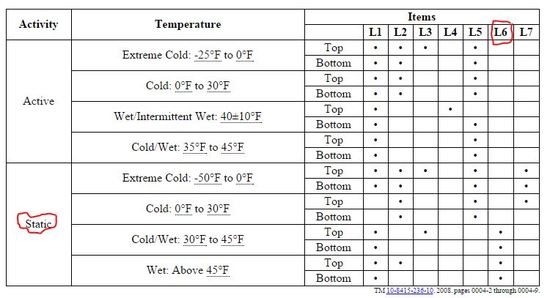
The C8 chemistry DWR has been phased out (2015); the C6 chemistry is not as good as the C8 but better than any common DWR alternative. For applications when you are "done in a few days" just wash and heat set the C6 (or less effective alternatives) if it starts to lose its effectiveness. If that doesn't fix the problem, then more DWR needs to be applied and heat set (140F for ~30 minutes for C6). For long trips in wet weather (think multiple weeks in SE AK) without access to a washer / dryer, an Epic windshirt (military level 4) is your best option when active. When static, you need to augment it with a poncho, coated jacket, or WPB jacket. Unlike C6 or C8, the surface energy of silicone won't repel oils-just water. When it starts to wet out prematurely, you don't need a washer and dryer, unlike C6/C8, to reactivate the DWR. Just wash it in cold water with camp soap and wear it dry or hang it to dry. The low surface energy (built in silicone DWR) is good for the life of the garment. The military has a simple table of ECWCS layer rows and column markers for issued clothing. They only recommended that the issued Level 6 rain gear (Special Forces use un-breathable and regular military use Paclite) be worn WHEN STATIC. An Epic layer is all that is recommended for active use in the wet weather. I have tested Level 4 windshirts currently offered (Gen I & Gen II) by ORC, Wild Things, Otte Systems, and Beyond Clothing. Wild Things is closest to the venerable pre-2012 Houdini in air permeability, Ottoe is more breathable and the others are less breathable. All the jackets that I tested used 70 denier fabrics but, the newest issued level 4 windshirts (Gen III) use 40 denier fabrics. I haven't tested a 40 denier level 4 windshirt. The weight for a typical 70 denier, size M, averages ~7.5 oz. After a long patent infringement battle between Brookwood (Ecology fabric) and Nextec, both Brookwood and Milliken now offer silicone impregnation fabrics in addition to Nextec. The 40 denier silicone fabrics used for the level 4 windshirts are from these companies. From http://ciehub.info/clothing/CW/ECWCS/GEN3.html 1

PostedOct 3, 2015 at 7:48 pm

"So when is someone going to create a breathable face fabric that can't wet out dwr or no dwr? Or even a face fabric with a dwr that will never wear off? That seems more important than worrying about breathability of the membrane." Justin, relating to both your and Richard N.s' posts, i have often wondered why companies don't combine EPIC or EPIC like treated face fabrics (truly durable-WR) with other WPB tech (eVent, neoshell, etc). I also have wondered why woven polypropylene isn't more utilized. It's surface energy isn't as low as the fluorocarbons, or even silicone, but it's low enough to be fairly innately water repellent and completely naturally and thus permanently so. It's also quite light weight (rather low density). It's main problem is UV–it degrades even faster and more severely than nylon. However, adding carbon or other additives can increase UV resistant properties. Another issue is that it readily absorbs oils, but oils themselves are hydrophobic, but conversely can increase hydrophillic properties by holding/retaining hydrophillic materials (dirt, plant residues, etc). Occasional rinses would help with that though. I'm still holding out for ultra high molecular weight polyethylene fibers (dyneema, spectra, etc) eventually being used for fabrics. Similar density and water repellency as, but MUCH stronger and more durable, than polypropylene. May eventually become the future face fabric of high end wind resistant and WPB clothing and tech. Two biggest downsides is that it would have to be dried carefully, and also loses much integrity due to UV exposure (but it's so initially strong and durable that it matters less as compared to P.P.). Similarly to P.P., you can add additives like carbon to increase UV degradation resistance. Well, black is already a pretty popular color for outerwear to begin with it seems.

Brad Rogers BPL Member
PostedOct 3, 2015 at 8:46 pm

Richard, Is there any way to tell if a jacket has C8 vs. C6 DWR without a scientific test? I already have issues with the short life of DWR's and I don't want it to be any worse. You have me thinking of trying to pick up another shell while I can still (hopefully) get C8. I currently have a Haglofs Ozo which I really like, but it does need some new DWR on the sleeves. I was going to try the Rivevex spray on DWR (and then heat set it).

Richard Nisley BPL Member
PostedOct 3, 2015 at 9:14 pm

Braford, There is no way, that I am aware of, to tell what formulation you have on your existing OZO. In 2006, EPA and the eight major companies in the industry launched the PFOA Stewardship Program, in which companies committed to reduce global facility emissions and product content of PFOA and related chemicals by 95 percent by 2010 and to work toward eliminating emissions and product content by 2015.

Viewing 15 posts - 1 through 15 (of 15 total)
Loading...