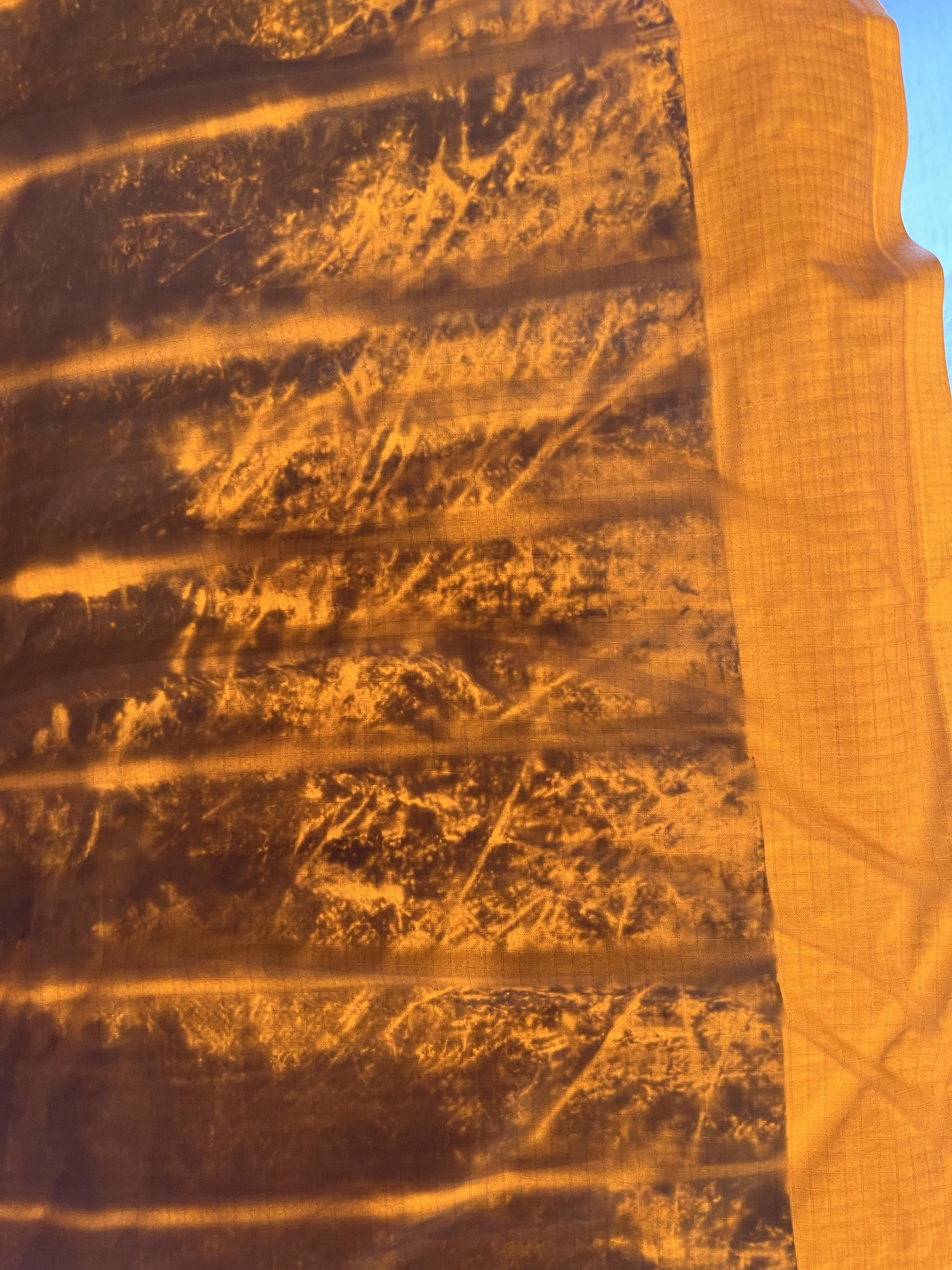
I have two NeoAir XLite pads and both show serious amounts of reflective delamination. I would like to know if anyone has gotten solid information from Thermarest about how much this may affect R-value, or if Thermarest replaces pads exhibiting this condition? Older posts on this subject are filled with theories; has any new and real information emerged?

Topic
NeoAir XLite reflective delamination
Become a member to post in the forums.
- This topic has 15 replies, 3 voices, and was last updated 3 years, 10 months ago by .
I have an xtherm and it has lost significant ability as a radiant heat barrier over 20-25 nights of use. This was the 2014 model.
I think these radiant barrier air core pads are a fad that will die out as soon as people realize how not durable they are.
That being said the internal baffles work fine and I am guesstimating the r-value of my xtherm at around that of the x-lute new.
Did you blow up the pad by mouth?
http://www.cascadedesigns.com/Service/Warranty-and-Repair
If your pad shows no signs of damage from abuse, Thermarest will replace it pretty much no questions asked with the most current version. All it will cost you is one way shipping.
I thought you only needed to avoid inflating by mouth when temps were expected to drop below freezing. As a result I have inflated mine by mouth several times. XLITes don't even come with pump sacks so they can't be expected to not inflate with breath.
Condensation can occur at temperatures well above freezing.
The air coming out of your lungs is loaded with water vapor. Even if you don't see condensation at the moment, it can occur as the temperatures drop through the night.
I don't see anything in the literature from Thermarest that suggests one can't blow up the Neoair with one's mouth.
When I am storing the pad, I always first unscrew the valve and let any moisture release. After a day or two, I roll it up and store it. I haven't had any issues yet, apart from leaks….
Older posts discuss the potential contribution of mouth-blown condensation to the delamination; the contribution of condensation at different temperatures to reducing overall insulative effectiveness; the percentage of warmth that comes from the reflective material vs the baffles of a product described as "reflective ThermaCapture technology". As Thermarest instructs mouth inflation and offers absolutely no caution against it, it would seem that they do not consider it bad practice. I don't feel compelled to return this product if indeed R-value is only affected as little as 5%. But I do push this pad into late season and a 20% degradation is not acceptable. So I was just wondering if any definitive information has showed up in the years since the product was introduced and these issues were first raised.
Yes, I only mouth inflate, and yes, I believe that it plays some role in the delamination. But this is a premium product and I think it is reasonable to expect it to perform for several hundred nights use when following manufacturer recommended practices. It also does make one wonder about the longevity and reliability of the XTherm.
I prefer inflating the pad with the Microburst battery powered pump, and only add a few breaths for firmness. Don't know if this will help in the long run, but it certainly couldn't hurt.
I contacted Thermarest and their initial reaction is that the reflective delamination is not normal. I sending sending one pad to them; they want their engineers to look at the pad to be able to give the best response to the questions raised here.
Cascade replaced my pads. I talked with Chuck:
– He said that the delamination was a problem with first generation pads, and that they have since changed both the materials used and the reflective application process, for better results.
– He confirmed that the reflective coating is very important for the R-value. If your pad exhibits a serious amount, you should consider replacing it.
– The prime difference between the x-lite and x-therm is the amount of internal reflective surfaces. The air baffles are mostly about comfort.
– The x-lite and x-therm have the same 30 denier nylon tops, but the x-therm now features a 50 denier poly bottom. This also means that the x-therm is indeed more puncture resistant.
– Mouth inflation represents no greater risk to the longevity of the pads, and is fully endorsed by Cascade.
"He said that the delamination was a problem with first generation pads, and that they have since changed both the materials used and the reflective application process, for better results."
They made the fabric opaque so you couldnt see it as well.
Sorry to resurrect an old post but has anyone dealt with this issue recently? Curious as to Thermarests response. Currently have an email in but they responded with it may take 12 weeks for a response.

Old thread but I thought I would update it for others. After 3 emails and no response from Thermarest after 5 months, I called. They pulled up my email-which had pics of the defect- and sent me a new mattress. All I had to do was show them a picture of the old mattress with an X across the brand name and RMA number written on the old pad so it can’t be warrantied again. I got to keep old pad.
Bottom line-send email with pics, then call in a day or so.
Thanks, Brad. I have 2016 xlite that looks similar to the photo you posted. I guess it’s time to go take a pic and email Cascade Designs.
How long do people expect current UL air pads (i guess with reflective layers) to last?
As Alex above, i also still use an xlite from before 2016 (never been crinkly).
Become a member to post in the forums.