


Has anyone used the Aquamira Frontier Pro Filter?
It seems to good to be true with its weight, simplicity, and price- 20 dollars. Are there draw backs to it such as flow rate or life span?
Topic
Become a member to post in the forums.
Has anyone used the Aquamira Frontier Pro Filter?
It seems to good to be true with its weight, simplicity, and price- 20 dollars. Are there draw backs to it such as flow rate or life span?
No experience, but interestingly compact and light! One concern I have is the large, 3-micron pore size. As a comparison, MSR filters have 0.2-micron pore size — that's a 15 times difference!
For those interested here is a link to the aforementioned product’s respective Web site.
Neat design and concept. I suspect I'd like this better than the typical in-the-bottle filter, which I find fussy to use.
> One concern I have is the large, 3-micron pore size.
Yeah, right!
That pore size should stop Giardia and Crypto. It will NOT stop any bacteria, like E coli. Imho, if this really is the rating, it is of strictly marginal value. I would not trust it myself.
Cheers
The katadyn hiker pro, a very commonly used water filter, also only has a 3 micron pore size.
Is 2 microns necessary?
Hi Kevin
> The katadyn hiker pro, a very commonly used water filter, also only has a 3 micron pore size.
NO. It has 0.3 micron pore size.
> Is 2 microns necessary?
I will assume you mean 0.2 microns.
This is a tricky question. You see, the pore size in micro-filters is NOT a fixed value. The figure quoted for the Hiker of 0.3 microns really means that it is roughly equivalent to a fixed 0.3 microns, but in fact it is multi-layer and more like a mesh.
Of course, marketing spin from the vendors will confuse this issue completely.
There are few bacteria which would slip through a 0.3 micron filter but be stopped by a 0.2 micron filter IN PRACTICE. That said, I am sure there may be some. However, you are probably at FAR, FAR, FAR greater risk from viruses in the water than from the slight difference between 0.3 and 0.2 microns. Viruses are more like 0.005 microns or smaller. (Said with some feeling…)
Cheers
The Aquamira Frontier Pro is rated at 3.0 microns. The Katadyn Hiker is rated at 0.3 microns. This represents a substantial difference in filtering capabilities. I would think that chemical water treatment of some kind would be mandatory with the frontier pro for protection against bacteria and virus. At best the frontier pro will filter crypto and giardia.
David
Kevin,
I would personally just go with aquamira. The frontier filter would not be as good for extended use, And does not kill everything in the water.
Kyle
If you're concerned about pore size, here's the one that beats them all: The Sawyer Complete Water Purification System.
0.02 micron pore size, even filters viruses, and comes with a MILLION GALLON guarantee. At $170 it costs just a bit more than the frontier pro, but by the time you pass… what? a few thousand gallons…. you're way ahead in terms of cost per gallon.
Of course lugging that 4-liter setup around isn't exactly "backpacking light".
Ben,
This is a follow-up to our earlier thread about Frontier Pro. Just got the Frontier Pro from BPL. Tried it out last night in gravity mode–pulled off the bite valve part and screwed the "dirty" end onto a 3L Platypus hydration reservoir, inverted and watched. The flow rate was excruciatingly slow. How did you get 2.5 min / L? Did you remove the pre-filter screw-on part?
thanks
David
PS–When attaching the "clean" end to your "clean" bladder, do you use the plastic tubing provided? Please explain how again what connector you are using.
David:
I tried with tap water about 4 times — and the flow was actually quite reasonable — 2.5 to 2.75 minutes per liter.
I left the 'sponge' prefilter on — connecting as follows:
"dirty" platy –> Frontier Pro * –> tube ** –> clean platy
* Frontier Pro is simply screwed onto the dirty platy
** I used a cutoff section of Platypus hydration tube — which fits nicely into the Frontier Pro's fat output "nipple" (with bite valve removed). But next time, I will tie enough cord so I can raise/lower the dirty platy "just right" so that the Frontier will reach right into the clean platy — dispensing with the tubing entirely.
Sorry if I am asking the obvious. but you did hang the dirty bladder up high so that water will pass straight down through the Frontier and into the clean bladder, right?
I just read a pamphlet that says that protozoa are 0.3 microns in size. Is this totally false?
(Ben, I got your PM and I'll get back to you as soon as I run some more tests on my Frontier Pro).
Not a protozoa expert, but methinks the .3 is a typo as that’s the size of a small bacterium. Protozoas are much bigger than that. Click here for a quick read.
Not a chemicals expert either, but the reasons chemicals have a harder time with protozoa are due to their larger size and protective ‘hard’ shells.
Have fun re-testing your Frontier Pro.
Protozoas have some good full body armor.

Yeah,
Just think of them as miniature Ninja Turtles. ;}

I've used it and on an upcoming trip to Mt. Whitney, I plan on using it in combination with some Micro Pur tablets: http://jasonklass.blogspot.com/2008/03/aquamira-frontier-pro-water-filter.html
nm
(Ben, I tried to PM you on this but couldn't get through. Check your profile and try PMing me again).
OK, so I got my Frontier Pro the other day and did a little preliminary testing and wasn't too impressed. Tonight, I had the chance to put the thing through several tests.
Test #1: Screw the Frontier Pro onto my Platypus 3L hydration bladder as "dirty" bag and hang.
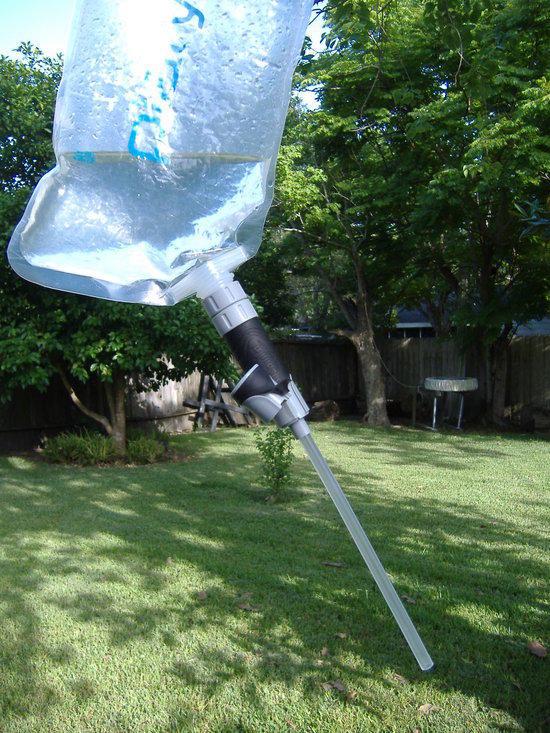
Time to filter 1L = 7 minutes, 26 seconds
Test #2: I was rather disappointed with the first test, so I thought I'd remove the prefilter and see if I can improve the flow rate. (I also removed the tube on the clean end, I think).
Time to filter 1L = 13 minutes, 50 seconds
What happened?
Test #3: Ah…Pressure = force x area. This time, I tried attaching 32" of Platy tubing ABOVE THE FRONTIER PRO via the screw-on adapter that is used to attach your hydration hose (Platypus sells, or did sell, this tube and adapter link as a kit to link your pump filter to your Platy hydration bladder). I had to hang the "dirty" bag pretty high this time to allow for the length of tubing.
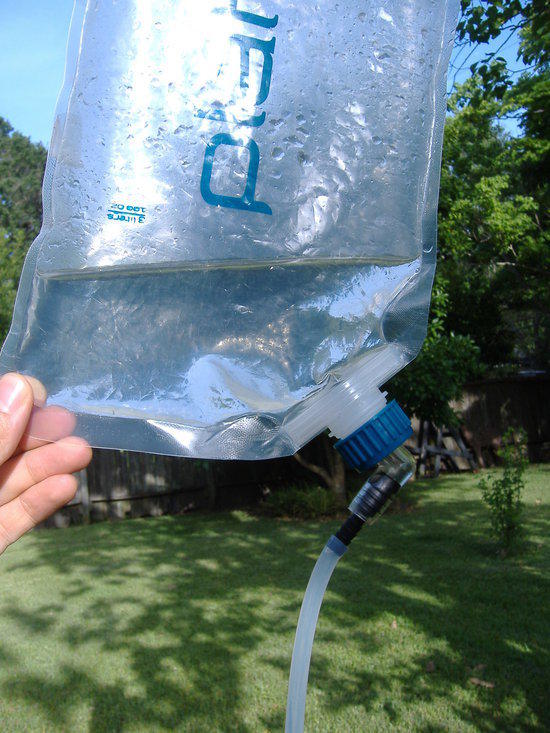
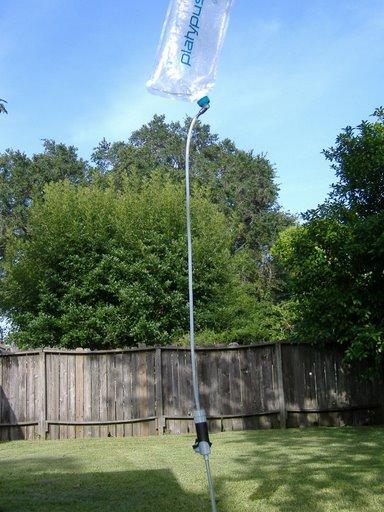
Time to filter 1L = 2 minutes, 36 seconds
Test #4: Remove all the kinks in the hose above the filter so it hangs straight down.
Time to filter 1L = 1 minute, 56 seconds(!)
Test #5: Filter two liters at a time.
Time to filter 2L = 3 minutes, 30 seconds(!)
Conclusion: My initial tests confirmed my skepticism about the flow rate of the Frontier Pro. However, further testing has shown that the key to making gravity filters work is having a length of tubing ABOVE THE FILTER. I hypothesize that the flow rate is directly proportional to the length of the tubing. A 10' long tube would undoubtedly improve the flow rate even further. (Imagine your "dirty" bag being nothing but a long tube). I think the system could further be improved by using a better "dirty" bag. My 3L Platypus hydration reservoir is angled out the corner, so the flow rate is probably not optimized. The bags that come with the new Platypus CleanStream gravity system seem more suited for this purpose (they have handles for hanging). 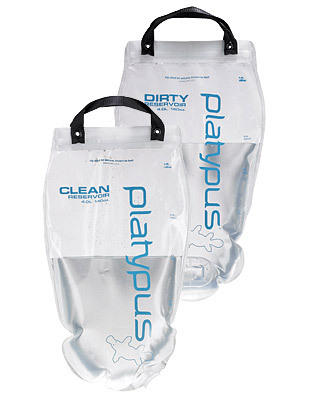
Although, I can't figure out how their system would work if the "clean" bag is set up the way it is pictured on their website. (Shouldn't the "clean" bag be upside down?)

I do have some remaining concerns with the Frontier Pro:
1. Is the pore size really small enough to remove all protozoa?
2. How does the filter fare in freezing temps? (My Sweetwater filter is desigend to be stored in the freezer).
3. Can the filter be cleaned by backflushing it like the Platypus CleanStream? How will I know if the filter is still good?
4. Will the filter remove all traces of chlorine dioxide taste (treating the "dirty" bag is essential to make this system effective against microorganisms)?
5. Will the chlorine dioxide really kill off all viruses and bacteria in 15 minutes as claimed, since these will pass completely through the filter?
I still have to yet to make my decision, but it looks as if this system might replace my MSR Sweetwater (11.5 oz) for my Colorado trip next month.
System specifications:
Weight of Frontier Pro (after use, includes prefilter and "clean" tube provided in package) = 2.54 oz
Weight of Platy tube and adapter to link Frontier Pro to "dirty" bag = 1.41 oz
Total system weight (doesn't include "dirty" bag) = 3.95 oz
Lighter weight tubing in lieu of the (rather heavy) stock Platy tubing, along with a drinking straw of identical diameter to the "clean" side plastic tube included with the Frontier Pro would help to reduce system weight.
Sorry the photos came out so big.
David
Great info, David!
One thing I do differently — I punched two holes and added grommets to my Platy 3L "dirty" bladder. This allows me to tie the bladder up to a tree branch (or to the top of my tent) — setting the correct height with a cord — like Kelty Triptease. At the other end, the Frontier Pro's output "nipple" will just reach the opening of the receiving "clean" bladder.
If your dirty bladder already has the handle, you can skip the grommet step and just tie a cord to the handle to allow for height adjustment. A piece of cord is lighter and much more compact then hydration tubing.
Just came back from REI and saw the new Platy Hoser 3L. The new Hoser is perfect for setting up the Frontier Pro in gravity mode. It has one hang loop that is heavily reinforced and will be perfect for hanging. (Last year's model had two delicate hang loops, not good for hanging). Also, the hang loop is positioned opposite the spout side so it will hang straight.
No need for installing grommets with this setup, Ben.
Help,
I am new to gravity filtering. Should the dirty bag be open to the air as to not cause a vacuum that would slow down the filtration rate?
Since the pore size is large compared to other filters, would it be smart to add a chemical step to the process to kill bacteria and viruses? How long does it take to inactivate bacteria and viruses with chlorine dioxide?
I currently use a steripen, but miss the carbon filtration step to remove the organics (taste factor)
Thanks for your help
Dave
The dirty bag does not have to be open to the air at all. I use a Platypus bladder for my "dirty" water and when filled up, I squeeze out the air before twisting on the tube connector.
You should DEFINITELY use this filter with chemicals like Micropur chlorine dioxide tablets.
Read this thread for other details.
Thanks for link Ben,
I re-read your original post. Answered my questions. Looks like for weight – gravity and chlorine dioxide is the ticket – if I am solo. If I am in a group – UV or a punp may be better.
You all are a wealth of information.
Dave
i purchased a anti-gravity gear h2o filter. it has a aqua mira filter and bag for dirty water. i might have missed info in blog, but would you put the tablets in the dirty bag or clean? i have always used a hiker pro, but was trying to get my wt. down. a tad disappointed in that it does not kill virues and bacteria. virues are not so much of a worry in this country, but bacteria is..thanks for help p.s. some of the tablets take 4 hrs. to work. any out there that are quicker??
Become a member to post in the forums.
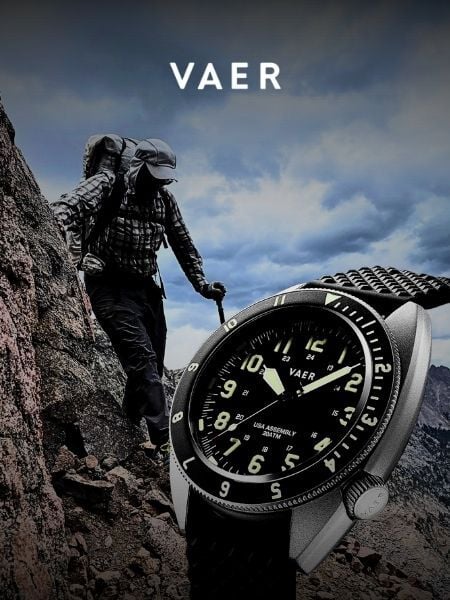 Vaer C4 Tactical Field SolarDurable timepiece for wilderness users - 20ATM (200m) water resistance, 120-click bezel, 316L SS casing, sapphire glass, solar-powered, Epson VS-42 Japanese movement, C3 Lume, USA assembly.
 © Beartooth Media Group Inc.
 Loading...