

Introduction
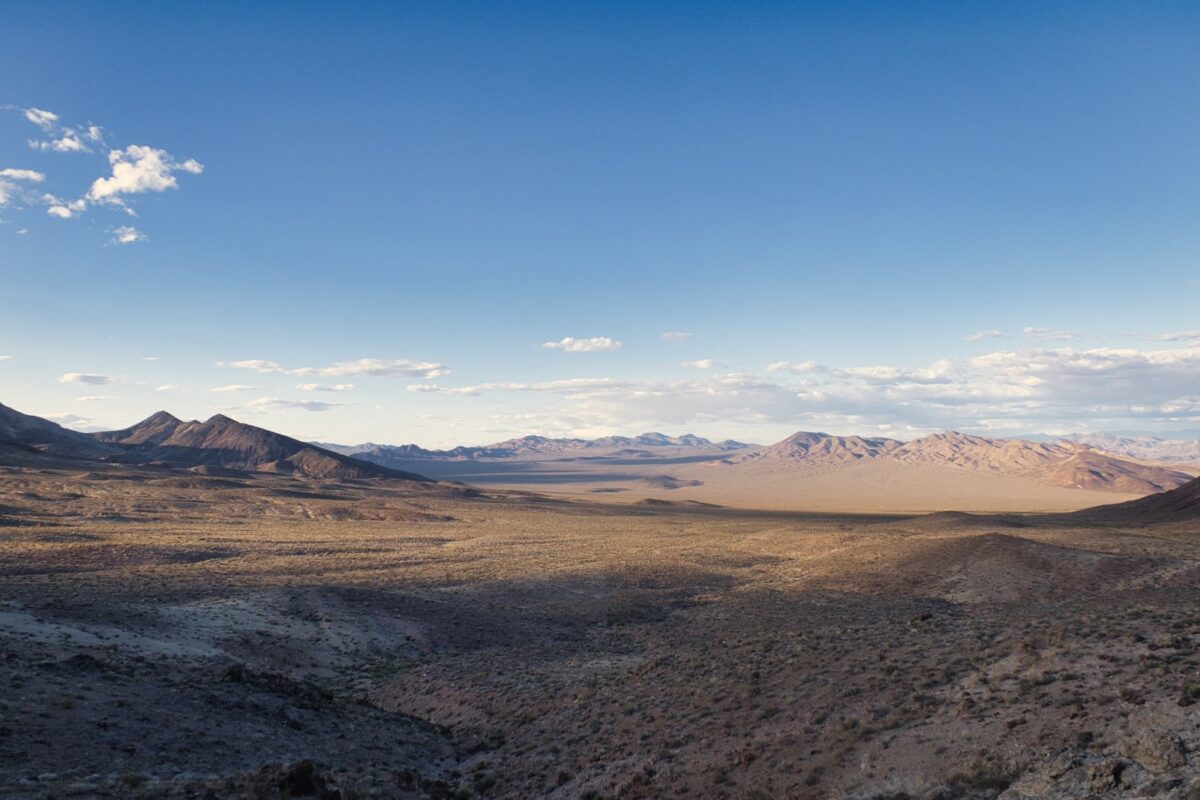
Most landscapes are defined by what they are, rather than by what they are not. Forests are known by their trees, plains by their grasses, mountains by their soaring peaks, coasts through their embrace of oceans. By contrast, deserts are not defined by plants, animals or geology, but rather by their lack of water. They are consigned to nullity, landscapes characterized by scarcity and want.
The Mojave is foremost among these negative spaces. It is an empty land, devoid of that which humans prize – no water, no trees, no grasses. Only sun, wind, sand and scrub. There are no destinations here. It is just a space, one that serves only to separate Las Vegas from Los Angeles, the flats from the angels.
Interstate 15 is the wormhole through this bubble in the space-time continuum, a corridor that shoots cars from one node to the other. I pulled off I-15 at Halloran Summit, one of the few exits, then rumbled for a mile down a Jeep road to a grove of Joshua Trees. I turned off the engine and stepped out onto the sand.
At 4500 feet (1370 m) in elevation, it’s the high point of all the emptiness. I looked north toward lands even more empty, lands that would progress from one emptiness to another until I reached the ultimate void, Badwater, Death Valley – a place so empty that even the earth has receded, leaving a basin of nothingness, an empire of air and sun.
Through the Kingston Hills and into the Valjean Valley
I stepped forward, the muffled crunch of sand beneath my trail runners the only sound. The walking was easy. The landscape was bare and brown. Two especially dry winters after a decade of drought have pushed even the hardiest of plants to the edge of survival. It was late March, usually a time of renewal but the creosotes (which can live for thousands of years) were brown, the rabbitbrush was brown, and the Joshua Trees were withering and also turning brown.
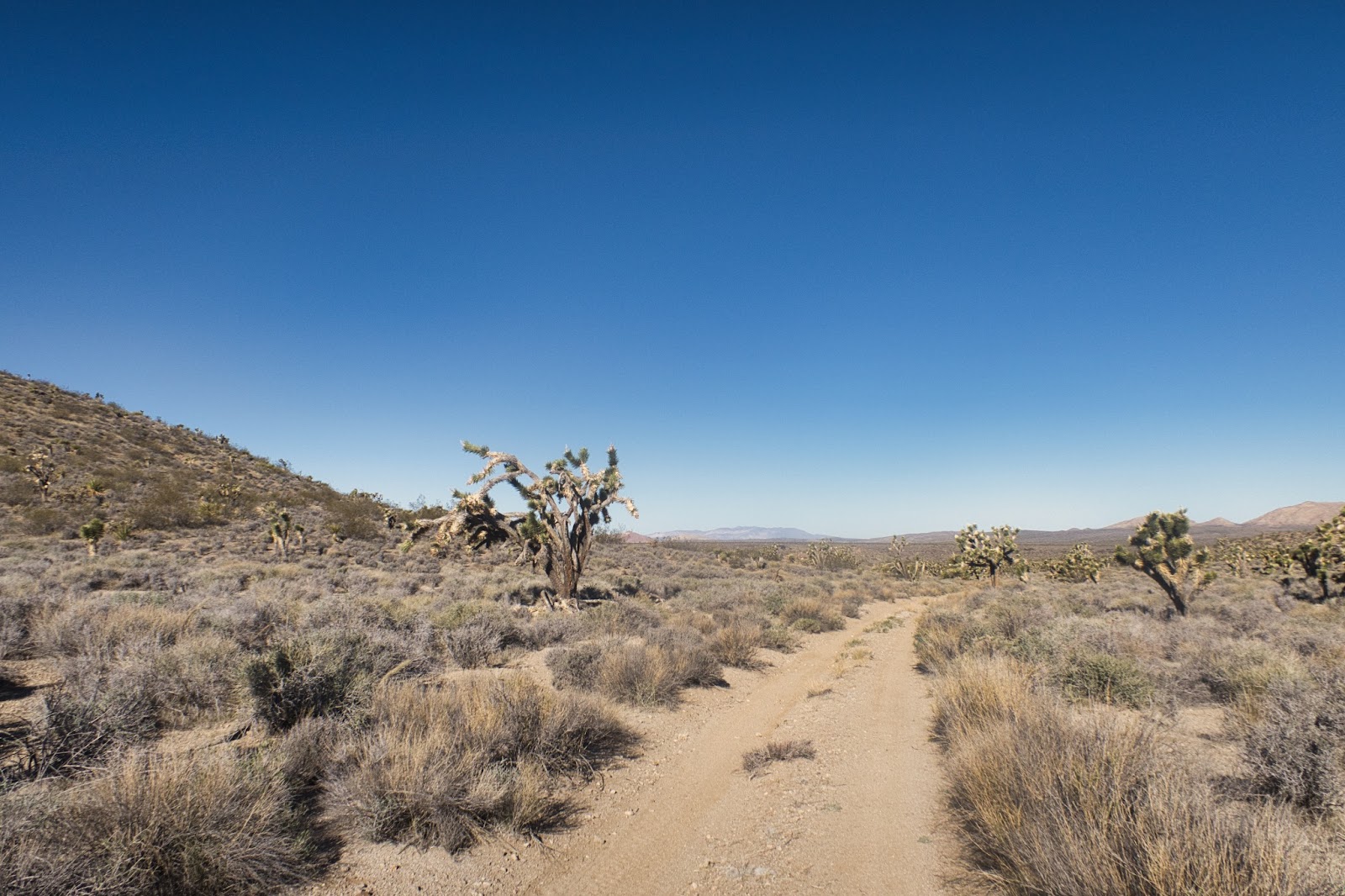
The trail stayed high, rolling over the landscape. But even within this limited range of elevation, the higher places were greener than those below. With so little rain, I think a degree or two of average temperature determines which plants make it and which do not.
Member Exclusive
A Premium or Unlimited Membership* is required to view the rest of this article.
* A Basic Membership is required to view Member Q&A events


Discussion
Become a member to post in the forums.
Companion forum thread to: Down to the Valley: Embracing the Desert Trail from the Mojave Desert to Badwater Basin
Drew Smith journeys from the Mojave Desert to Badwater Basin finding beauty in a seemingly desolate place.
Always enjoy reading your trip reports, Drew. I only get to backpack in desert landscapes every few years so it’s a treat to be able to read these and sip coffee while I watch spring snow blanket the valley floor in western Montana. Your reports have me itching to plan a trip for this fall or next spring to the desert.
Thank you. Really appreciate the inspiring report.
Nicely written – thanks!
I like freedom from the “tyranny of goals.” How un-American.
Great story and photos.
Question: “a scoop of the brown water to my lips revealed it to be merely murky, warm, and unrefreshing, but not actively poisonous.” Does taste tell you enough to know the water is not arsenic? or something else?
@AK Granola – per Wikipedia, arsenic has a mild slightly sweet taste, making it ideal for poisoning annoying spouses and rival claimants to the throne. So my taste test was of little value. A better measure of potability is the presence of algae and bugs in the water – if they can survive, you probably will too.
Having experienced the yummy deliciousness of date shakes while in civilization, I can only imagine how even much more sublime they would be in the midst of a desert backpacking trip!
Great trip report!
Become a member to post in the forums.