


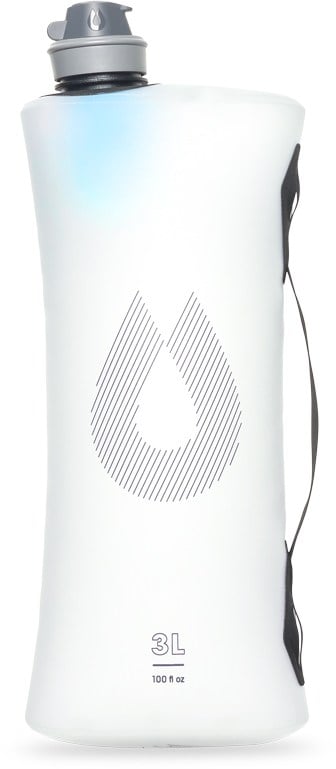
I spent two weeks in the Emigrant and Yosemite Wilderness in early August. While on a long day hike from camp, I lost the only water bottle I packed for the day – my primary drinking bottle. I left my other water storage containers back at camp (a 3L bag and a cooking pot).
I must have lost it while bushwhacking. I retraced my steps for an hour, but was unable to find it.
I didn’t want to bail on my day hike, so I considered my options:
- Drinking untreated water from its source, like a deer.
- Using a disposable plastic bag for water storage and treatment (I had Aquamira with me).
So upon reaching the next water source (a lake at the Emigrant-Yosemite border), I commandeered a poly bag from my lunch (emptying its contents – chocolate-covered cherries – into my stomach first), filled it with lake water, added the Aquamira mix, knotted it up, stowed it in a safe spot, and went fishing for a bit:
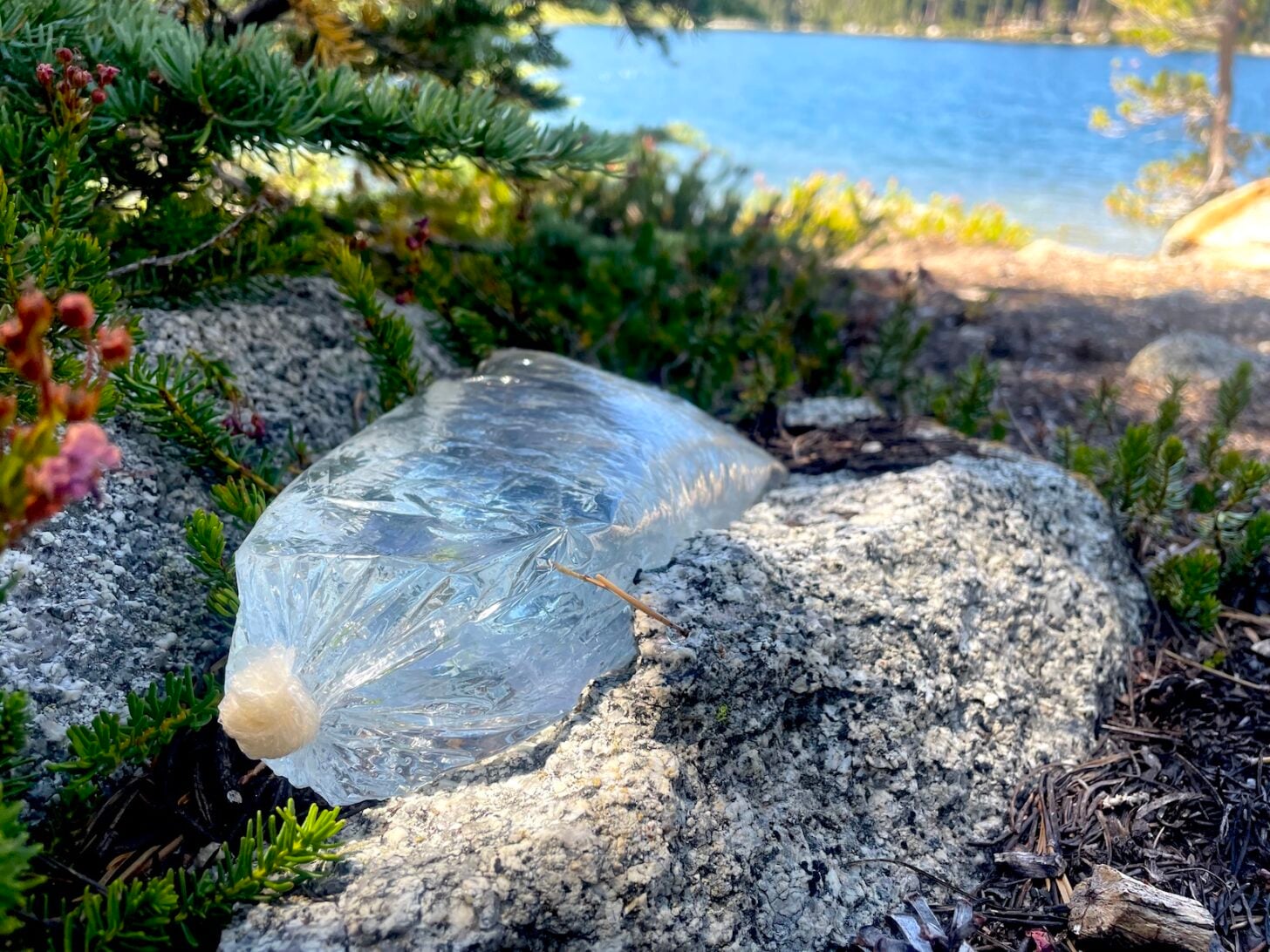
The bag was too thin (2 mil) for packing water, and a huge pain to drink from and unknot/reknot, so I only used it to tank up when I reached a water source. But it worked. I didn’t have to bail on my day hike, and I didn’t suffer from dehydration.
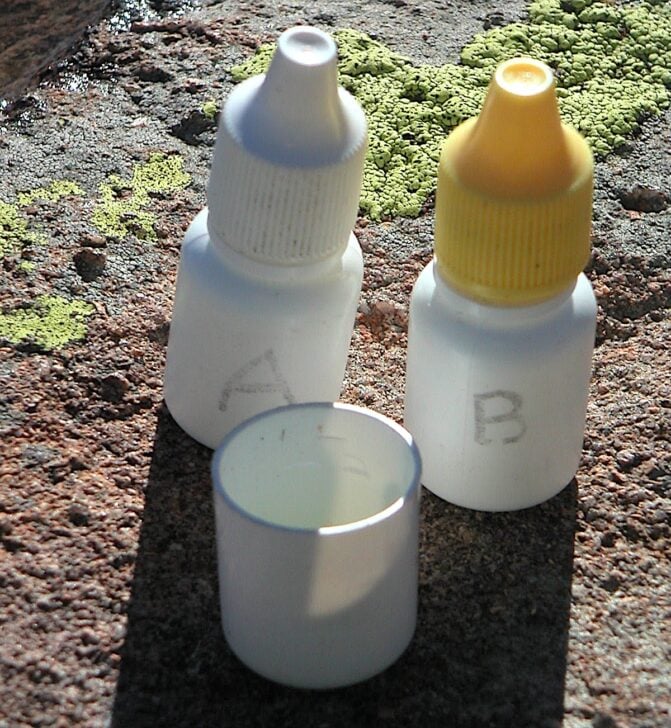
What if my sole source of water treatment was a bottle filter (e.g., squeeze-style) – and that’s what got lost? I had a bottle filter back at camp, but I’m glad I had my mini-Aquamira kit as a backup – and with me on my day hike. If I didn’t, and I lost my water filter bottle – then I’d have no option for treatment for the rest of my trip. I’m not one to bring backups of many things, but I’ve had too many water filter failures through the years not to bring Aquatabs or an Aquamira kit repackaged in mini-dropper bottles for backup:
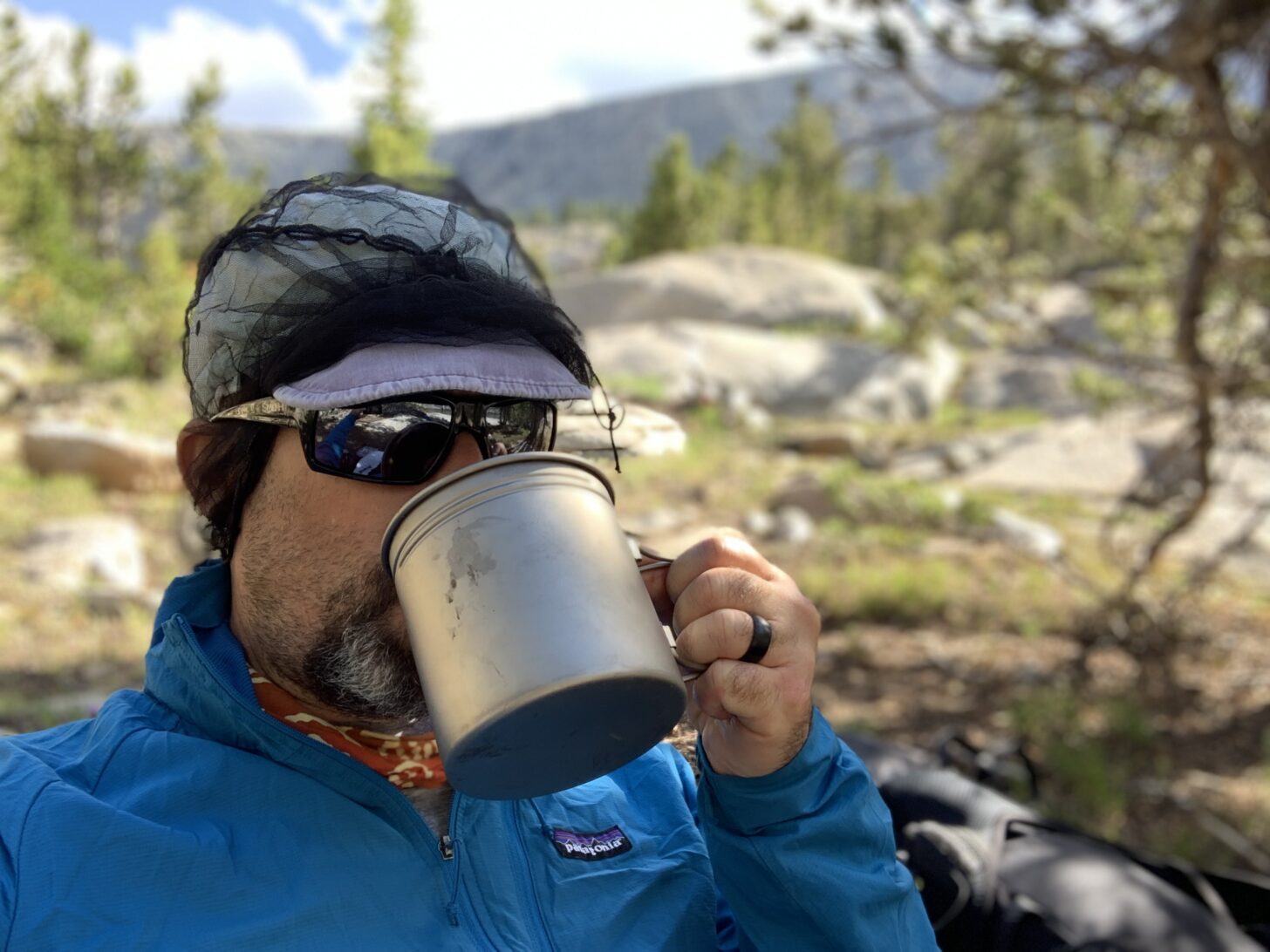
In addition, I brought a Vargo Bot 700 (photo below) as a cookpot, which subsequently served as my main “water bottle” for the rest of the trip. A silicone-sealed screw-top lid makes this not only a viable option, but a very good one. I kept it in the side pocket of my pack while hiking, just like I used to do with my old Nalgene bottle.
This experience reminds me to explore contingency plans in the case of gear failure. Losing an item during a trip is simply a sub-type of gear failure (with the unfortunate added consequence of contributing to backcountry litter).
Related:
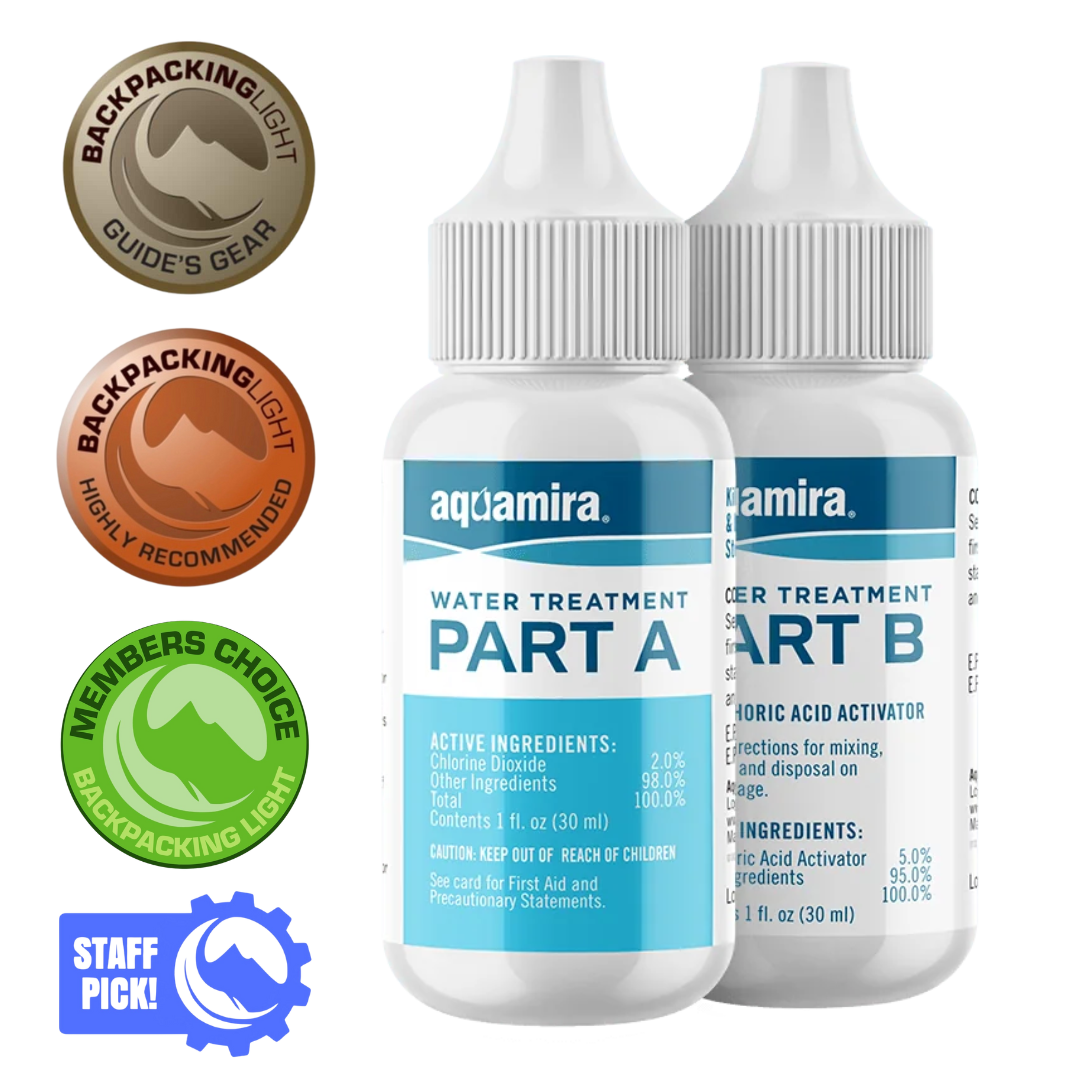
A cult favorite in the ultralight community for its ease of use, pre-mix stability, efficacy against viruses, bacteria, and protozoan cysts, and its ability to impart better flavor and odor to bad water sources. Can be repackaged if using opaque PE dropper bottles.
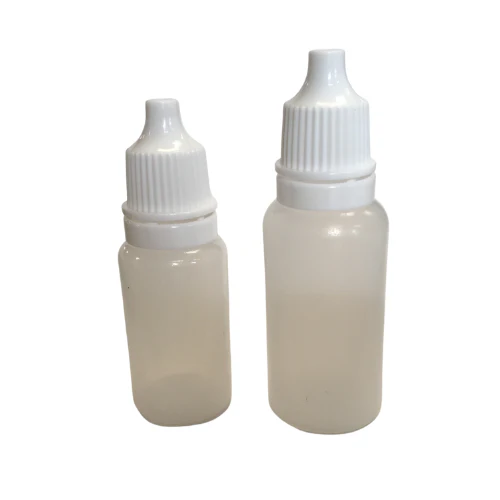
Repackage soaps, condiments, insect repellent, Aquamira, sunscreen, and more to reduce the bulk and weight of your essentials.

Aquatabs contain Sodium Dichloroisocyanurate (NaDCC), which releases hypochlorous acid (HOCl) - a powerful, broad-spectrum disinfectant that is both faster-acting and more palatable than iodine. Unlike iodine tablets, which leave an unpleasant taste and are less effective against viruses and cysts, NaDCC provides superior pathogen inactivation, works better in cold and turbid water, and does not discolor water or stain containers. It’s also safer for long-term use. And unlike chlorine bleach-based disinfectants, which degrade quickly and deliver a harsh taste with imprecise dosing, Aquatabs use more stable compounds to release controlled amounts of disinfectant for safer, more effective, and better-tasting water purification.
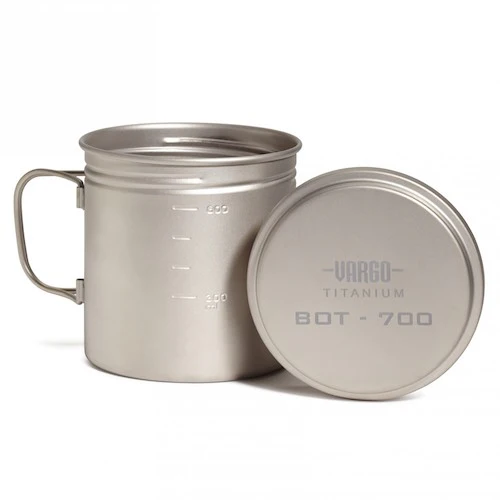
Perhaps the most versatile titanium pot on the market - more durable than Toaks, screw-top sealable lid can be used for cold-soaking or extra water storage, usable handles, and a lid that can be used for a mug or fry pan in a pinch.


Discussion
Become a member to post in the forums.
Companion forum thread to: When you lose your water bottle on a trip…
When I lost my water bottle backpacking, I improvised with a disposable bag, backup chemicals, and a cookpot to keep going.
I’ve found water sources that smelled like sheep. I carry Aquamira tablets. I don’t know what the better option is.
I’m cautious with the Bot. I’ve put hot liquids in it and found it hard to open.
Putting hot water in the Bot, then sealing the screw-top side of the lid, that’s a known issue. When the water cools down, the air pressure inside the Bot decreases (PV=nRT), creating a vacuum, making the lid hard to open. Generally, avoid this. If it happens and you get stuck, you can use a tent stake or knife or metal utensil – jam it under the lid lip and lever it outward to separate the lip from the pot just enough to break the seal and let the in/out air pressures equalize, then the lid can be unscrewed again.
Sheep: Aquamira tabs are a good call. We have lots of sheep grazing here in the Rocky Mountain wilderness areas.
Become a member to post in the forums.