


This presentation was initially delivered at Trail Days Online 2025 and as a keynote at the 2025 ALDHA-West Gathering.
Presentation Summary:
Bear Senses and Behavior
Bears rely on powerful smell and capable vision to locate and evaluate potential food sources. Understanding how olfactory conditioning develops is central to preventing bear–human conflicts and reducing the number of food-conditioned bears that are ultimately destroyed.
- Bears’ overall sense of smell is strong, but their ability to detect properly contained human food from long distances is often overstated.
- Bears possess 200 to 600 million olfactory receptors, granting high sensitivity and long-range odor detection.
- The olfactory system links odor cues to reward centers in the brain, leading to durable food conditioning.
- Bears have competent eyesight, particularly in low light, and can visually recognize food containers or camps.
- Food conditioning, the association of humans or objects with calories, is more dangerous than habituation, which is tolerance without reward.
- Food-conditioned bears are more likely to engage in aggressive behavior and are often euthanized.
- Not all bear–human conflicts are food-related; some are predatory, particularly involving grizzlies.
Food Storage Methods and Effectiveness
No portable storage method is infallible, and every system involves trade-offs in weight, convenience, and reliability. Effectiveness depends as much on user technique and odor management as on the hardware itself.
- Fixed food-storage lockers are the only fully reliable bear-proof solution.
- All portable methods have documented failures, including bear canisters, Ursacks, and food hangs.
- Ultralight hangs minimize weight but present the highest failure risk.
- Ursack users achieve moderate protection, but success depends on proper knots, tie-offs, and odor management.
- Bear canisters offer the greatest protection but are not infallible against persistent or food-conditioned bears.
- Sleeping with food may be necessary in treeless or rockless terrain; if so, it must be meticulously packaged and kept close for defense.
Odor Dispersion and Packaging Science
Odor dispersion follows predictable physical principles that can be mitigated through layered packaging. Crystalline polymer barriers like Mylar and nylon significantly reduce detection distances when combined with disciplined hygiene.
- Odor disperses as a plume shaped by wind and terrain; still air concentrates near the source, while wind and turbulence spread and dilute it.
- Layered packaging can dramatically reduce odor detectability; polyethylene Ziplocs offer modest improvement, nylon barriers like oven or Nylofume bags provide an order-of-magnitude improvement, and Mylar is the strongest common consumer barrier.
- Combining Ziplocs with Mylar and Nylofume within an Ursack or canister can shrink detection distances from hundreds of meters to meters or less.
- Surface contamination from food residue is the most common failure point and can negate odor-control benefits.
- Nylofume bags are fragile but effective as secondary odor barriers and are easily repaired.
- Mylar alone is highly effective; layering adds redundancy and protection.
Campsite Strategy and Hygiene
Spatial planning, wind awareness, and sanitation are as important as packaging. Organizing sleeping, cooking, and storage zones thoughtfully reduces scent dispersion and wildlife attraction.
- Site selection is critical; avoid wildlife travel corridors such as rivers and trails.
- Separate sleeping, cooking, and storage zones by several hundred feet, with food positioned downwind of camp.
- Cooking and dishwashing should occur far from the sleeping area to reduce local odor concentration.
- Inconvenient storage locations, such as deeper in trees or rugged terrain, can deter lazy bears.
- Broadcast disposal of gray water, dispersed in fine droplets across vegetation, minimizes concentrated odors.
- Poor hygienic practices, including reusing contaminated bags or touching exterior surfaces with food-scented hands, significantly increase risk.
Ethics, Safety, and Management Implications
Responsible food management integrates odor control with physical protection and serves both safety and conservation objectives. Preventing food conditioning protects people and preserves natural bear behavior.
- Odor control and physical containment address different dimensions of risk; both are essential.
- Effective food storage reduces human–bear conflict and protects bears from lethal management outcomes.
- Deterrence, such as loud noise or thrown objects, may prevent bears from associating canisters with easy rewards, subject to regulations and safety.
- The ethical responsibility of backpackers extends beyond personal safety to wildlife conservation and the preservation of wild behavior in bear populations.
Referenced Products
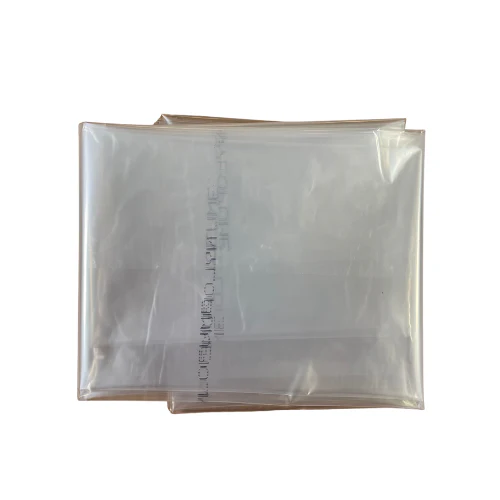

Lighter and more compact than a bear canister. The Ursack series of bear-resistant food storage bags save weight and bulk in areas where bear canisters are not required or Ursacks are certified as lawful food storage options.
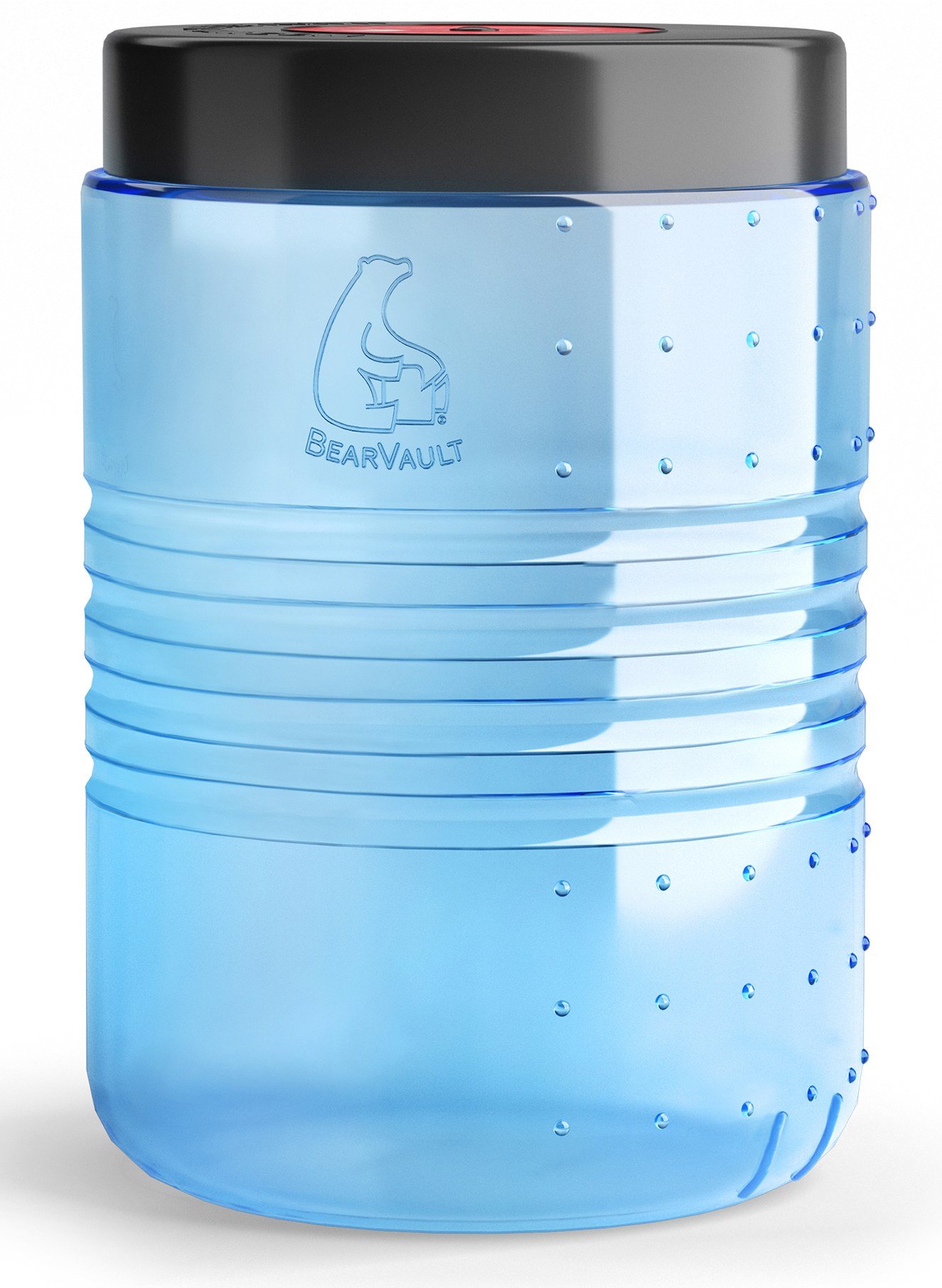
BearVault offers a range of bear-resistant food canisters designed for backpackers and hikers, varying in capacity and weight to suit different trip lengths:
- BV ONE: Expandable/collapsible volume: 282 to 505 cubic inches (4.6 to 8.3 L), 2.0 lbs (0.91 kg), 5.6 to 8.5 inches (height) x 9.9 inches (dia).
- BV500-Journey: 700 cubic inches (11.5 L), 2 lbs 9 oz (1.16 kg), 12.7 inches (height) x 8.7 inches (dia).
- BV475-Trek: 565 cubic inches (9.3 L), 2 lbs 4 oz (1.03 kg), 10.5 inches (height) x 8.7 inches (dia).
- BV450-Jaunt: 440 cubic inches (7.2 L), 2 lbs 1 oz (940 g), 8.3 inches (height) x 8.7 inches (dia).
- BV425-Sprint: 305 cubic inches (5 L), 1 lb 12 oz (800 g), 6 inches (height) x 8.7 inches (dia).
BearVault canisters are constructed from durable polycarbonate material, feature transparent walls for easy content visibility, and have a wide opening with a screw-on lid that doesn't require tools to operate. They are certified bear-resistant by the Interagency Grizzly Bear Committee (IGBC).
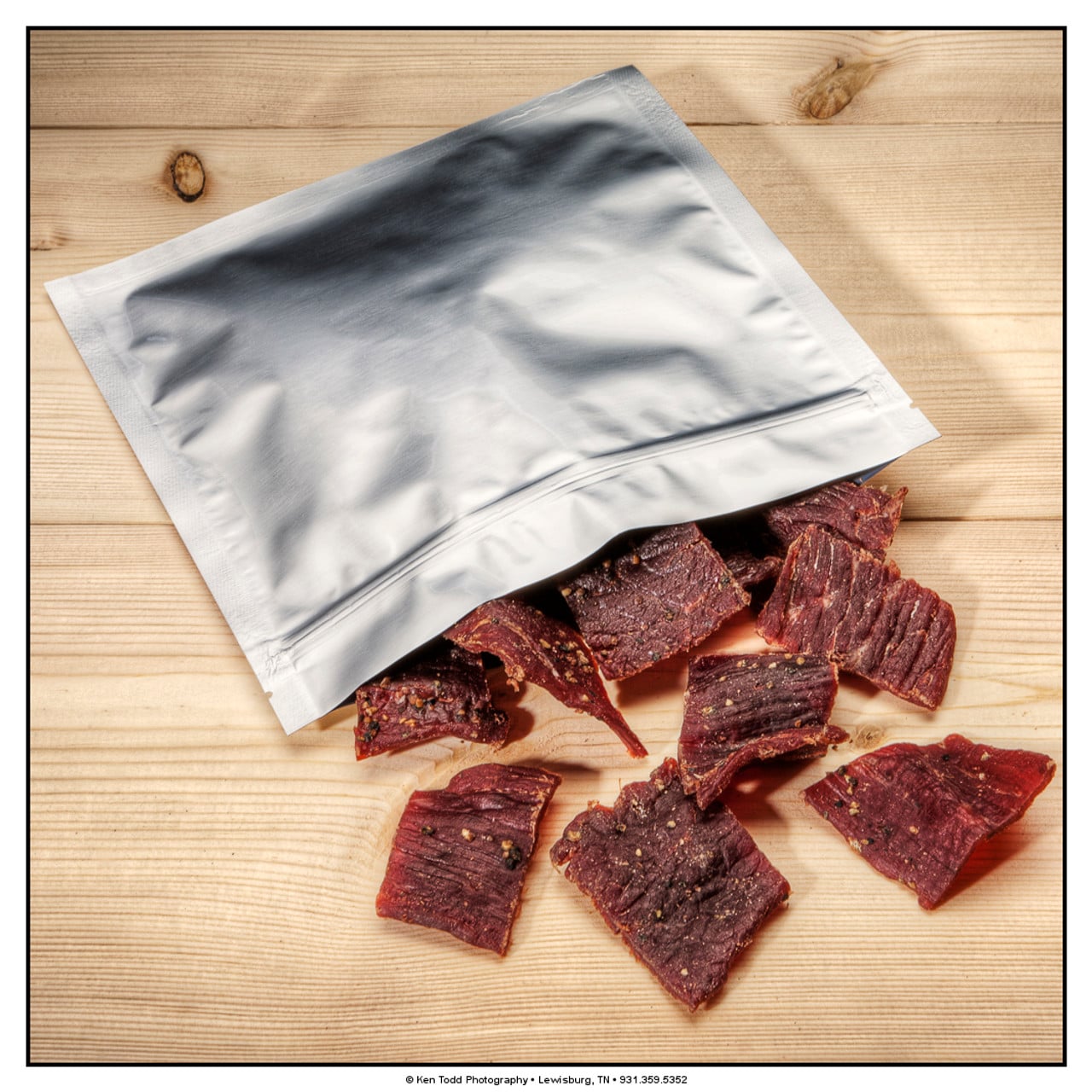
Mylar Bags are your first line of defense for long-term food storage and help contain food odors when in bear habitat. Mylar bags are multi-layered bags of PET (Polyethylene) and aluminum foil and have excellent oxygen, light and moisture barrier properties.


Discussion
Become a member to post in the forums.
Companion forum thread to: The Nose of a Bear
Bears’ sense of smell is extraordinary – but their ability to detect properly contained food is often exaggerated. This presentation explores the science of odor control, food storage systems, and campsite hygiene. Learn how to reduce scent dispersion, prevent bear encounters, and responsibly protect both your food and the wildlife around you.
I’ve always wondered how much non-food items are really attractive to bears. As a rule I just put almost all into the bear can, since I don’t care to test this myself. But in the huge expanses of tundra and forest I call home and backpack in, I can’t really believe a bear is going to wander into a camp with 3 tents and lots of human smells and decide that my lip balm left inadvertently in my jacket pocket in my tent, is sufficiently enticing to tear down my tent and attack me. There’s lip balm on my lips too, even if I store the lip balm correctly. I always have my bear spray in my tent; that surely has a smell. I don’t store Deet in my bear can ever, but I’ve seen folks argue that bears will be attracted by it too. I realize this video and article are about actual food, but more info on the other smelly things we carry and any evidence for bears being attracted to those items would be interesting.
Time and place could impact the lip balm argument. Isolating, pinpointing and finding the source of a scent after detection is another variable. Associating the scent with humans and food comes from training, not from nature.
I leave my toothbrush in my tent at night to get air and dry. I’m more concerned about bacteria growth due to locking it in a opsak sealed bear bag overnight. Leaving it exposed in the mesh pocket of my pack to dry while I hike, sitting alongside with my washed and wet undies and socks and exposed to dust and bushwhacking mess never struck me as a hygienic option either.
Even in sites festooned with habituated chipmunks and squirrels that will attack an open food bag in minutes, I’ve never had a nightly visitor give a darn for the toothbrush.
I once had something scatter the heavy fireside log seating in the middle of the night in a provincial park back country site that must have been a bear looking for scraps left by messy previous tenants. There were no signs that it went anywhere near my tent or my ursack/opsak combo.
Then there are best practices for toothpaste spitting which will surely overpower the scent of the toothbrush. I spit into the fire pit if it’s an established site. I’ve heard arguments that burned toothpaste can carry on the wind and be picked up by a bear, but damned if you do and damned if you don’t.
I try not to carry any non food items with a stronger scent than toothpaste
TBH, when I read the title The Nose of a Bear, I thought it might lead off with a picture of a bear’s nose poking under a rain-fly –the thought of which I’ll admit gives me the willies.
I think of a bear can as similar to a seatbelt or bike helmet; it’s an easy safety measure for an unlikely but potentially catastrophic occurrence. Side benefit is that a bear can also prevents rodents and bugs from eating my food and toiletries so I stuff everything I can inside.
I’ve also wondered about going to sleep with minty-fresh breath or maybe a dinner-stain on my shirt, but I tell myself that my own odor should overpower them.
Yeah, bear cans are heavy and unwieldy, but I’m willing to carry one to protect myself and the wildlife. And hopefully keep a bear’s nose from poking under my fly.
that’s what I thought, a bear’s nose through the tent door : )
Toothpaste is not really necessary and, strictly in my opinion, best left behind when heading into the backcountry. The same can be said for other scented personal hygiene/grooming products. Lip balm, soap, and sun screen can all be purchased in scent free, or nearly so, options.
Based on personal experience I am a strong advocate of the Nylofume option, double bagged and inverted on each other in remote areas, as Ryan specified. Closer in to higher use areas add a Mylar bag. Combined with VERY close attention to scent management, especially on hands when packing/unpacking the bags, camp hygiene, and eating well away from my sleeping area, I was comfortable sleeping with my food for all the years I used Nylofume bags after they first came on the market. I do think it might have been worth mentioning in the article the option of going cold food and avoiding odiferous foods like smoked/processed meats as additional means of reducing the dispersion of odors. I do draw the line at hot coffee in the morning, however. For that, a small alcohol setup worked perfectly for minimal weight penalty. FWIW.
I enjoyed this. Thank you Ryan.
Question for ya: why insert the two nylon bags vs tie off the first then insert into and tie off the second. (I don’t literally mean to tie it off,I use multiple twists)
Thanks again!
Edit to above: I meant”why invert” rather than “why insert “
Ryan, can you or another member comment on the scent proofness of your common dehydrated Mountain House meal packaging that is unopened? I always pack them in a bear-resistant container but for proper scent control, would they also need to be put in a double-ended ziplock and/or mylar bag? There is probably even more scent packing out the cooked, used dehydrated package than unopened. Thanks, Mark.
Ziploc bags are made from polyethylene rather than PET (polyethylene terephthalate).
In the closeout section of Walmart, I saw a pack of 10 liners for an off-brand Diaper Genie receptacle marked down to $1. I figured if it keeps the diaper stink in, it will work with food odors and have been using those as my food bag since. But if you’re willing to pay full price, that’s a potential retail source of odor-proof plastic liners in almost any town.
And there’s a Diaper Genie-like receptacle for used kitty litter, so there’s another source of liners at pet stores or in the pet aisle of a big-box store.
At the very least I know this might sound moderately paranoid, but I’ve always wondered about my pot and spoon. I don’t use any soap and just clean them by scraping any food away with my spoon and water and then drinking the gray water. So I’ve got to think there might be something that smells left on them that I can’t see. If I have space I’ll usually try to put them in my Ursack along with any towel that I used to dry my pot and spoon, however I usually don’t have enough space in my Opsak so I just stick them on top.
Hi Ryan, revisiting this excellent presentation and had a question about the formula used in your barrier combinations at 23:12. If I’m understanding correctly (knowing that this is theoretical, based on zero wind, etc.), it works like this:
That’s the result we see in your first slide, but when I apply the formula to what you say about Nylofume, I get a different number than you:
I’m interested to know if my interpretation of the formula is right or wrong, since I’ve used something similar to the latter combination for some time now.
The biology and behaviours of bears, visual cues, and the wind factor are all important pieces of the puzzle, too. The content you’ve presented should be required reading for all backcountry campers.
Become a member to post in the forums.