


Introduction: The Primary Mechanical Function of Load Lifters
A load lifter is a mechanism that changes the position of the upper portion of a backpack. By understanding and using this mechanism correctly, hikers can control how the backpack load is applied to the body, ultimately improving comfort and hiking performance.
When the load lifters are tightened, the upper portion of the backpack is pulled toward the wearer’s back while the lower contact region acts as the fulcrum. This single mechanical action changes the position of the backpack’s center of gravity relative to the body.
This change influences lumbar torque, shoulder load distribution, and the amount of load supported by the pelvis under static conditions. During walking, it also affects the relative motion between the backpack and the body, thereby influencing dynamic stability.
In addition to explaining these mechanical principles, this article also discusses important design considerations and practical adjustment methods for maximizing the effectiveness of load lifters.
Lumbar Torque
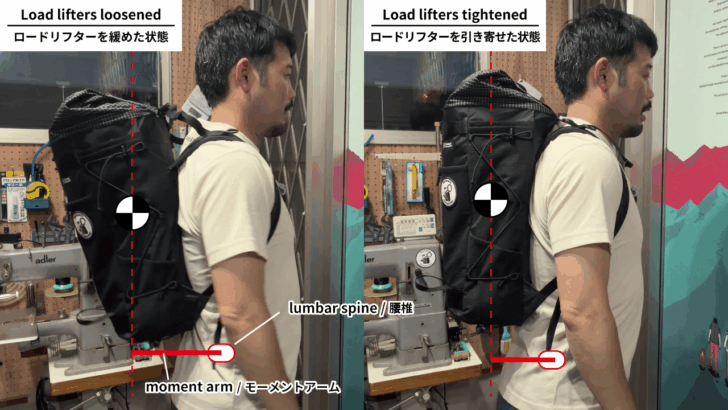
When the load lifters are tightened, the upper portion of the backpack moves closer to the wearer’s back, bringing the backpack’s center of gravity closer to the body. As a result, the moment arm between the backpack’s center of gravity and the lumbar spine is shortened, thereby decreasing lumbar torque.
Conversely, loosening the load lifters increases the distance between the backpack and the body, lengthening the moment arm and increasing lumbar torque. This requires greater muscular effort to maintain an upright posture. If this effort cannot be maintained, forward trunk inclination may occur as compensation.
Shoulder Load Distribution
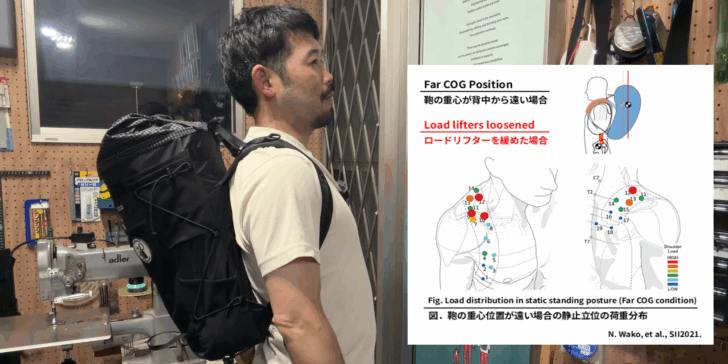
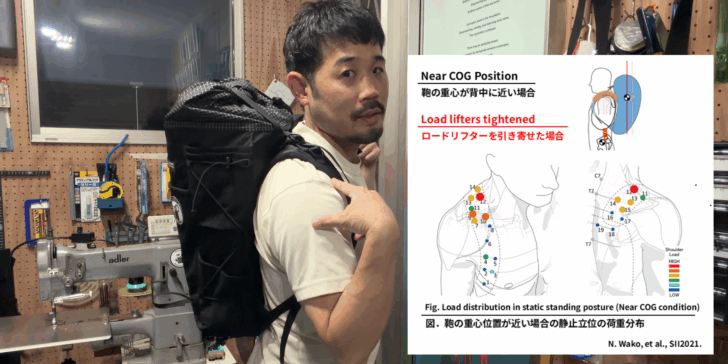
When the backpack has sufficient structural rigidity to transmit the load-lifter tension without significant bending, bringing the upper portion of the backpack closer to the body changes the shoulder load distribution. The lower contact region acts as the fulcrum, and more of the load is supported by the upper back while loading around the clavicular region decreases. The magnitude of this redistribution depends on shoulder strap geometry, padding, torso fit, and individual anatomy, but the mechanical tendency is unchanged.
This interpretation is considered to be consistent with our previous ergonomics study, in which the backpack’s center of gravity was experimentally fixed in Near and Far positions using a rigid back panel together with shoulder straps made of solid PVC sheets. These conditions minimized structural deformation, allowing the influence of backpack center-of-gravity position on shoulder load distribution to be evaluated more directly.
Controlling Load Distribution Between the Shoulders and Pelvis
When the backpack is equipped with a hipbelt or lumbar pad that provides stable load support on the pelvis, and the back panel has sufficient structural rigidity to resist bending, changing the backpack position and its center of gravity using the load lifters changes the backward-sagging torque acting at the lower contact region.
As a result, the proportion of the load supported by the shoulders and pelvis can, in theory, be adjusted continuously. The maximum proportion of the load that can ultimately be supported by the pelvis depends on the backpack’s structural design. Moreover, this mechanism does not function effectively if pelvic support is insufficient or if the backpack bends under load.
Dynamic Loading
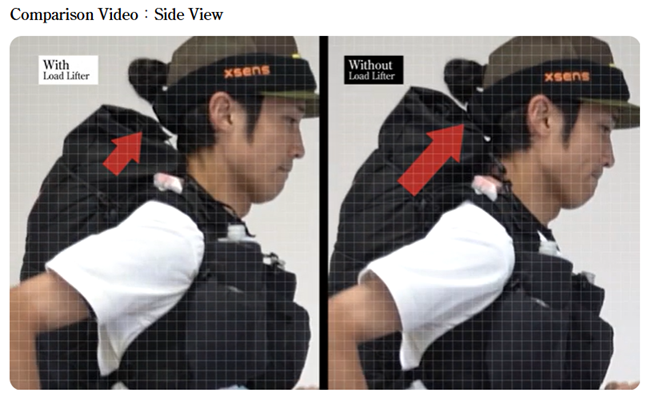
The primary function of load lifters also extends to dynamic loading during walking and running. In addition to influencing static loading, they reduce the relative motion between the backpack and the body.
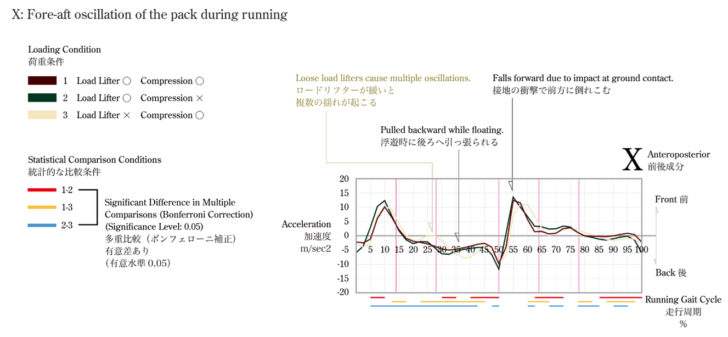
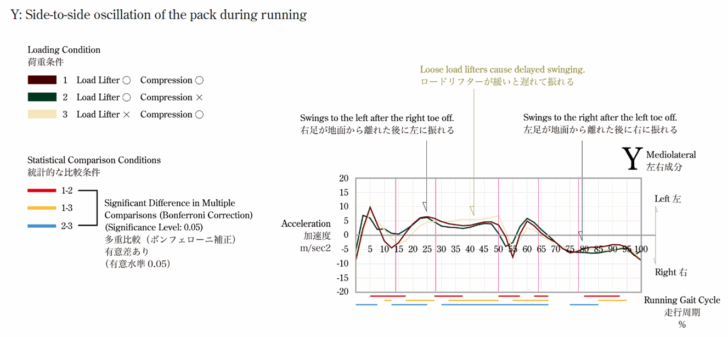
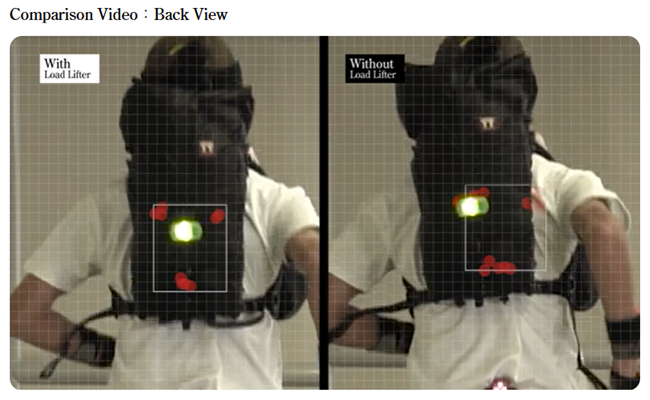
Running experiments using the Tabisuke Tabizo T2 Trail showed that loosening the load lifters increased the phase lag between body motion and backpack motion. As a result, the backpack was pulled backward during the floating phase, swung toward the side opposite the push-off leg, and then fell forward after foot contact. These delayed oscillations produced larger relative anteroposterior and mediolateral accelerations between the backpack and the body.
Tightening the load lifters reduced the phase lag between the backpack and the wearer’s body, suppressing these delayed oscillations. The largest improvements were observed in the anteroposterior and mediolateral directions, indicating improved control of dynamic load rather than merely changing static load distribution.
Design Considerations
Two design considerations are important for ensuring that load lifters function as intended.
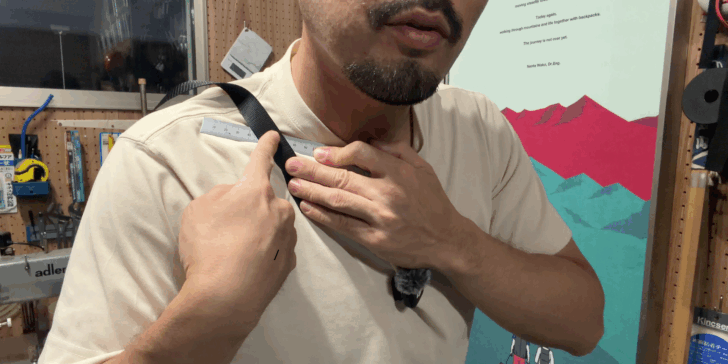
The first is the load-lifter attachment position on the shoulder strap. The load lifter should be attached within the triangular region above the clavicle and in front of the shoulder ridge. If the attachment point is below the clavicle, tightening the load lifter increases compressive loading on the clavicle. If it is located behind the shoulder ridge, the load lifter becomes much less effective at pulling the backpack toward the body.
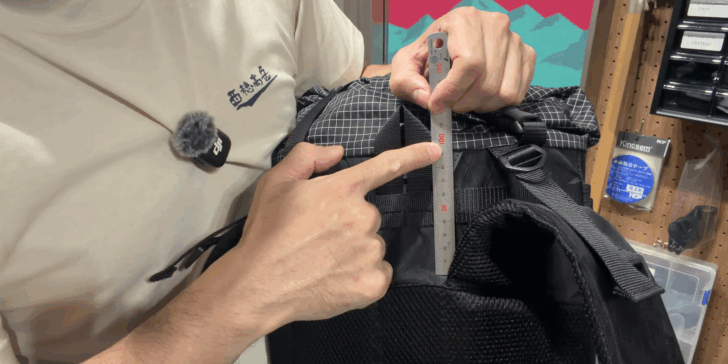
The second is structural rigidity. If the backpack extends sufficiently above the shoulder strap attachment, load lifters become necessary to draw the upper portion of the backpack toward the body. For this mechanism to function effectively, the structure between the shoulder strap attachment and the load-lifter attachment must be sufficiently rigid. Otherwise, tightening the load lifters bends only the upper portion of the backpack, and the backpack as a whole is not drawn closer to the body.
In my prototype, using a 2 mm polyethylene sheet stiffener, load lifters became necessary and functioned effectively when the backpack extended more than approximately 4 cm above the shoulder strap attachment. This value is specific to the material used in my prototype. For stiffer structures, such as aluminum stays or composite frame sheets, the required dimensions will differ.
Adjustment Procedure
- Loosen all straps completely.
- If the back panel reaches the lumbar region, position the lumbar pad on the sacral slope. If the backpack is equipped with a hip belt, tighten it next. This establishes the pelvic load path, which determines the maximum proportion of the backpack load that can be supported by the pelvis.
- Tighten the shoulder straps until stable contact is achieved.
- If necessary, adjust the sternum strap to optimize shoulder contact or help prevent the shoulder straps from slipping off the shoulders.
- Finally, adjust the load lifters to fine-tune how the load is applied. Tighten them only until the shoulder straps naturally conform to the shoulders. Overtightening deforms the shoulder straps and adds unnecessary compressive loading to the shoulders.

Key Takeaways
Load lifters are far more than simple adjustment straps. Their primary function is to control the position of the upper backpack relative to the body. This single mechanical action influences lumbar torque, shoulder load distribution, load sharing between the shoulders and pelvis, and dynamic load. Their effectiveness ultimately depends on appropriate attachment geometry, sufficient structural rigidity, and proper adjustment.
The following YouTube video provides engineering illustrations and practical examples to help explain these mechanisms in greater detail. I hope this engineering perspective helps hikers, MYOG makers, and backpack designers better understand how load lifters actually work.
Load Lifters: Mechanism, Design & Adjustment (YouTube video)
Additional Information
- N. Wako, et al., Investigation of Relationship Between Multi-Point Mechanical Stimuli on Shoulder and Overall Pain on Backpack Wearers, 2021 IEEE/SICE International Symposium on System Integrations (SII2021), pp. 363–368, Fukushima, Japan, Jan. 2021. DOI: 10.1109/IEEECONF49454.2021.9382675.
- Load Lifters: Mechanism, Design & Adjustment (YouTube video).


Discussion
Become a member to post in the forums.
Companion forum thread to: The Engineering Behind Backpack Load Lifters
Load lifters do more than pull the top of a backpack closer to your body. Backpack engineer Nenta Wako explains how they affect lumbar torque, shoulder and pelvic loading, pack stability, and carrying comfort – and how frame rigidity, attachment geometry, and proper adjustment determine whether they work.
Thank you for this Nenta, I have been an avid follower of your YouTube channel for a few years now and very much enjoy your content.
I would love to see a more thorough/in-depth explanation of the Wako Device and how to find the ideal attachment point for shoulder straps.
Thanks from New Zealand, Scott
Become a member to post in the forums.