



A bivy sack reduces shelter to its simplest form: a weather-resistant fabric cocoon. This simplicity eliminates poles and guylines but comes at the cost of interior volume and floor space. Modern inflatable pads amplify the problem: most bivy sacks can’t fit wide or thick pads without compressing sleeping bag loft, restricting movement, or choking airflow. As a result, pad choice in a bivy has disproportionate effects on warmth, comfort, and moisture management.
Here are the issues:
- Interior volume: Most bivy sacks aren’t built for wide pads (25 in / 64 cm). A pad that’s wider than the floor reduces canopy volume, while thick inflatables (2.5 in / 6 cm or more) eat into the interior volume. Both lead to the same outcome: compressed bag loft and restricted movement.
- Condensation: Reduced interior space also limits airflow. When the bivy’s upper fabric presses against your bag, moisture can’t dissipate and condensation builds more than if air is allowed to move around as you shift positions inside the bivy sack.
- Abrasion and stability: Pads placed outside the bivy face abrasion from sharp ground and tend to slip out from under you. Without walls to contain them, rolling off becomes more likely.
- System integration: In tents, extra space hides poor pad-sleeping bag matches. In bivies, there’s less slack: the pad, bag or quilt, and bivy must work together as an integrated system that doesn’t compromise user movement or insulating warmth.
Closed-Cell Foam (CCF) Pads
Ultra-Thin Pads
Ultra-thin pads (1/8 to 1/4 in / 3 to 6 mm, < 3 oz / 85 g) add little comfort or warmth on their own, but they can enhance your pad system. In bivy setups, they boost R-value when paired with another pad, provide insurance if an inflatable fails, reduce slippage, and extend insulation to the head and foot when combined with a short pad.
Example: Gossamer Gear Thinlight
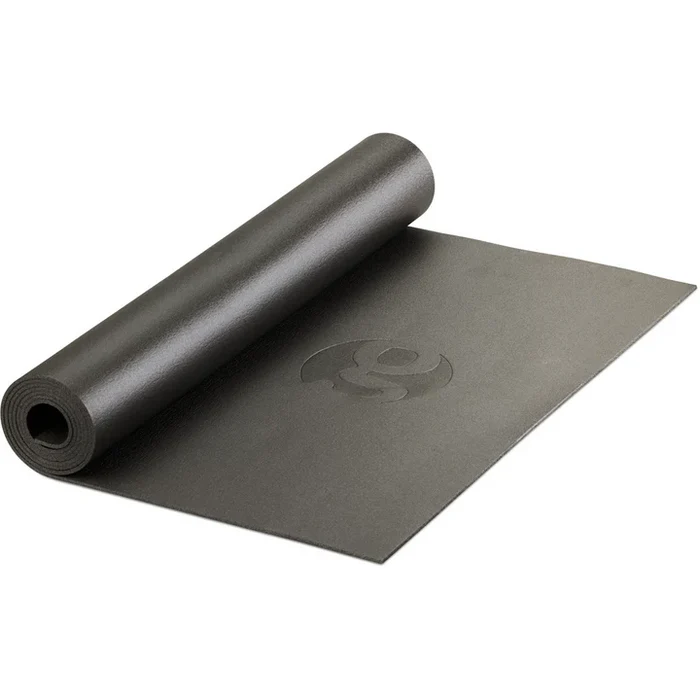
The Gossamer Gear Thinlight Foam Pad is a closed-cell foam pad available in 1/8" thickness, with an estimated R-value of 0.5. Use it for protection and additional insulation from cold ground when paired with an inflatable pad, or keep it handy for on-trail and in-camp lounging.
Standard CCF Pads
Standard CCF pads (10 to 15 mm, R-value 2 to 3) are valued for reliability (they can’t deflate!), which makes them popular among alpine bivy users on rocky terrain. Inside a bivy, they occupy less volume than inflatables. But they are bulky, high-quality foams (e.g., Evazote) are heavy, and comfort is limited.
Example: Evazote EV50 13 mm

Genuine EVAZOTE EV50 foam (13 mm) is a high-performance closed-cell foam known for its fast recovery and long lifespan. It’s often used in backpacks and sleep pads, the 13 mm thickness is ideal for hip belts, shoulder straps, and structural pack parts
Folding Accordion Pads
Accordion-fold construction reduces packed volume (relative to standard CCF pads) with nesting cells when folded. Their dimpled patterns trap heat, increasing warmth per weight. R-values typically range from 1.5 to 2.5, and they are lighter than conventional Evazote pads because of both their physical design and lower-density foams (but their lighter foams are more subject to compression damage with use). In bivy systems, the accordion structure resists slippage a little better than smooth foam.
Example: Therm-a-Rest Z-Lite

The iconic sleeping pad for long-distance hiking.
- puncture-proof
- inexpensive
- durability (resistance to compression)
- comfort on hard ground
- warmth (R-2)
Rolled Ridge-Cell Pads
Rolled ridge-cell pads use a ridged surface that traps warm air (R-values of 2 to 3), similar to accordion pads. They are more durable (because they are usually made with denser foams) and thus resist long-term compression better than lightweight accordion foams. In bivy systems, the ridges also reduce pad slippage compared to smooth rolled foams. They must be rolled, so they are bulky to pack.
Example: Therm-a-Rest Ridgerest
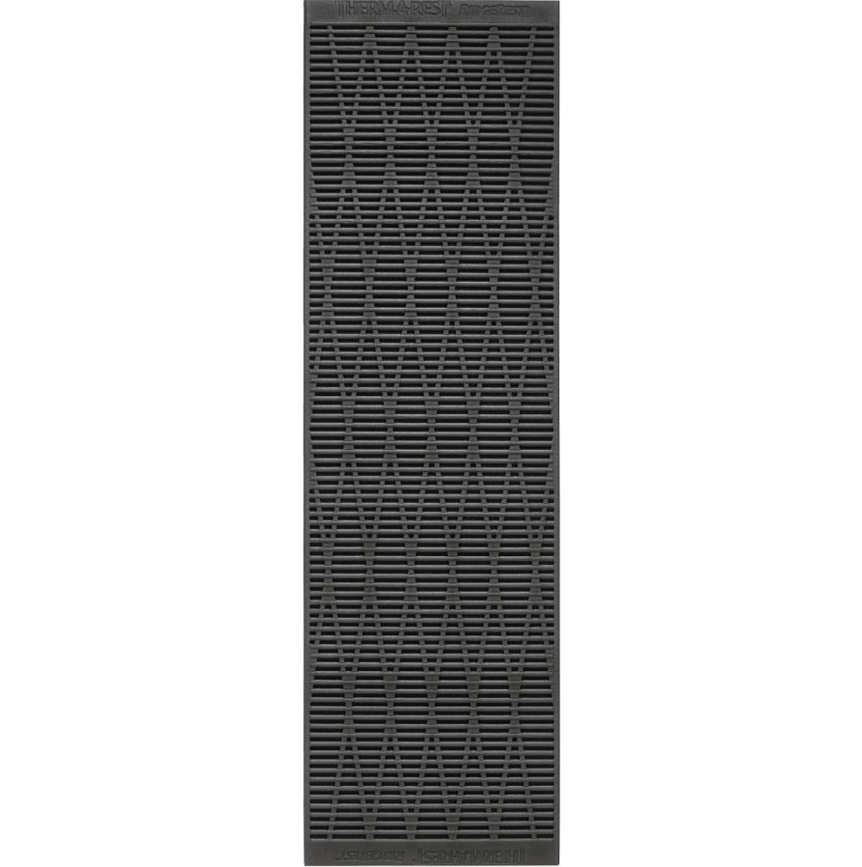
The Therm-a-Rest RidgeRest Classic is a simple, rugged closed-cell foam sleeping pad, with no valves, no leaks, and built to last. Its ridged foam surface helps trap warmth (R-value ≈ 2), making it useful both as a stand-alone pad in mild conditions or as an insulating layer under an air mattress.
Inflatable Pads
Self-Inflating Pads
Self-inflating pads combine open-cell foam with air inflation. When the valve is opened, the foam expands and the pad partially inflates, with a few breaths finishing the job. Typical thickness is 1 to 2 inches (2.5 to 5 cm) with R-values of 2.0 to 3.5. Their hybrid design provides limited insulation even if punctured, making them more forgiving than air-only pads. Compared to modern air inflatables, they’re thinner (so they take up less interior volume inside a bivy sack), provide a more stable sleeping platform, and are less prone to convective heat loss. They’re usually built from more durable (but heavier) fabrics, and because foam is the insulating material, they are bulkier than air-inflatables to pack (but less bulky than closed-cell foam).
Example: Therm-a-Rest Trail ProLite

A hybrid pad that incorporates features of modern-day inflatable pads (like thickness and comfort) with the benefits of traditional self-inflating pads (like a foam core and more durable construction).
- thicker and warmer than traditional foam-core self-inflating pads
- relatively heavy for the warmth it provides
Inflatable Air Pads
Inflatable air pads provide the highest comfort-to-weight ratio of any pad type. With R-values ranging from ~2 to 7+ (depending on reflective layers and thickness) and 2 to 3+ inches (5 to 8+ cm) of cushioning, they offer high levels of comfort (particularly for side sleepers). They also pack down very small, making them appealing to bivy users with limited pack volume. However, they are prone to puncture (which eliminates both comfort and insulation until repaired), their thickness reduces usable space inside a bivy sack, and can feel wobbly or unstable. Lightweight fabrics also increase the risk of abrasion and puncture, making them impractical for use outside the bivy sack without a ground cloth.
Example: Therm-a-Rest NeoAir XLite

The Therm-a-Rest NeoAir XLite NXT is a 1-person mummy air sleeping pad with Triangular Core Matrix construction, ThermaCapture insulation, 3 in. thickness, 4.5 R-value, WingLock valve, multiple size options, and a listed Regular weight of 13 oz.
Combining Pads
Combining pads can improve warmth, comfort, and redundancy. The classic pairing is a thin closed-cell foam pad with an inflatable air pad. While common in tents, this setup is tricky in bivy sacks: two pads inside often slip against each other, and the confined space makes constant re-adjustment frustrating. A practical alternative is to place the inflatable inside the bivy and the foam pad outside. This protects the bivy floor from abrasion but reduces system insulation and exposes the foam pad to moisture and wear.
Pad Placement in the Bivy
Pad placement in a bivy sack forces a trade-off between space and protection. Placing the pad inside keeps it aligned with the sleeper, reduces slippage, and shields it from abrasion. However, it reduces interior volume. Placing the pad outside preserves interior space but increases the chance of abrasion, puncture, and pad shifting. All pads absorb moisture when exposed to wet ground (yes, even so-called nonabsorbent CCF pads and pad fabrics), and quilt users lose the ability to seal drafts since the pad is no longer integrated. The practical takeaway: inside placement works best for ultralight inflatables, while outside placement is only viable for more durable foam pads.
Integration with Quilts
Integration with quilts adds another layer of complexity to bivy systems. Because quilts lack underside insulation, the pad must provide all of the ground-side warmth. In bivy sacks, narrow pads (20 inches / 51 cm) are often the only fit, but for sprawling and high-movement sleepers, they seal less effectively than wide pads (25 inches / 64 cm) with quilts. Foam pads further reduce integration effectiveness compared to inflatables, which seal better with quilt pad straps. And when pads are placed outside the bivy, quilt integration fails entirely since the quilt can’t anchor to the pad. The result is reduced warmth and draft control, making pad choice even more critical for quilt users in bivy systems.
Sizing Considerations
Sizing considerations play a bigger role in bivy systems than in tents. Torso-length pads (~48 inches / 122 cm) save weight but in cold temperatures, require supplemental insulation under the legs, often using a backpack or spare clothing. Full-length pads (~72 inches / 183 cm) eliminate those compromises but can crowd the limited interior space of smaller bivies. Width matters too: the standard 20-inch (51-cm) pad is usually the safest fit, while wider pads (25 inches / 64 cm) are better for quilt integration but may not fit well in many bivy sacks. For summer use, torso-length plus supplemental insulation is often sufficient, but in cold conditions, a full-length pad is more reliable for preventing lower-limb heat loss.
Thickness and Comfort
Thickness and comfort come with more trade-offs in bivy sacks than in tents. Pads thinner than 2 inches (5 cm) often feel a little unforgiving on rocky terrain, especially for side sleepers. Pads thicker than 3 inches (7.5 cm) add comfort but consume too much interior volume, pressing the bivy fabric against your bag, restricting airflow, and increasing the risk of condensation. The practical sweet spot for most bivy users probably lies in the 1.0 to 2.5 inch (3 to 6 cm) range, balancing comfort with livability inside the sack.
System Examples
Choosing a pad system for bivy use requires striking a balance between durability, comfort, warmth, and livability. Here’s what I use the most:
Alpine Bivy System
For trips where I know I’ll be sleeping on rock, I want a more durable (puncture-resistant) pad without giving up too much comfort.
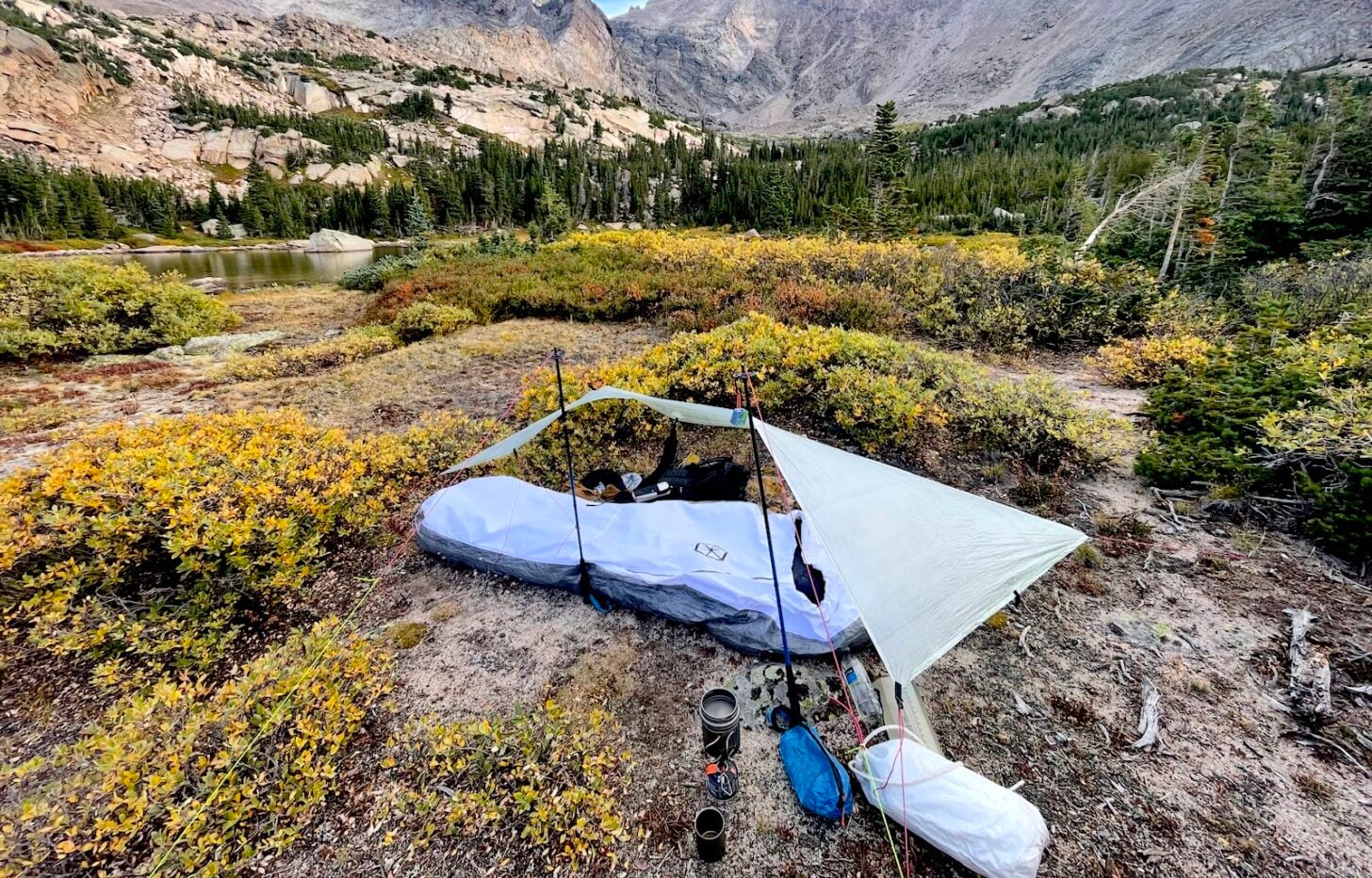
My alpine system is a Samaya Nano Bivy sack combined with a Sea-to-Summit Pursuit self-inflating pad (I used to use an Evazote pad in this system, but those days have passed). The Samaya bivy has limited room inside, so I opt for a thinner (but comfortable enough) 1.5-inch thick pad with enough durability for sleeping in rocky environments.
- System Strengths: simple bivy sack combined with a durable, low-volume pad.
- System Limitations: pad weight and bulk.
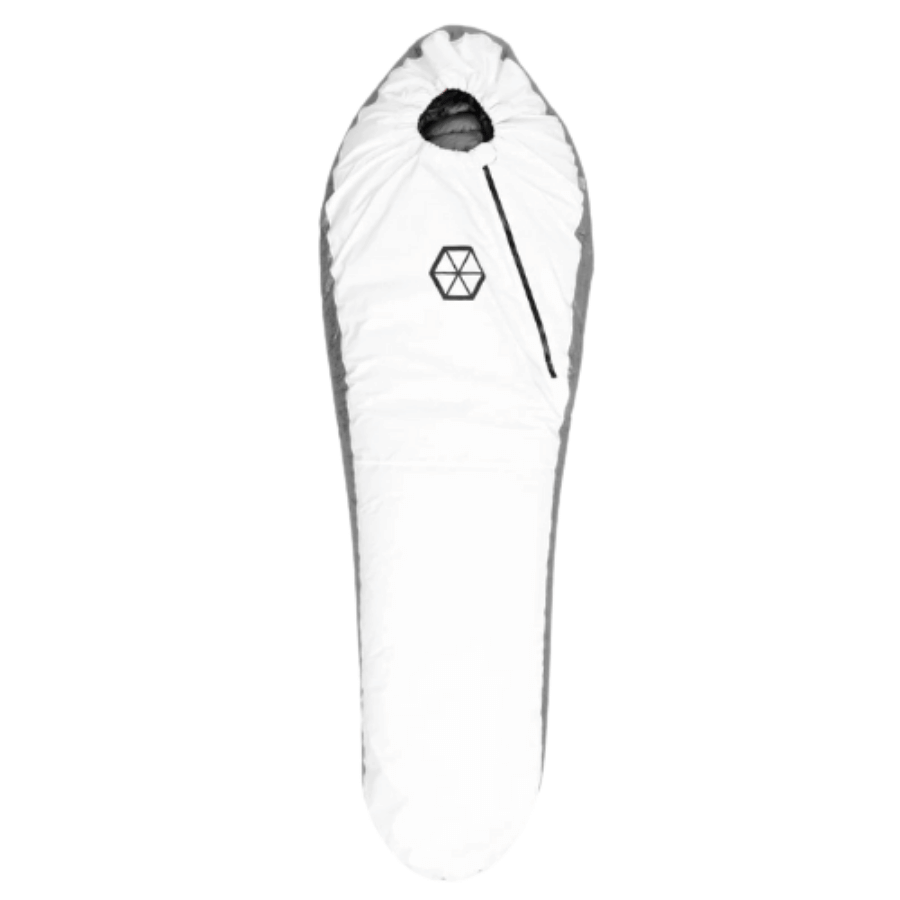
The Samaya NANO BIVY is a 235g ultralight bivy sack featuring Dyneema Composite Fabric floor (20,000mm waterproofing) and 3-layer Nanovent membrane walls (10,000mm waterproofing, 40,000g/m²/24h breathability). It offers 4-season protection with fully taped seams and a water-repellent YKK AquaGuard zipper, designed for minimalist mountaineering and emergency shelter during alpine races.

The Sea to Summit Pursuit is a self-inflating sleeping pad with 5 cm Horizontal Delta Cored foam, an XPEL multi-function valve, recycled solution-dyed 20-denier fabric, ASTM-tested R-value of 3.0, and listed weights from 21.3 oz to 36.9 oz.
Camping Comfort Bivy System
For maximum comfort, I use a voluminous bivy sack (Big Agnes 3-Wire Hooped Bivy) combined with an insulated inflatable air pad (Sea to Summit Ether Light XR).
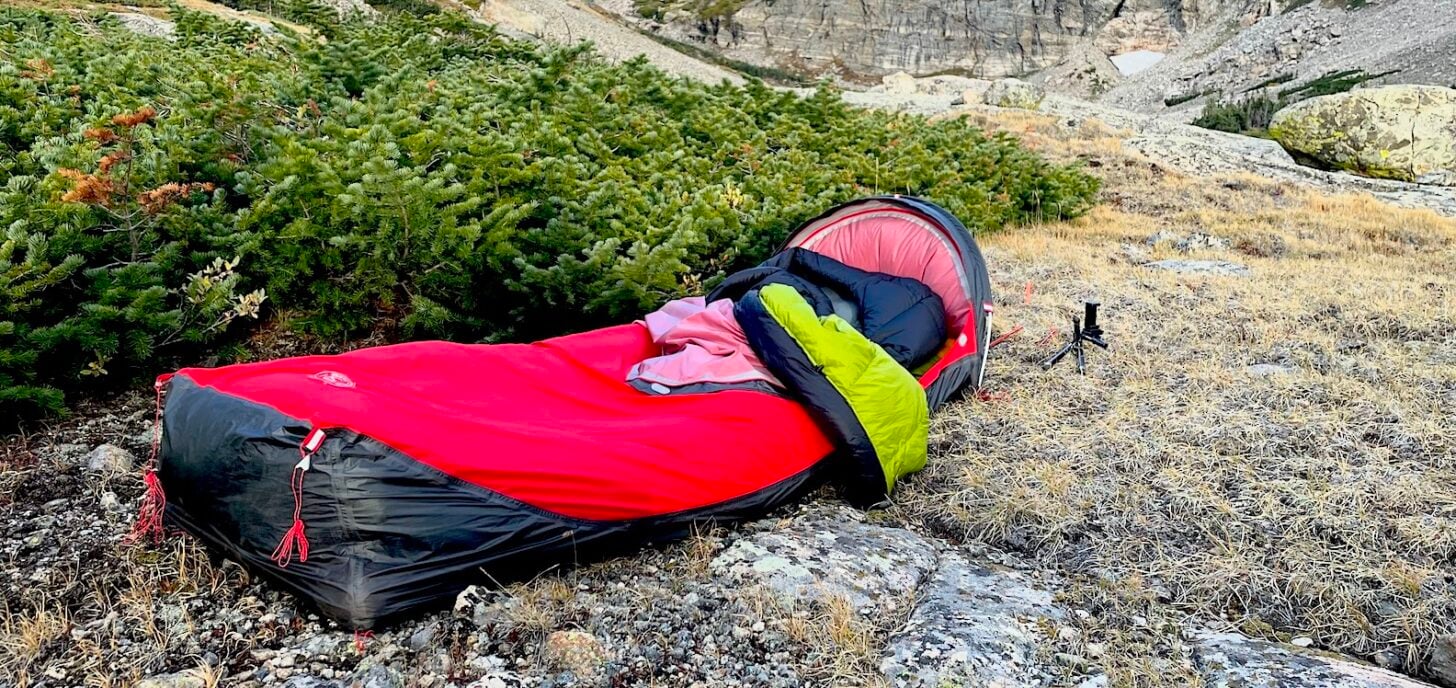
The Big Agnes bivy gets a little bit tight with a wide (25-inch) pad, so I opt for the Sea to Summit pad because it’s an “in-between size” (22 inches wide).
- System Strengths: roomy, bug-resistant bivy sack combined with a comfortable pad.
- System Limitations: bivy bulk, setup requires a pole and a couple of stakes.

Oversized volume for large pads, larger people, or winter sleeping bags. Easy-entry exit and ventilation options with a fully-retractable top. Storm window at head end can be operated from inside to control ventilation and views. Three-stake pitch with overhead pole improves livability and breathability.
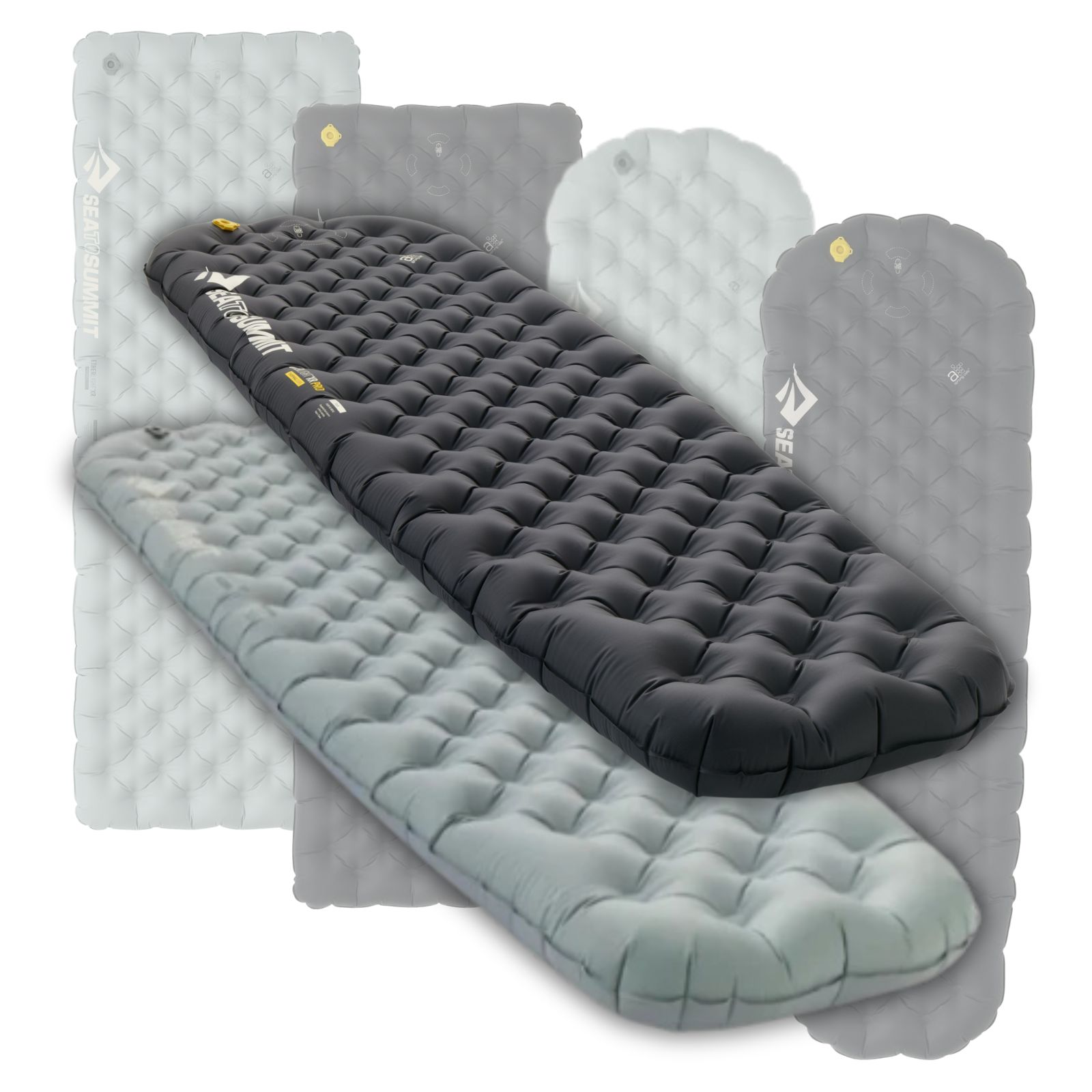
The Sea to Summit Ether Light XR Insulated ASC Sleeping Pad is an insulated air pad with Air Sprung Cell construction, ThermalCore insulation with a suspended TRM reflective layer, 10 cm thickness, 4.1 R-value, XPRESS valve, integrated pump sack, and 470 g Regular weight.
Minimalist Bivy System
When I’m bivy sack camping with a tiny (30-L) backpack, the packed volume of the pad is the limiting factor. So, I opt for a minimal-volume pad (e.g., Nemo Tensor Elite) and the lightest bivy sack that can accommodate it without compressing the loft of my quilt – a Mountain Laurel Designs eVENT Soul Bivy.
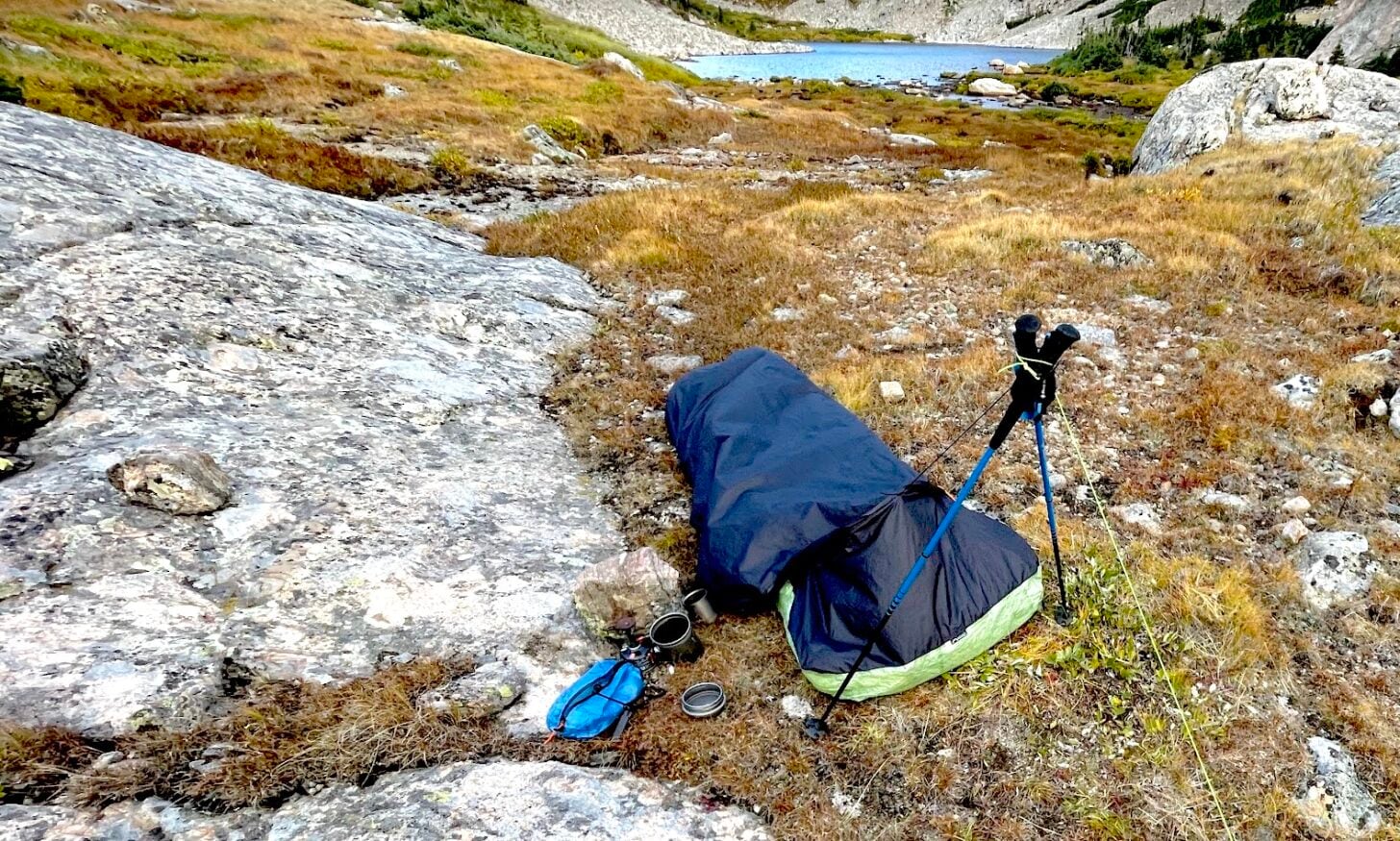
- System Strengths: low weight and packed volume
- System Limitations: narrow pad, bivy sack could be a little lighter.

The Mountain Laurel Designs eVENT Soul Bivy is a fully enclosed, three-layer bivy featuring eVENT waterproof/breathable ripstop upper fabric and a 1.3 oz 20d Pro SilPoly floor with >3,500 mm HH rating; it weighs ~11 oz (310 g) in medium and includes a full‐width waterproof zipper, overhead hang loop, hang loops at corners, and a wire hoop that holds the upper fabric off the face to reduce condensation.
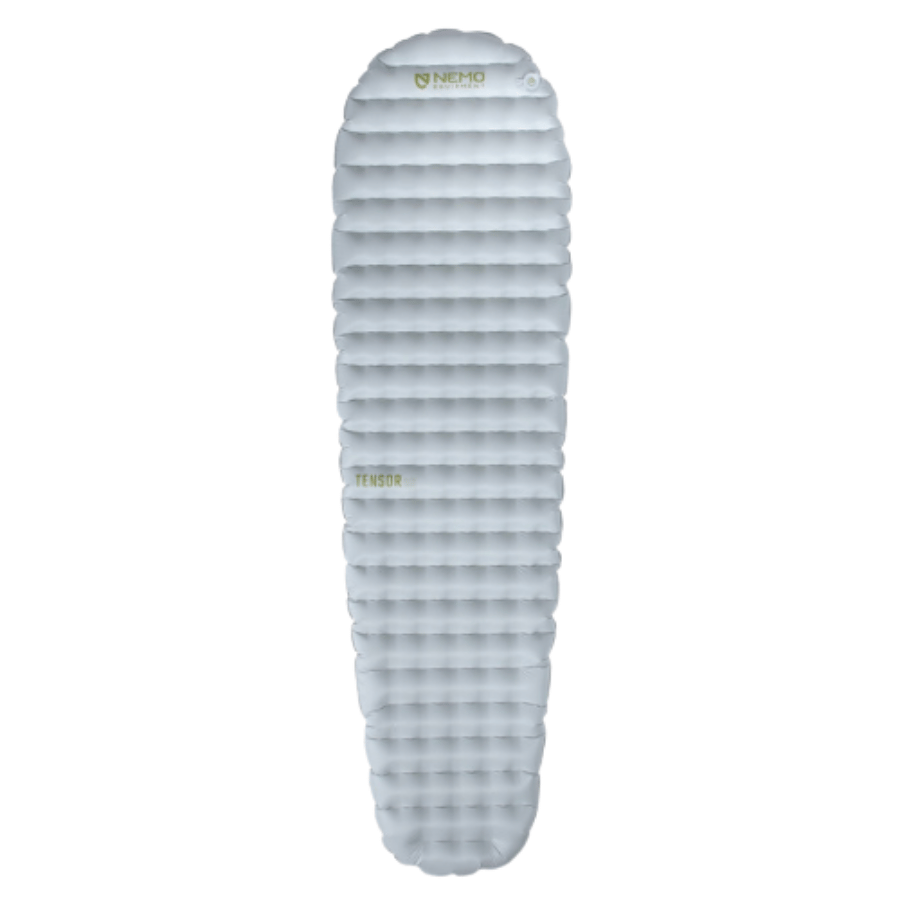
The NEMO Tensor Elite Mummy Sleeping Pad is an insulated mummy air pad with Apex baffle construction, 10D Cordura nylon ripstop fabric, single-layer Thermal Mirror film insulation, 3 in. thickness, 2.4 R-value, Laylow valve, and 8.5 oz / 240 g Regular Mummy minimum weight.
Summary
The bivy system magnifies the consequences of seemingly small decisions about “which pad to use”. Consider your pad as an integral part of the bivy system, instead of a standalone item – so you can maximize gear system efficiency and performance and minimize your frustration in the field.


Discussion
Become a member to post in the forums.
Companion forum thread to: Sleeping pad systems for bivy sacks
Sleeping pads play an outsized role in bivy systems. This article explores how pad type, size, and placement affect warmth, comfort, condensation, and integration – helping you choose pads that maximize efficiency and livability in confined bivy shelters.
Using a small pad to fit into a bivy is one approach, but isn’t the cause of the problem that bivies are too small?
Wouldn’t a more direct solution be to insist on a bivy that is large enough for a modern sleep system?
I went for an overnight this past weekend and used the following setup: An old Duomid tent (which is basically size of a solomid xl), with a 1/8 pad under a Bristlecone 6′ wide bivy, with my 25″ wide regular length Nemo all season and 68″ wide Tanager inside it. The tent tarp was soaked with condensation and the footbox of my bivy and bag were both wet. I can’t tell if that was because I pressed against the tarp or if the airflow was limited between bag and bivy or both.
I didn’t really have to set up the tent because conditions were good, I was just practicing the combined setup. Now I wonder how wet the bag and/or bivy would have been if outside and exposed.
I guess I just need to just use my 20″ Nemo trail or Therm-a-rest Z-Sol pad for my bivy system and use my 25″ pad for my comfort system with my double wall tent.
Bill – yes, that seems obvious to me as well. We are putting together a market survey of bivy sacks, and it’s shocking to me how few of them accommodate air-inflatable pads that are 3+ inches thick without loft compression of the bag. Or maybe it’s not shocking, and the bivy sack market is just slow to catch up to current trends in pad use.
Looking at bivies, few gave actual widths. Rather they gave the circumference. I think I can understand why, but it does make it a little hard to vision, at least for the novice. I settled on the HMG Splash, partly because they gave me the figures that I wanted. The large is 27″ wide at the head end, tapering down to 20″ and it’s 78″ long. About the same size and taper as my Thermarest mummy pad. With 9″ sidewalls and 28″ high at the head, 21″ at the foot, I still have the full width while lying on a 3″ pad with room to move my arms and legs. The pad helps the Splash keep its shape. A little more effort I think than a minimalist bivy like the Samaya.
Moving up in size would be the S to S Escapist, though I’m not sure how it’s actually categorized.
Pad(s) outside the bivy is the way I go. Not a quilt user so the integration with the pad is not an issue. CCF on the bottom, self inflating on top.
Im heading out in the Adirondack Mountains this week for 2 nights. Will be using my MLD eVent Soul bivy with Nemo Switchback pad. The pad will be on the ground and my bivy on top of it. I sleep with a quilt. Overnight temps will dip to 30°F, possibly a few degrees less since will be camping near lakes in the mountains. Probably will use MLD Spirit 28° quilt.. but contemplating bringing the 20° EE synthetic quilt instead. It will be a last minute decision for me.. but the pad and bivy are no brainer.. or should I use my air pad???
I think at 30F I would start to feel cold if my CCF pad was outside my bivy sack, and right on the edge if it was inside…but wind and ground temp probably play a role as well.
just get a big enough bivy
Therein lies the heart of the problem – there just aren’t that many out there that can accommodate thick inflatables without compressing the loft of a 3-season bag.
Maybe Dave is thinking of something like this?:
https://bivysack.com/shop/ols/products/bivysack-two-person
EDIT: That should be big enough. Now we just need a WPB top to fit the rest of Ryan’s recent posts on the topic of alpine bivies.
There are larger bivies. They’re called tents.😁
27- 30°f overnight temps. Daytime temps sunny and hi 50s.. these 2 low overnight temps are first time for this fall.. so ground will not really be that cold yet. I think
Plans changed. Going to the Catskills for 2 nights, heading up there tomorrow morning. Overnight Frost warning in affect for Wednesday and Thursday with a low of 28°F.. Winds 6 – 10 mph with gusts to 21 mph.
So 20° quilt its. “Winter is coming”
Become a member to post in the forums.