


Introduction
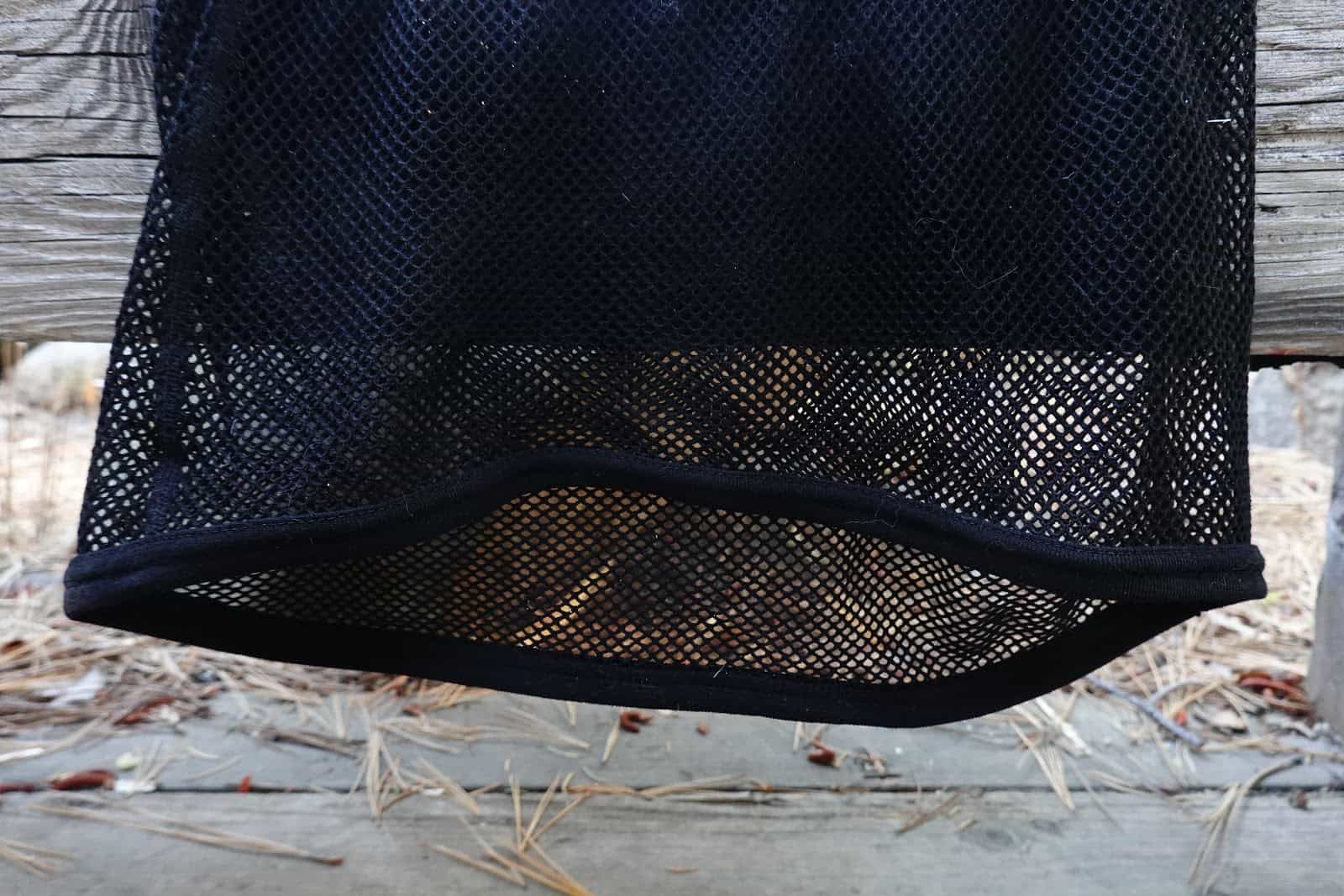
Brynje (pronounced brin-ya) is a Norwegian company specializing in base layers with an open-weave construction (as opposed to a traditional, fine-knit construction). In an open-weave (“fishnet”) construction, perspiration vapor can be rapidly transported to outer layers. This is In contrast to solid knit construction, where perspiration vapor tends to (first) condense onto the fibers and then must be “wicked” to the outer layers.
The idea is that open-weave fabric dries faster, breathes better, and offers a higher insulation-to-weight ratio than traditional base layers. Brynje also claims that its woven products are more durable than conventional base layers.
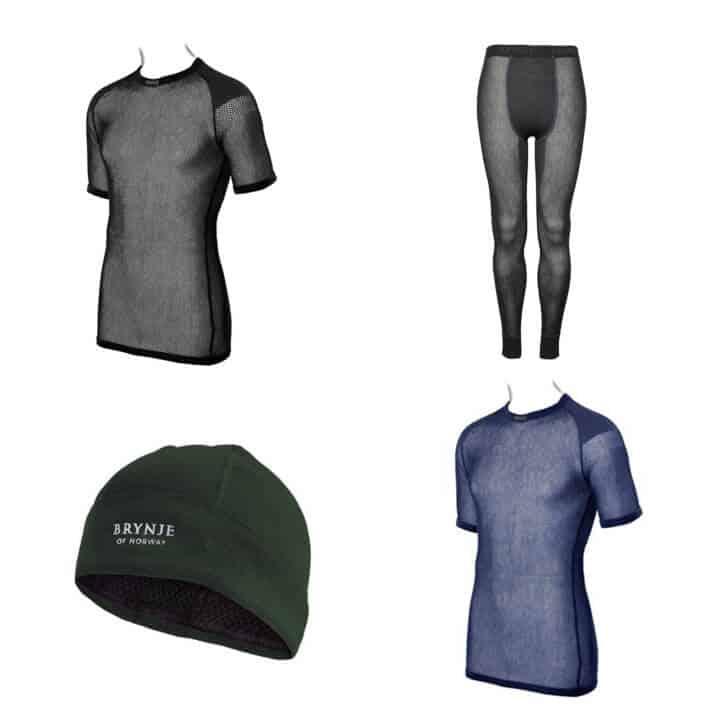
Brynje’s products come in a range of designs and material blends. For this base layers review, I got my hands on four products:
- Unisex Wool Thermo T-Shirt Base Layer with Inlay
- Unisex Wool Thermo Light Longs Base Layer with Inlay
- Unisex Super Thermo T-Shirt Base Layer with Inlay
- 70 Gram Wool Hat
At this point, since nomenclature can sometimes be confusing, it’s important to note that:
- Wool Thermo is a blend of (predominantly) merino wool and nylon (for durability).
- Super Thermo is a polypropylene fabric (lowest water absorption).
- Inlays are solid fabric panels that have been sewn into the shoulders of torso garments (for more comfort under a pack strap) and into the crotch panels of leggings (presumably, for some measure of modesty).
Together these products form a complete base layer sleep system (minus socks) and represent a well-rounded sampling of Brynje’s design aesthetic, manufacturing quality, and material choice.
Features and Specifications
Features
- Wool Thermo T-Shirt
- Open-weave mesh fabric
- Wool/synthetic blend
- Solid knit inlay at shoulders
- Long cut falls well below the waist
- Drop hem (in addition to long cut)
- Snug, athletic fit – very stretchy
- Unisex
- Super Thermo T-Shirt
- Open-weave mesh fabric
- Synthetic
- Solid knit inlay at shoulders
- Drop hem
- Snug, athletic fit – very stretchy
- Wool Thermo Light Longs (leggings)
- Open-weave mesh fabric
- Wool/synthetic blend
- Solid knit inlay at crotch and knees
- Elastic bands at waist and ankles
- Snug, athletic fit – very stretchy
- Unisex (no fly)
- 70 Gram Lined Hat
- Open-weave mesh liner
- Knit wool/synthetic blend shell
- Extra fabric available for pulling down over ears and neck
- Snug fit, slightly stretchy
Specifications
- Wool Thermo T-Shirt (size medium)
- Weight (claimed): 3.9 oz (110 g)
- Weight (measured): 4.2 oz (119 g)
- Material: 80% merino wool and 20% polyamide
- Fabric: knit, 3/8 in (1 cm) open-weave mesh, 3.7 osy (125 gsm)
- Super Thermo T-Shirt (size small)
- Weight (claimed): 3.9 oz (110 g)
- Weight (measured): 4.0 oz (113 g)
- Material: Schoeller® Polycolon® synthetic yarn (polypropylene)
- Fabric: knit, 3/8 in (1 cm) open-weave mesh, 4.1 osy (140 gsm)
- Wool Thermo Light Longs (leggings) (size small)
- Weight (claimed): 5.2 oz (150 g)
- Weight (measured): 4.2 oz (119 g)
- Material: 80% merino wool and 20% polyamide
- Fabric: knit, 3/8 in (1 cm) open-weave mesh, 3.7 osy (125 gsm)
- 70 Gram Lined Hat (size large)
- Weight (claimed): 2.5 oz (70 g)
- Weight (measured): 2.4 oz (68 g)
- Material and Fabrics:
- Shell: solid knit, 80% merino wool and 20% polyamide
- Lining: knit, 3/8 in (1 cm) open-weave mesh polypropylene Super Thermo Mesh
Review Context
Clothing in the outdoor industry seems susceptible to hard-to-prove, occasionally outrageous claims. Just recently, Smartwool released Intraknit, which they claim is “the biggest innovation in apparel manufacturing in 200 years*.”
Bold talk – but representative of the kind of hyperbole the outdoor industry seems to reserve for apparel. Brynje is a little less extreme with their advertising copy. But they still claim that their open-weave concept dries faster, is more robust, and provides the same warmth for less weight than solid knit base layers.
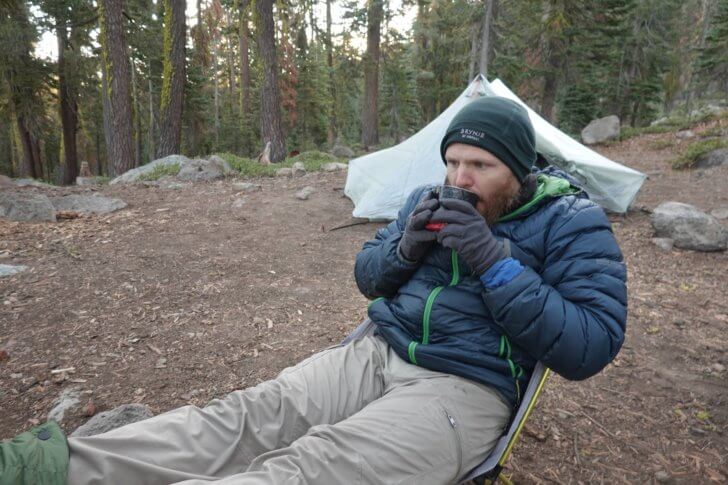
I tested these claims as well as I could outside of laboratory settings. Like most serious backpackers, I’m a long-time user of base layers. I tend to hike in them in addition to sleeping in them. I hike hot, so I like the breathability and comfort that a base layer affords as a primary hiking garment.
In 2012 I completed a thru-hike of the Appalachian Trail while hiking and sleeping in Patagonia’s synthetic Capilene Cool base layer system (at the time it was called Capilene One). Since then, I’ve completed a few more thru-hikes and dozens of shorter trips in Smartwool and Icebreaker base layers.
I’m a fan of wool or wool-blend base layers. But apparently, my sweat is slightly acidic, and when combined with pack-strap abrasion and bushwhacking, thinner wool knit garments tend to rot off my body within a few months of heavy use. I wish I had pictures of the lower back, belly, and underarm holes in all my merino base layers, but my wife has permanently banished these offensive items of clothing from our cabin.
So, while I was interested in testing Brynje’s warmth, comfort, and fast-drying claims, I was particularly excited to see how the products held up over a long period of backcountry use. I tested these four garments in various configurations and situations over a year of sleeping and hiking – mostly in alpine zones in California and Montana.
*Note – this claim initially appeared on a Smartwool Facebook advertisement, and seems to have disappeared in the weeks since I first came across it.
Commentary
Wool Thermo T-Shirt (size medium)
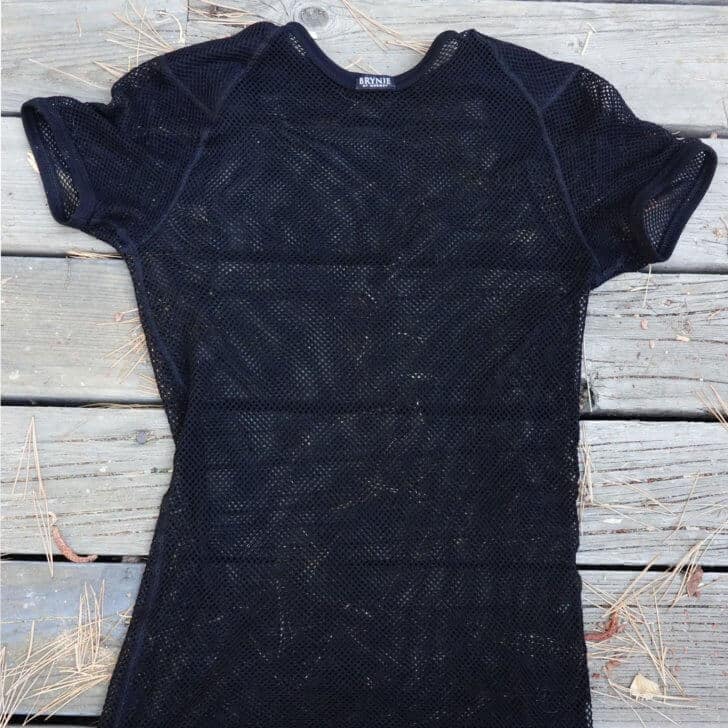
The Wool Thermo T-Shirt is Brynje’s mid-weight mesh base layer. It also comes in long-sleeved and women’s-specific versions. The women’s version has a large solid knit front panel for modesty.
Indeed, this is not necessarily the base layer you want to be hiking in without anything covering it. The mesh pores measure 3/8 in (1 cm) in diameter – which is plenty large enough to show some skin. So maybe save Brynje products for sleeping, layering underneath other garments, remote expeditions, or, if you are feeling saucy, western Europe.

The fit is snug. My body type (5 ft 6 in / 168 cm, and an athletic 165 lb / 75 kg) hovers between needing small and medium sizes, depending on the product’s cut. For Brynje, I needed mediums. If you are a border-line size, I’d recommend choosing the larger one.
Although snug-fitting, the Wool Thermo T-shirt has plenty of stretch. The result is a form-fitting garment that is soft against the skin. The double-stitched seams are flat, and they never chafed or rubbed while wearing a pack. Thicker, solid knit inlay panels in the shoulders ensure that the mesh doesn’t chafe against the shoulders while wearing a pack.
The Wool Thermo T-Shirt features a long cut – it might be the longest-cut base layer I’ve ever used. I like this design element. I want my layers to stay in place during high-exertion activity, particularly my base layers. The Wool Thermo T-shirt’s hem falls well below the hips, allowing it to securely tuck into other base layers or hiking pants (or skirts, or kilts).
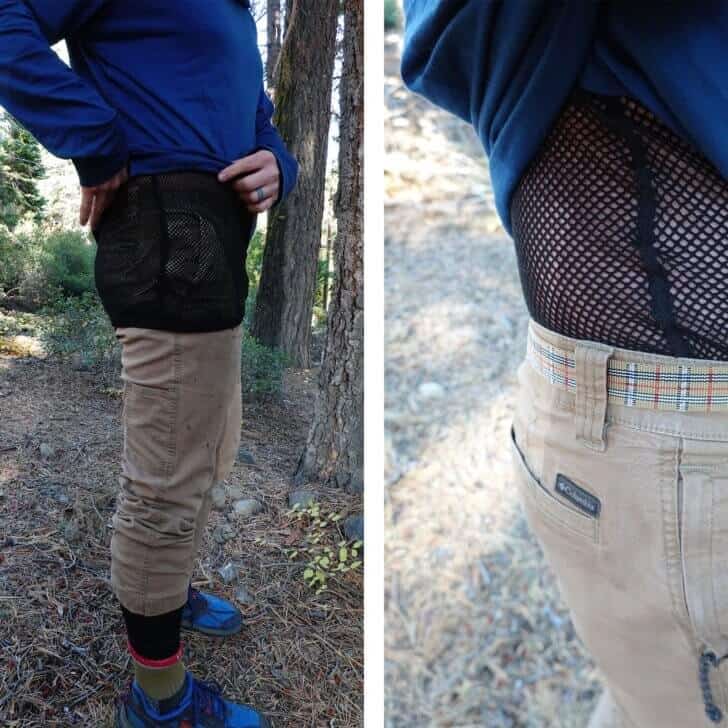
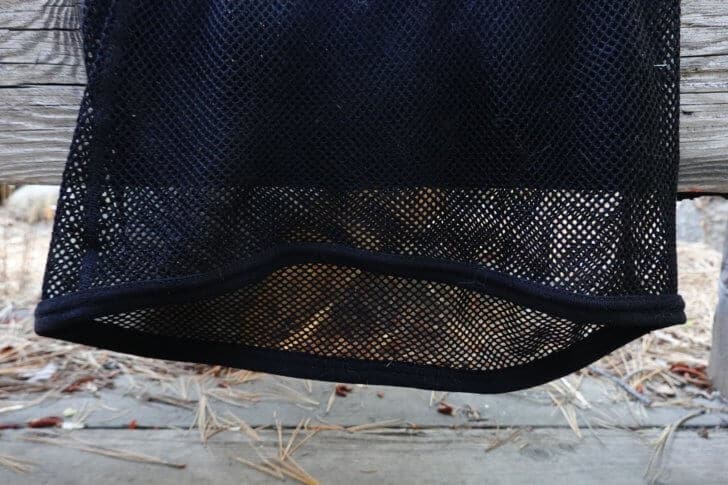
The garment has a drop hem in addition to its extended cut – given all that, I think you’d be challenged to feel a draft while wearing this layer as a result of the hem riding up.
Member Exclusive
A Premium or Unlimited Membership* is required to view the rest of this article.
* A Basic Membership is required to view Member Q&A events


Discussion
Become a member to post in the forums.
Fishnet base layers really work.
Back in the day (late ’70s) I had a pair of all wool Norwegian fishnet underwear that I used for Nordic ski patrolling work – until my wife shrunk them beyond hope by putting them in a dryer after I had clearly told her NOT to ever do that. She forked over the money for a new pair that I laundered myself from then on. That was a lesson for both of us and from that day until this I do ALL my own laundry, thank you very much.
Her plan worked perfectly! $25 for a lifetime of laundry.
Yeah, one cannot help wondering …
Cheers
Hi Eric,
Your tale about the shrunken fishnets reminds me of a very similar story. In the 70s I was a member of a climbing club, and at that time was single and sharing a house with another guy from the club and his girl friend. The guy had been a professor in Switzerland and brought back with him some Swiss wool long underwear (not fishnets). They were very nice, very expensive, and unavailable in the US. After a climbing trip, and without discussing it with him, his girlfriend washed and dried a whole load of our dirty stuff, including the Swiss long underwear. When the things came out of the dryer, we all were astonished to see that the Swiss underwear was no shrunk down to the size of Barbie Doll clothing!! The shape and form were preserved exactly, but the scale was now about 1/16th.
John,
Yeah, my better half also shrunk my Norwegian Gen. 1 polypopleyene long johns to the same dimensions.
Shortly before she shrunk my highly prized 1980 US Biathalon Team wool ski hat – given to me by a US Biathelete at the 1980 Olympics. Aaaarrrggghhh! I may have divorced a lesser woman but finding someone as bright, beautiful and fun would have been impossible.
Arthur, As I said above, the is very bright. She did pre-med on a full scholarship in 3 years. Did I mention she was smart? So yeah, maybe she planned all this “shrinkage”. ;o)
As with most of you above, I became acquainted with fishnet in the 70s…cotton fishnet. It slowly became unavailable or fell out of favor for polypro, the new tech fabric. Then about 15 years ago I came across an offering by some obscure online outlet for Brynje polypro fishnet T-shirts at $5 a pop. Needless to say I ordered several and most are still in the bag unopened! For shoulder season and winter wear it can’t be beat for all the reasons discussed above; worn under a grid fleece it’s all I need most of the time while x-c skiing, if the wind picks up then the wind shirt comes out. It’s a fantastic legacy from WWII!
Just for grins I thought I’d check what Decathlon might carry in fishnet and found a ss T made of 46% polypro and 44% polyamide for $24.99, and the holes are large, not fine, as is the case with some cycling shirts.
Hi Jeff,
My Brynje zipneck wool long sleeve shirt has the panels on the shoulders, inside the mesh. I got it about 7 years ago I think.
This link of the crew neck long sleeve clearly shows the shoulder panels too:
https://skimo.co/brynje-super-thermo-shirt?option%5B2343%5D=18083&gclid=EAIaIQobChMIzrK32_Pa5QIV8SCtBh28qQMSEAYYAiABEgLF3fD_BwE
Monty, do you have a link to the Decathlon stuff? I can’t find any.
When I saw the email and clicked through to the review all I could think of was one thing:
That none of you men have had to EVER wear the fishnet underwear of hell after birthing a baby. Ask your wives. They scar you for life. You couldn’t pay me to ever relive that again, it is like PTSD.
Otherwise, great review.
Which is why we NEED female contributions to reviews!
Thanks
I warn against getting the zipneck. I have the Brynje wool zipneck and the neck is very poor. It is made of a double layer of heavyweight solid merino fabric. This makes it very slow drying and poorly breathing, so entirely in contrast to the rest of the shirt.
usually I love zip necks for there versatile, and because I always get cold around the lower neck.
Then there is the fit: the collar is very tall and very tight. The irony is, I have a very tall and skinny neck, so usually I’m trying to find taller collars and narrower ones, but even for me, this collar is to tall.
Due to the zipper and thicker fabric, it is also uncomfortable to wear zipped up.
In short, get the crew neck, even if, like me, you prefer zip neck models and have a tall and skinny neck!
Interesting garment related to this is the Patagonia Mission Peak jacket.
It is a breathable windshields lined with a mesh, slightly thicker than the Brynje baselayers in the front and shoulders.
Hi Andrew,
What is the dark blue hoody you are wearing on top of the Brynje Mesh (second last picture from the bottom)?
Thanks!
I just noticed at our local bike and ski shop, that Björn Daehlie also has wool fishnet baselayer tops, and for better prices.
Become a member to post in the forums.