

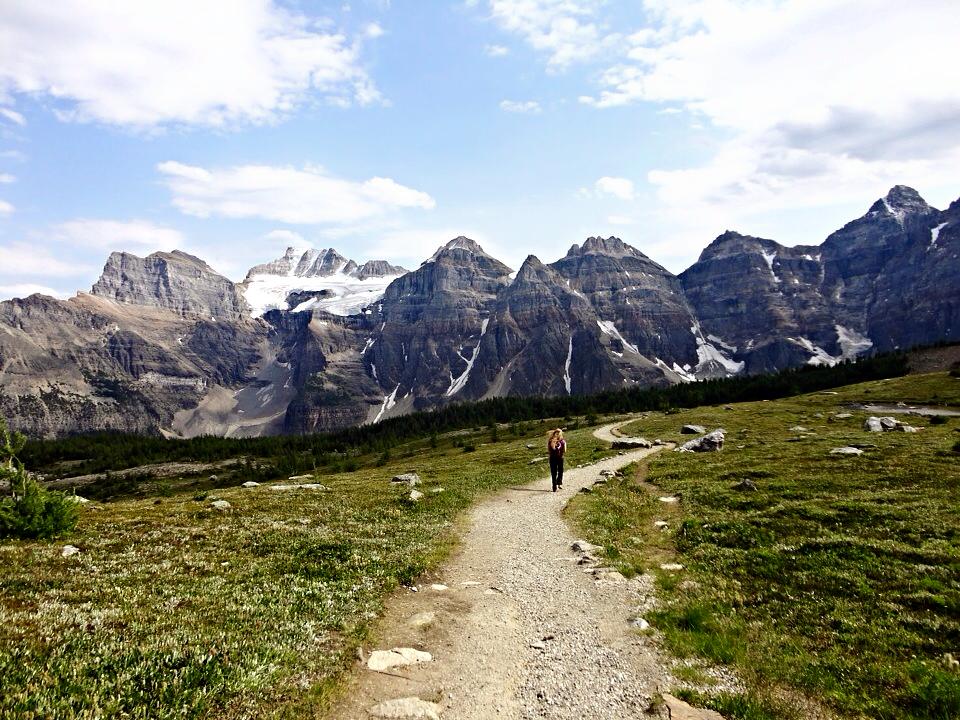
Nine years ago, a friend of mine planned a backpacking trip for twelve hikers and asked if I wanted to go. Though I had been hiking, horseback riding, and camping most of my life, I knew little about logistics of planning a backpacking trip. In September 2007, I took an inexperienced and impulsive leap onto one of Canada’s most challenging and scenic trails.
My first West Coast Trail (WCT) trip, though memorable, was not one a finer example of backpacking skills. Due to inexperience and lack of planning, WCT 2007 was one of the best/worst experiences of my life. Failure is a better teacher than success. From an overstocked pack to poorly suited foot ware, the trip was a learning experience like no other. I broke a foot bone, sprained several tendons, had to borrow trek poles to use like crutches, and met a sports injury doctor who mercifully taped me back together long enough to survive the trail. All in all, I completed the trail because I had some great friends, a couple of trail miracles, a tenacious attitude (which defied common sense), and realized two feet and a heartbeat is the only exit off the WCT.
Years later my planning skills are considered strong by my backpacking companions. Most prefer to let me handle planning details. To my chagrin, I learned "the hard way" so my friends wouldn't have to. This year, I’m planning to backpack the West Coast Trail in British Columbia, Canada…again.
After a decade of trial and error, I will share the twelve crucial points of complex backpacking trips planning to avoid making common mistakes.
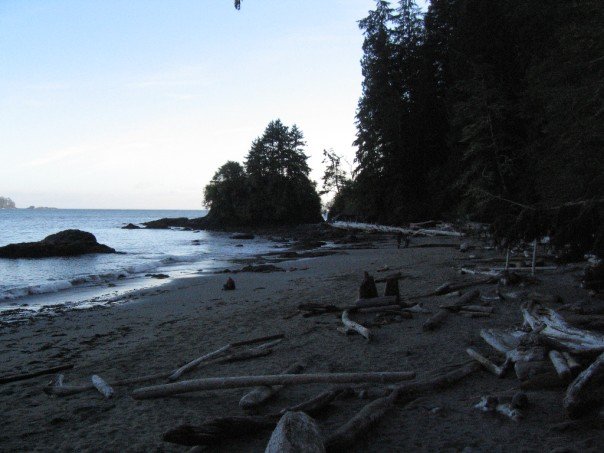
Some people have trust funded travel accounts. Most of us have to budget and plan to head out. My first WCT was a whim; I vaguely knew where I was going. My friends were going, and I wanted to go too. I’d never seen the ocean or been to a rainforest. I loved and hated it. Time has numbed my memory of the bog (less aptly called a rainforest), but white sandy beaches remain engraved in my memory.
I am intentionally choosing to endure the muddy trudging to get to the most beautiful places I have ever seen. I know how bad the conditions can be, I'm mentally and physically prepared for what lies ahead: I could not say the same ten years ago.
A backpacking trip is not the place to determine the trip mates on board are not enjoyable. If in doubt, take some shorter trips with proposed companions. Make sure being in high-pressure situations for several days, is workable for everyone on the trip.
Read on for the full story!
Article Outline
- Lesson 1) Intentionally choose your destination
- Lesson 2) Choose your companions wisely
- Lesson 3) Know before you go
- Lesson 4) Don't lose the schedule but remember it's not infallible
- Lesson 5) Cash is king even in the backpacking world
- Lesson 6) Test your gear
- Lesson 7) Book early
- Lesson 8) You don't know what you don't know, but you can find out in advance and learn
- Lesson 9) If you don't like it at home don't take it backpacking
- Lesson 10: Never neglect your most key piece of equipment: your body
- Lesson 11: Confirm everything
- Lesson 12: Plan your hike, you alone are responsible for your backcountry choices
- Conclusion
# of Photos: 7; Word Count: 2775
Member Exclusive
A Premium or Unlimited Membership* is required to view the rest of this article.
* A Basic Membership is required to view Member Q&A events


Discussion
Become a member to post in the forums.
I’m curious what footwear you found that works for you, given your injuries. Because of the widespread support for trail runners on BPL I tried them, and found them great for day hikes on trails, and truly awful on my feet for longer hikes over rough terrain with a pack. They also weren’t wonderful for a marathon on trail, although passable. My immune-related arthritis issues affect my feet, and I have to have more support than a light mesh expensive “sneaker.” The feet do not get stronger with more time spent hiking, instead they just get more painful.
Right now I’m using a mid and that seems to work ok, so far. Did you find something between lightweight and full leather that works well?
Great article! I enjoy trips much more when I plan them well, and spend less time fiddling with gear and more enjoying the surroundings. I think your advice is spot on, especially for those new to backpacking.
Sadly, I struggle finding good for my foot shoes in general. Narrow heels, wide forefoot and nerve damage add up to complications.
My first step was going to a podiatrist and getting a prescription athletic insole. Any shoe feels more custom fit and has appropriate support with a prescription insole. A prescription insole took me from an air cast and crutches to walking in a matter of days.
My physiotherapist worked with my foot. Muscle development and strengthening help support the foot, but the nerve damage is permanent. Immobilizing the injury was my best course of action.
Before testing too many shoes (because it costs a fortune) talk to some experts. I suspect Arthritis is a similar prognosis to my injury: muscle development stabilizes the foot but immobilization is truly the only ‘fix’ because the damage is done.
In general we take our feet for granted, if I had it to do over I would have gone into a physiotherapist to build the muscles before training excessively on them. I went six months after the injury expecting my foot to preform like normal (marathons, backpacking and on my feet several hours a day.) I paid for my trouble with nerve damage. Water under the bridge now, but a younger backpacker/marathoner might benefit from the idea. Prevent the injury instead of trying to cure it.
More to the point of your question though:
For me fit wise an Asics runner is best, they make a few trail runners which I found were too light in the mid and out sole even with a prescription insole. That said, their athletic runners (though lacking enough tread to stick to wet slippery trail) have enough cushion that I’m comfortable so long as I replace them often (3-4 months depending on milage I put on.) The lack of good traction and eventual foot pain put me off using cushiony gym runners on the trail.
I like the midweight Solomon as a midweight option though they are too wide in the heel cup for me. My big struggle in midweight is how much flex is in the ball of the foot. For most people that flex is a good thing, for me it takes the swollen nerve through the narrowed nerve passage, rubbing the bone spur and irritating the nerve. I would say replace mid-weights every 8-12 months. I traded mid-weights out because I couldn’t find a good fit and the flex in the ball of the foot eventually caused pain.
To stop the mid foot flex I moved to a Zamberlan Voiz GT boot. They have a solid shank and almost no flex in the ball of the foot. What Zamberlan did differently was to put in a rocker plate. Instead of having the boot flex across the ball, the entire boot rocks up on the ball of the foot (a rocking chair like motion.) It’s an abnormal stride, but the idea is to save energy by not flexing as many muscles in the foot and leg. For my foot, it prevents movement in the damaged portions. The Zamberlan is a full grain, Goretex boot. I have yet to replace these boots. I have over 1000km on them. I have replaced the prescription insole in them twice in the last ten years.
From what I understand, there are a few manufacturers who use a similar ‘rocking chair’ concept but I haven’t found anyone else who fits my unusual foot shape and has the ‘rocking’ concept in a lighter boot.
The long way around, but the answer is: no, I haven’t found a shoe. For anyone with permanent injury: do what works. Usually that means consulting with a couple of professionals and doing what they reccommend not what is ‘trendy’. My favorite part about my boots is my feet don’t hurt at the end of the day and in the morning they feel fresh.
I’m sure I look bizarre with my 8-12lb base weight and my Zamberlan boots. Contrast of concepts, but it works and I I don’t limp too badly. If medically you need more support for your injuries, train your legs and feet with a physio before throwing on boots and heading down the trail. I make good milage in the heavier boot and keep up with trail runners because I strip my pack down and trained properly to do it.
Lowa used a similar strategy, and it worked well with my old, heavy Banff boots. I believe they refer to it as “Ideal roll-off motion”. Several of their soles offer that feature, and their Speed Hiking models look promising.
https://www.lowaboots.com/about-lowa/lowa-sole-technology
https://www.lowaboots.com/womens/speed-hiking
Would a custom rock plate help stiffen the shoe and form it better to your feet? Here are some custom rock plate options.
http://www.rtpfast.com/
http://www.myfootshop.com/spring-plate-carbongraphite-fiber-insert
https://backpackinglight.com/forums/topic/47713/
Great info Shawn!
Lowa’s haven’t been available in Canada too readily. I hate ordering a boot, pay duty and shipping, only to have to ship them back if they don’t fit. It’s on my list for my next trip to the states.
The custom plate has some potential, I don’t know if it would interfere with my prescription insole but for anyone else who isn’t in a prescription (Karen?) it might be an excellent solution.
For me it’s the imobilization of the joint which I think makes or breaks the shoe or boot. I’m interested to see what Lowa come up with if they are using a rocker system.
I dislike ordering footwear online unless I already have previous experience with a similar model; international ordering in the blind would be even worse. If you find yourself in Seattle, REI usually has a decent selection of Lowa footwear, among others.
:As a culture we are loosing many of the ‘hard’ skills like fire starting and survival techniques due to urbanization. Again a gross generalization but stats say there are children in cities who have never been to a farm or gone camping.”
I agree that many folks are losing many “hard” woodcraft skills or more specifially losing the experiences that teach those skills. Even the Boy Scouts do not spend much time learning how to build fires these days.
Many baby boomers had parents born on farms or ranches. Now most folks live and work in the cities. I took some Boy Scouts backpacking in June and during breakfast one of the Scouts asked me what I was putting in my coffee. I said it was half and half, you know half milk and half cream. Then we started discussing what cream was and where it came from. A few minutes later the Scout’s father disclosed that the Scout was descended from Oregon dairy farmers.
Nick Gatel, what an incredible & moving story. You’ve given me some ideas. Thank you. ? ?
Become a member to post in the forums.