Topic

Newbie Seam Sealing my Moment DW

  • This topic is empty.
Viewing 9 posts - 26 through 34 (of 34 total)
PostedFeb 7, 2014 at 11:47 pm

Hi Franco, my experience is that silicone dissolves better in what Australians call White Spirit ( marketed as a dry cleaning fluid) rather than mineral turpentine ( a paint thinner). There is a lot of confusion over the term White Spirit – I am not talking about a stove fuel.

I have been mixing 300g tubes of silicone in 1500ml of Diggers White Spirit and it dissolves easily in a few minutes in a bucket mixed only with the end of a tent peg.

Diggers have product sheets for mineral turpentine and white spirit and they are different products. It describes White Spirit as "Good solvency for oil, grease, wax, silicone and general dirt".

http://www.recochem.com.au/files/downloads/Cons_Mineral_Turpentine_PDS_Apr11.pdf

http://www.recochem.com.au/files/downloads/Cons_White_Spirits_PDS_Apr11.pdf

I have been re proofing Cordura with 2 coats of a 5:1 mix just dunking the material in a bucket of the mix and then letting it dry over a couple of days. Its quick and cheap. I dont know how long it will last. This mix would be too heavy for tents I suspect. If I did it again I would use a thinner mix for the first coat and then the above mix for the final one. Even so this thick mix seems to really get into the fibres of the material even though there are traces of old urethane one one side. It does not dry sticky.

A link to a thread on which I posted my experiences is:

http://foldingkayaks.org/phpBB/viewtopic.php?f=36&t=1921&e=0

HTH

Chris
PostedFeb 8, 2014 at 7:03 am

I thought I'd mention that hexane works better for thinning silicone than any other solvent I've tried. It works fast and produces a real solution, not just an emulsion. It even dissolves high temperature silicones that, in my experience, won't dissolve in anything else. And it flashes off rapidly so there is no solvent in the silicone while it is curing. The cured silicone has the same properties as it would if it were applied undiluted. I've even thinned silicone to water-thin (1:10) with hexane and airbrushed it onto fabric to achieve a very thin, penetrating coating, and it worked great.

Hexane is easy to obtain on ebay (a liter is about 20 USD right now), but it isn't generally on the shelf in hardware stores. The vapors are nasty, of course, but I'd wager that they're no worse than most other volatile organic solvents mentioned in this thread so far. I use long gloves and a mask with organic vapor cartridges, and work with it only outdoors.

PostedFeb 8, 2014 at 10:13 am

"I thought I'd mention that hexane works better for thinning silicone than any other solvent I've tried."

" I use long gloves and a mask with organic vapor cartridges, and work with it only outdoors."

From Wiki –
"In February 2010, reports surfaced saying that an employee of Wintek Corporation, an Apple contractor in China, a company that manufactures iPhone touchscreen components, died in August 2009 due to hexane poisoning. Hexane was used as a replacement for alcohol for cleaning the screens. Reports suggest up to 137 Chinese employees required treatment for hexane poisoning around the same time. An ABC Foreign Correspondent episode covertly interviewed several women who had been in the hospital for over six months. The women said that they were exposed to hexane while manufacturing iPhone hardware. Apple has since required Wintek and other suppliers to cease using hexane."

I think I'll stick with mineral spirits, or

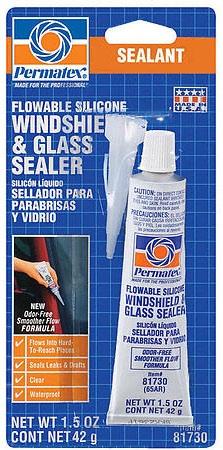
Permatex Silicone
Permatex® Flowable Silicone Windshield & Glass Sealer, ready to apply, with applicator tip.

PostedFeb 8, 2014 at 11:04 am

Thanks for the knowledge, Greg. I'll pass on the dig. Could have wikied TAP but am weak and gave up after looking at MDS from several vendors saying "unavailable" where info wasn't required. Will take down my betting touts. Now that my rank speculation has paid off with scientific knowledge,…if not science. ;)

PostedFeb 8, 2014 at 2:10 pm

I would add a note of caution about using hexane. I don't doubt it works but to say it has the same safety profile as mineral spirit or white spirit is incorrect. It is a much more volatile and dangerous product. Of course with due precautions it could be used but it is much more toxic.

The product sold as white spirit in Australia dissolves silicone easily and well. It is a true solution not a slurry. It produces a water-like liquid that coats fabric easily. It is cheap at $5/ litre. It is widely available here in hardware shops (Bunnings).

The problem is that what we call white spirit is probably not what you call white spirit. The term has different meanings in the UK, the US and Australia. Someone said we are a people divided by a common language. So what the product I am referring to is called it US or UK I don't know. I do know it is not mineral turpentine or mineral spirits though it is similar to that solvent. It is nothing like Coleman fuel. Maybe the data sheet I quoted would help someone track it down.

Chris

PostedFeb 11, 2014 at 9:41 pm

Thanks to Greg and Chris for the correction about hexane. I work around hazardous chemicals all the time and I'm used to respirators, bunny suits, fume hoods, etc. Just today in the lab I spent several hours at the fume hood working with phenol and chloroform. I have the equipment to work safely with hexane, but I see that for many people who lack equipment or experience it presents a risk. I shouldn't have mentioned it.

Viewing 9 posts - 26 through 34 (of 34 total)
Loading...