


It’s that time of year, once again. BPL Staffers are among the most picky and critical backpackers you’ll encounter. Which items lived up to and exceeded their lofty expectations? This isn’t an “Editor’s Choice” or a formal endorsement, just a list of gear we like – and use on a regular basis.
This time around, we asked the staff to include one item related to UL backpacking, one item that relates to another outdoor activity, and one lifestyle item not necessarily related to backpacking, but that they enjoy everyday. The results shed some light on our individual personalities beyond the usual gear junkie facade.
Don’t forget to add your own favorites in the forum below!
| BPL Staff Member | Favorites | ||
| Ryan Jordan | Altra Lone Peak Shoes | Hornbeck Blackjack Canoe | Detachment |
| Will Rietveld | Trail Designs Caldera Keg Cooking System | Vegetable Gardening | Diet and Exercise |
| Roger Caffin | Exped Synmat UL-7S plus Pillow Pump | MYOG Winter Stove | Adept CNC Machining Center |
| Damien Tougas | Rab Xenon | Sole Runner FX Trainer | Apple iPad |
| Dave Chenault | Dimension Polyant DX40 fabric | Daiwa Soyokaze 27SR Tenkara Rod | Unibroue La Fin du Monde beer |
| Ray Estrella | NEMO Equipment Siren 30 Quilt | Therm-a-Rest NeoAir XLite Sleeping Pad | The TrekSta NestFIT Last |
| Doug Johnson | Snow Peak SnowMiner Headlamp | CoMotion Periscope Tandem | The Beach Swing at Cape Alava |
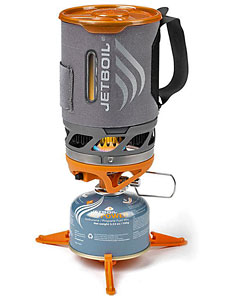
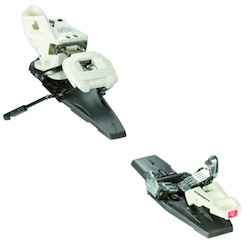
| Daniel Paladino | Jetboil Sol Stove | Dynafit Vertical ST AT Binding | Subaru Rust Bucket |
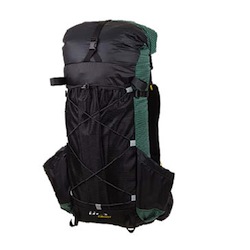
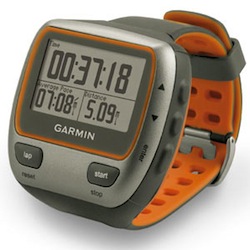
| Kevin Sawchuk | ULA Circuit Pack | Garmin 310XT | A Hot Shower |
Ryan Jordan – Bozeman, Montana
|
|
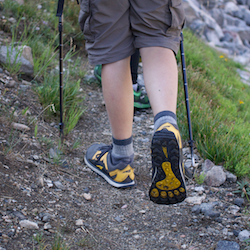
Altra Lone Peak Shoes | I wrote about the Altra Lone Peaks in Considering Minimalist Footwear for Backpacking and touted their benefits relative to so-called minimalist shoes advocated by the running-without-a-pack community. Specifically, I like what they bring to the table for backpackers: a reasonably aggressive sole, a little bit of longitudinal stiffness, and some cushioning, while preserving what I think are two valuable attributes of minimalist footwear: zero differential and maximum toe splay. My son and I live in our Lone Peaks, whether waltzing around town or trekking across a 10,000 foot pass in the Spanish Peaks.
Weight: 11 oz/shoe (Men’s Size 9.5) |
|
|
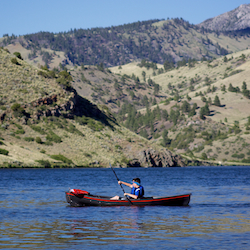
Hornbeck Blackjack Canoe | At twelve pounds, our Hornbeck Blackjack is an absolute joy to paddle. What a far cry from the old days, where the constant clanging of paddle on the gunwale, sore back, and agonizing portages relegated canoeing to one of the lowest forms of outdoor recreation for me. The Hornbeck Blackjack requires so much less effort than a more traditional sit-on-top aluminum canoe that it has completely restored my love for canoeing. Sitting inside the canoe, paddling with a kayak paddle, being able to carry it with my fingertips – and even sailing it with a Wind Paddle sail – what an example of a piece of gear getting out of the way so you can enjoy the natural world around you, like the sound and spray of waves lapping just inches from your elbows while the canoe glides silently through the water.
Weight:12 pounds |
|
|
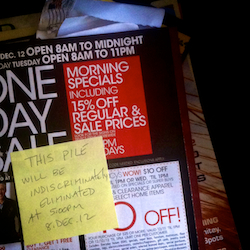
Detachment | As much as I enjoy owning and using cool gear (see above!) I enjoy – just as much – detaching myself from those things that I do not love. Whether it’s unused gear that’s been in storage too long, clutter in our crawl space, time frittered on activities I no longer enjoy, or even junk mail – detaching myself from the obligation required to own or manage those things has given me immense satisfaction through the years. In 2012, new circumstances and intentional choices further increased my detachment from material possessions, awkward relationships, and old time commitments, and I’m looking forward to the opportunities this detachment brings as we move into 2013.
Weight: Depends on your burden… |
Will Rietveld – Durango, Colorado
|
|
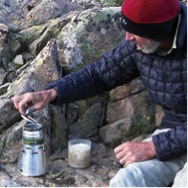
Trail Designs Caldera Keg Cooking System | The Caldera Cone has made cooking with alcohol or Esbit as reliable as canister fuel, even more so when you consider it’s wind protection and heat transfer efficiency. The entire kit weighs just 6.3 ounces, so if you want to go ultralight, this is a must have. The latest version includes some significant upgrades, including a durable Titanium cone connection and cook pot reinforcement. I prefer to use alcohol because its clean burning, but Esbit will boil water in this system in half the time.
Weight: 6.3 oz / 179 g |
|
|
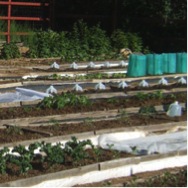
Vegetable Gardening | When I’m not out backpacking and hiking I love to be outside working in the yard and garden. I have been a gardener since I was 10 years old, and perhaps that’s what influenced my career choice. I love vegetables, both growing them and eating them. I grow all the usual stuff, and our freezers and cellar allow us to enjoy organic produce the year around. We also keep our friends and neighbors pretty well supplied too. (Minimal cost, a labor of love, value—priceless!) |
|
|
Diet and Exercise | Paying attention to both has been my mantra since my 20’s. The reward is being trim, fit, and able to pursue my wanderlust. I’m sure most backpackers can relate to that. I don’t subscribe to any particular diet, just whole foods and low fat. (Doesn’t cost any extra; I love being able to keep up with the younger guys; I plan to make it to 90, at least.) |

Roger Caffin – Berrilee, NSW, Australia
|
|
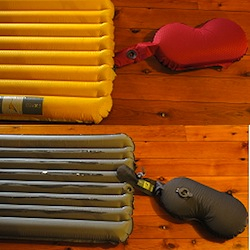
Exped Synmat UL-7S plus Pillow Pump | While labeled ‘short’, this mat is not. It is 163 cm x 52 cm and 7 cm thick (64″x24.5″x2.8″), which is quite long enough for us. It has an R-value of 3.7 – 2.5, depending on inflation. This is much higher than an empty airmat of the same thickness due to the synthetic insulation inside it. I found it very comfortable down to sub-zero conditions (on snow grass), but I have since lost it to my wife. Very sad! It was included in our SOTMSurvey of Air Mats.It should be noted that the combination listed includes an Exped ‘pillow pump’. You see, if you blow up an airmat with your lungs you quickly get a whole lot of water condensed inside the mat. This is seriously ‘not-good’. Instead I use the Exped pillow pump shown in the picture – or rather Sue uses. It inflates the mat quite fast, and then makes a very nice pillow for me later on.
Weight: 15.4 oz / 436 g (Synmat), 134 g / 4.7 oz (Pump), 570 g / 20.1 oz (total) |
|
|
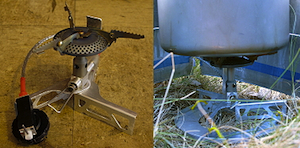
MYOG Winter Stove | Works with standard screw-thread canisters, French Campingaz canisters, and Coleman Powermax canisters, all in full winter mode. This means I can use it virtually anywhere around the world. It does not accept French Bleuet puncture-style canisters (which I regard as dangerous), nor does it accept the fly-spray cans of butane used in table-top wok stoves.The canister connector is the black bit. Safety on/off valve at canister (the white bit is the on/off valve.) Flow control valve at the stove – the wire handle. This valve controls the flow of gas, not of liquid, so I get really good fast fine control. The hose connections all rotate for ease of use. In the unit shown I have cheated and used the burner top from an FMS-116T stove, although I do also have a titanium burner head I made myself. Boil time for either burner head is similar to that of a standard upright canister stove – which depends of course on how wasteful you are of gas. Cooking for the two of us on a recent 6-day trip in the mountains required about 26 g of gas per day. In the right hand photo you can just see some yellow ‘things’ below the stove: they are Ti wire micro stakes with yellow heat shrink at the top hook. (The yellow colour helps me find the stakes when they fall in the grass.) These are optional, and serve to hold the legs of the stove down. Obviously on a table surface they are not used. I use them on the ground because the stove is now so light that it can skitter around rather easily. Fortunately the tendency to do so is reduced by the much lighter fuel hose used: it’s quite flexible. Manufacturing was by CNC machining (see the next item). This must be model/design 100 I think!
Weight: 88 g / 3.1 oz |
|
|
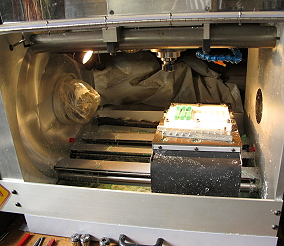
Adept CNC Machining Centre | As requested, this ‘favourite’ is not exactly a walker’s item. However, it is how I make the bits for the stove, along with lots of other ‘toys’. It is a combination 3-axis mill and lathe unit, built extremely solidly for teaching use. It is far more than a simple 2.5D router. I program it myself in g-code rather than use a CAD/CAM package, in order to take most advantage of the machine. Price is vague. The original units were made in Australia some years ago for the tech-school market, but the idea was a flop as the teachers did not have the skills to handle it. The company listed below buys them from schools, upgrades the electronics and the software, and resells them. I find the machine to be very robust: I guess it needed to be to withstand students! |
Damien Tougas – Gaspė Peninsula, Quebec, Canada
|
|
Rab Xenon | No other item in our gear closet elicits more praise than puffy insulation – my wife practically writes poetry about it. This past spring I picked up a synthetic puffy jacket from Rab called the Xenon. Warm, durable, light, and it fits well too. They even managed to squeeze in a full zip and hand warmer pockets and still keep the weight at 10.5 oz (300 g) for a men’s size medium. Coupled with a quilt and my BPL cocoon pants, it is the foundation of my three-season insulation system. When not on the trail, the Xenon never gets put back in the gear closet, as I always find myself reaching for it any time the temperature starts to drop. At $260 retail price, it isn’t exactly a low budget piece, but for something so light, practical, and versatile, it has been invaluable to me this past year.
Weight: 10.55 oz / 298 g |
|
|
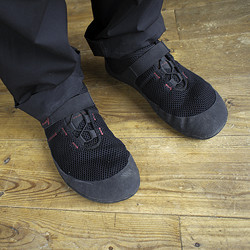
Sole Runner FX Trainer | I am a firm believer in building foot and ankle strength and flexibility in order to minimize injury. That is why on the trail I am a proponent of wearing minimalist footwear – as minimalist as I can get away with while maintaining the grip and protection I need. I also believe that conditioning the feet happens as much (if not more) off the trail than on the trail. My favorite off-trail shoe for everyday use – whether it be running, or running errands this year has been the Sole Runner FX Trainer. Slightly more protection than barefoot, a nice high-volume last, and a paltry 5.2 oz (147 g) per foot (in a size 43). They are durable too. Designed in Germany, made in Europe, they retail for $80.
Weight: 5.2 oz / 147 g |
|
|
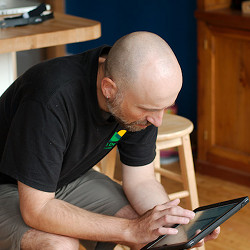
Apple iPad | I feel so cliche by saying that the iPad had changed my life. But it really has. I am a geek at heart and by trade. In the past I have always lugged around some form of laptop/notebook/netbook but it always felt unnatural and awkward in situations where people would pull out a book/magazine to kill some time. I also liked to keep notes and todo lists on my computer, but could never make that work easily when out-and-about. While smartphones were better, they weren’t great for doing a whole lot of reading or writing using the small screen (maybe that is why Twitter was invented – so people with smartphones could be “bloggers” too?). Now with my iPad I have my books (for pleasure and for reference), my email, my notes and todo list, my RSS, the web, maps, … pretty much anything I need in a handy book-sized device. Where have you been all my life!? |
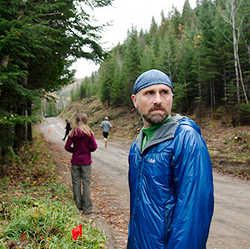
Dave Chenault – Kalispell, Montana
|
|
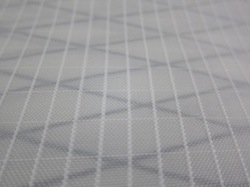
Dimension Polyant DX40 Fabric | DX40 is not my perfect pack fabric, but it is the closest I’ve yet found. Cut resistance, relevant when carrying skis and bushwacking, is outstanding. Waterproofing is, as would expected of a D-P laminate, exceptional. Straight abrasion resistant is very good, even compared to heavier fabrics, but could be better if the face weave were tighter. This face fabric also absorbs water, though the amount is quite modest, and it dries quickly. For a pack which will be used hard in wet environments, nothing better currently exists, save (perhaps) some purer dyneema weaves whose prices make 30 bucks a yard seem cheap. Beyond the pure performance of the fabric, the real pleasure I’ve gotten from DX40 this year has been working with it. The hand is markedly softer than VX21 or WX40 yet still holds a crease, and given it’s dyneema content it is easy to cut (use a sharp rotary cutter). Most importantly, I’ve had the satisfaction of using DX40 and years of fiddling to make a pair of packs that work well and have gone on many grand adventures. The only obstacle for the home user is finding some. Currently none of the usual suspects carry it. Your best bet is emailing a friendly cottage manufacturer who builds with it and asking nicely.
Weight: 7 oz / 198 g per yard |
|
|
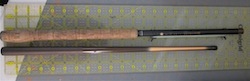
Daiwa Soyokaze 27SR Tenkara Rod | There was a lot of noise this summer over what was and was not a tenkara rod, mostly as members of the billowing tenkara industry scrambled to take market share from TenkaraUSA. I’ve been happily using my TenkaraUSA Amago since they were introduced, and was only seduced into buying a second rod buy the relative cheapness of the 9 foot long Soyokaze and the fact that it is so different from the stiff, 13.5 foot Amago. It turned out to be some of the most enjoyable money I spent all year. I don’t care about the definition of tenkara. As a fair-weather fisherman, I do care about the 3-4 months a year I can use dry flies to stalk freestone streams and rivers for native trout. In my mind this is right up with skiing powder through widely spaced aspens, pedaling endless domes of Navajo sandstone, and soloing exposed 5.3 alpine granite as one of the most fun and fulfilling outdoor experiences possible under human power. The Amago has shown me that tenkara is the best way to do this, and the little Soyokaze took the intimacy and exactitude of tenkara and applied it to the tiniest of headwater streams. The same river-tugging thrill a 22 inch bull trout gives the Amago can be had with a 6 inch cutt hooked with a Soyokaze, and the nine foot reach is enough but not too much in truly small streams. On many days this summer I found myself catching 20+ fish an hour, hidden in the bushes within a mile of crowded, hallowed fishing grounds. Hunting wild trout, seeing no one while doing it, all while being 10 minutes from the truck? That is just cheating. The Soyokaze isn’t perfect. I find the grip a bit too thin for all-day casting, and the general build quality is a step below the Amago, but the price is competitive and the length, action, and stiffness combine into a great package for truly small stream fishing. Tenkara is one of those rare things were you really can believe the hype.
Weight: 1.6 oz / 45g |
|
|
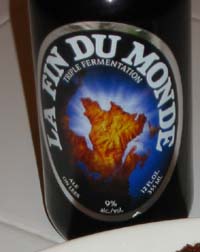
Unibroue La Fin du Monde Beer | The microbrew craze in the USA mercifully shows no sign of slowing down, and the cultural backwater of Montana is even turning out some impressive products, but none of them hold a candle to this exceptional libation. The ability of beer to enhance most things in the world has been axiomatic since the days of Socrates, and for me this is the best beer on earth. To quote Wittgenstein, “Whereof one cannot speak, thereof one must be silent.”
MSRP: Between $9 and $10 per 750mL bottle |
Ray Estrella – Moorhead, Minnesota
|
|
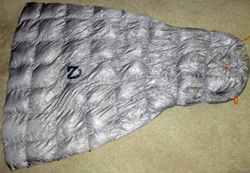
NEMO Equipment Siren 30 Quilt | NEMO has entered the sleeping gear market in a big way and being a backpacking-quilt fan my favorite item is their Siren 30 quilt. Using top-notch materials like 0.77 oz/yd2 (26 g/m2) 10-denier nylon and 850-fill power down it is the nicest retail quilt I have seen to date. With loft to as much as 2.5 in (6.3 cm) I think it is accurately rated at 30 F (-1 C), but I took it lower by adding a down sweater into the mix. I think what I like the most about it is just the fact that a large manufacturer is noticing, and catering to, us quilt users.
Weight: 18 oz / 510 g |
|
|
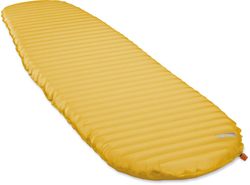
Therm-a-Rest NeoAir XLite Sleeping Pad | The original NeoAir sleeping pad was the biggest step forward in sleeping pad design in many years, and has been wildly popular, grabbing a ton of market share in the category. So how do you follow the largest sleeping pad success is recent history? By making it about 15% lighter while increasing the r-value (warmth) by 28%. It certainly works for me. Coming in at an r-value of 3.2 now my Large model saw use in 5 states with many nights at or below freezing, all with a quilt, meaning I was right on top of the pad. With at least 26 nights on it since last spring (that I can remember) I have had no problems with it at all.
Weight: 16 oz / 460 g |
|
|
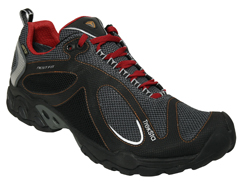
The TrekSta NestFIT Last | I just discovered TrekSta shoes at the end of summer and said, “Why hasn’t this been thought of before?” They made the last that their shoes are built on in the shape of a real foot, not a club with an ankle. I got a pair of their Evolution GTX Mountain Trail runners in time for a tough 10 days, 137 miles (221 km) of hiking in California and came away quite impressed. I have a weird foot as my toes are wide, yet my heel is narrow, so I can’t buy a wide size. Too-narrow toe boxes are always the problem for me and the NestFIT seems to be the ticket. I plan to get a lot more use next year and may look into boots too.
Weight: US 11: 15.4 oz / 47 g each |
Doug Johnson – Redmond, Washington
|
|
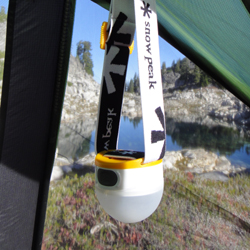
Snow Peak SnowMiner Headlamp | The Snowminer is both a headlamp and a lantern. With two small magnets, the silicone globe collapses, putting the lens close to the LED emitter, This makes a headlamp that works really well for backpacking, even when scrambling off-trail at night. When the globe is lightly pinched, the magnets release, creating a wonderful diffused light. A hidden hook in the strap makes it easy to hang and the regulated electronics bring the lantern from very bright to less than a single candle. Despite the fact that the headlamp is fairly large and spills a bit of light to the sides and the silicone can pick up some dirt, this is a beautiful piece of gear. It serves both purposes well and adds a lot of cheeriness to my camps.
Weight: 3.5 oz / 99 g |
|
|
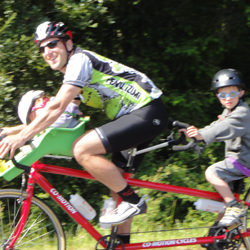
CoMotion Periscope Tandem | I own five bikes, and I use all of them. But I use our CoMotion Periscope tandem WAY more than the others. With crank shorteners, pedal blocks, and a slammed seat, it fits Henry (age 6) perfectly and an iBert safe-T-seat fits Lily up front (sleeping in this picture, age 3). Together we explore our neighborhood, the San Juans, and everywhere else we can. With a 10 minute adjustment, my wife Amy can ride on the back and we can talk for miles and miles. I love our tandem! |
|
|
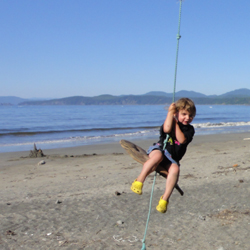
The Beach Swing at Cape Alava | Backpacking with kids = playing. I love playing outside with my kids. This summer while backpacking on the Olympic Coast, we discovered this great rope swing just north of Cape Alava. Between building sand castles, checking out seastars, and studying whale bones at the Makah ranger station, this swing was the best part of the trip. |
Daniel Paladino – Bozeman, Montana
|
|
Jetboil Sol Stove | Following Will’s excellent review, I decided to try out Jet Boil’s lightweight integrated canister stove, the Sol. Saying farewell to my trusty (and often frightening) jet engine liquid fuel stove, the MSR Whisperlite International, was easy after taking the Sol out for a test run. Boiling times are incredibly fast, and this thing absolutely sips fuel, stretching canister life to a remarkable degree. From quick overnighters to weeklong car camping trips in the desert, the Sol is my first choice. For group cooking, the larger Sumo cup is the way to go.
Weight: 11 oz / 312 g |
|
|
Dynafit Vertical ST AT Binding | No longer will I drag cement blocks (Marker Dukes) up the hill. Simple, lightweight, and reliable, the Vertical ST binding allowed me to reduce the weight of my backcountry touring set up by nearly 4lbs. The toe-pin system reduces underfoot mass on the ascent, and the releasable heel and low height inspire confidence on the way down – no matter how demanding the terrain.
Weight: 18.3 oz / 520 g |
|
|
‘93 Subaru Rust Bucket | After a long, emotionally draining, and expensive addiction to performance Subarus, I decided to sell my beloved Impreza WRX. The accumulating debts of college and a new-found lightweight mindset shifted my priorities (Do I really need 280 horsepower?), and led me to simplify my life, shrug off a precious material burden, and instead purchase a beat-up 1993 Subaru Legacy, courtesy of BPL’s own Sam H. Each body panel has its fair share of rust, dents, and scrapes, and I absolutely love it. The mileage could be 70,000 or 370,000 – I’ll never know. It gets me to and from the trailhead and the mountain in rust-bucket dirt bag Subie style, is unquestionably reliable, simple to maintain, and easy on gas. All wheel drive plows through deep puddles in the summer and dominates unplowed roads in the winter. The time I would have spent tinkering under my WRX and stressing over reliability issues is now spent worry-free on the trail or the slopes. The experience has taught me how rewarding it can be to reduce material possessions, no matter how seemingly precious, and do more with less.
Weight: 3,200 lbs and dropping as rusty bits fall off |

Kevin Sawchuk – Alamo, California
|
|
ULA Circuit Pack | This is my go to pack for trips from 3-7 days. It has a great balance between lightweight and durable–it’s not the lightest pack on the market but I’m not afraid of taking it through heavy brush or scraping it on the wall of a tight granite gully. It has a great set of usable features–its waistbelt pockets keep the calories I need to keep moving close.
Weight: 28oz (currently 35oz) / 794 g |
|
|
Garmin 310XT | My favorite training tool. I can gauge my pace, heart rate and distance while I’m out running. With the Garmin I can turn any road or trail into a controlled workout space. Keeps my training in the beautiful outdoor spaces I enjoy. When I download my Garmin data to Strava I get additional information about my performance and can virtually “race” others on popular segments.
Weight: 2 oz / 57 g |
|
|
A Hot Shower | Many of the best “things” in life are not things. To me these include the happy energy of the kids I coach, being indoors and warm when it’s raining and the health I currently enjoy. In that vein a hot shower is high on my list of daily simple pleasures. Think about how amazing it is to have perfectly heated water conveniently delivered to wash away the dirt and sweat from my workout and get me relaxed and ready for bed. Feel the enjoyment! |

Previous Years’ Staff Picks:
- 2011 Backpacking Light Staff Picks
- 2010 Backpacking Light Staff Picks
- 2009 Backpacking Light Staff Picks
- 2008 Backpacking Light Staff Picks
- 2007 Backpacking Light Staff Picks
- 2006 Backpacking Light Staff Picks
- 2005 Backpacking Light Staff Picks
- 2004 Backpacking Light Staff Picks
What are your three “Picks” for 2012?
Join us in the forum below and let us know what your favorites are from 2012!


Discussion
Become a member to post in the forums.
Ken wrote: Nothing from Chris, nor Addie huh?
Actually I am surprised to see so many listed as staff.
Kinda funny actually.
Apologies to all for my omission this year. I was in a drug-induced haze and typing (badly) with two fingers from shoulder surgery when our submissions were due. I hope to be back in good trekking form by summertime.
I'd also like to add further apologies for being yet another white male on BPL staff. ;-)
Happy Holidays,
-Mike
I started writing 2 female-specific articles I never finished enough to submit to BPL this year.
One is something like 'Tips to stay clean in the wilderness' and the other is 'A complete female backpacking kit'.
If you would like to read either draft, send me a PM and I'll send you the google doc link. I'm not promising quality.
Happy holidays and best wishes for the New Year to our BPL family.
Thanks for sharing your picks.
Gotta love an old Subie – so good in the snow and rain and easy to maintain.
Damien or anyone else, how does the Rab Xenon compare with the Patagonia Nano Puff Hoody for:
1) Warmth/fill
2) Length – Xenon looks a little short but it's hard to tell from photos
3) Fit and usability of the hood
I'm only familiar with the Montbell Thermawrap in this weight class, and it is generous in terms of length.
1. iPhone. I was walking and paddling for months this year and it was my first time with a smartphone. It was an extremely useful tool. I used it as a camera, GPS, map, journal tool, phone, star chart, plant and bird ID book and more.
2. Multiple-way tie:
A. Zpack Hexamid Solo Tent. Awesome 9.3 oz shelter.
B. Marmot Hydrogen sleeping bag. Light, comfy, warm. Rated to 30 F. but I take it down to 10 degrees or below by layering. About 24 oz.
C. Darn Tough, 1/4 Sock, Cushion. About 2.4 oz. Tough, comfortable. My favorite hiking socks.
D. Caldera Keg cooking system. Lightweight, efficient, nests nicely.
3. Free time.
I had the original Nano Puff pullover. The Xenon is about the same weight or maybe a little lighter thanks to the fabric but offers a full-zip. It's undoubtedly lighter than full-zip Nano. The Xenon doesn't have the odd quilting Patagonia used. Otherwise, they offer both offer 60 g of PL1 and non-adjustable hoods. The Nano pullover I had was shorter cut than the Xenon.
Also, Rab garments are cut more for an athletic fit where Paty is much more standard american (boxy). The Xenon is a bit looser than some Rab garments, but still not as boxy or roomy as the Nano.
1. Golite Peak (backpack)
2. Gossamer Gear Nightlight (sleeping pad)
3. Equinox Sprawler Ultralite Bivi
Thanks Chris, very helpful. Sounds like they are pretty similar for warmth, differing primarily in cut and the Xenon seems a bit lighter. A question about use and sizing:
My wife and I use our heavier puff insulation jackets belay style, to throw on over light softshell (Patagonia Ready Mix Jacket – the orange ones you see in my profile pic) and all layers underneath, during stops when snowshoeing, skiing or winter hiking, and to wear over all our layers in camp. Up to now we've used our lighter puff insulation jackets 3 season like your Xenon jacket belay style as well so we can use it for shoulder season stops.
How do you wear and size your Xenon? Do you wear it true to size under your outer shell? Assume you use it primarily for 3 seasons.
I ask such detailed questions about this because along with our wind jackets (currently Houdini) we find a light hooded puff insulation jacket to be one of our most useful items which also adds to your margin of safety. So light it's a no-brainer to take along. When you really need it, you're never sorry you've brought it. My wife loves knowing she can throw it on when she needs it.
Sorry about hijacking the thread for the Xenon…also curious about other items on the list.
No worries about questions and feel free to PM me (goes for anyone).
Mine is sized the same as my other Rab items. I have enough room under it to wear a couple of shirts and a Rab Micro (fleece). I could probably get a thinner softshell under it. I've been wearing it around town the last couple of weeks with the Micro under it if necessary.
Yeah, it's 3 season insulation for me here. In the early morning, I've been wearing my Infinity Endurance for walking the dog but that's been for sub freezing with low teen wind chills. I run cold these days FWIW.
If you want to layer it over something heavier, I'd go up one size. Rab tends to size garments based on use, so insulation like the Xenon is designed to wear over a few base and/or mid layers of the same size, but it's not really sized to throw over a hard shell.
Thanks again Chris. When on the trail 3 seasons, sounds like you generally wear your Xenon under your outer shell when you need to, not over it, right?
Because we use lighter puffy jackets like the Xenon for 3 season or very mild winter, and much heavier jackets for winter, it's not as much a problem to wear the Xenon under a shell. We always make sure we have our waterproof shell sized large enough to accommodate some extra insulation underneath.
For heavier winter puffy jackets, I'd keep wearing belay style – so useful just to throw on over everything at stops without taking anything off.
For me, if it's raining and cold enough to need a puffy, I'm not sitting outside. Short – I've never worn my Xenon and a shell at the same time.
Backpacking and the more wilderness-y activities of outdoors recreation are unfortunately not particularly diverse. It would be nice to see BPL, as a major platform in this arena, take some steps to address this. Some top-down efforts would nicely complement the bottom-up approach of encouraging article submissions.
Well, according to my wife, there are very few women-specific items of gear to write about.
And to get women-specific articles, we need women to write the articles. Well?
We can only publish articles which people write.
Cheers
We may see articles with Regina Caffin as a co-author. Then we'll know.
–B.G.–
1. Montrail Mountain Masochist 2's Trail runners
2. Six Moon Designs swift pack (2010 model) with half a Ridrerest Solite as the frame.
3. 03 toyota 4runner 4wd.
– Tarptent Notch – solid interior
– Thermarest Womens NeoAir XLite
– silk legging and long sleeve shirt for sleeping
There may have been all sorts of problems with BPL over the years, but going out of their way to be unaccommodating to women or other minorities is definitely not one of them. Carol Crooker and Addie were always given as much consideration and visibility as anyone else, especially Carol, who contributed a lot of the major articles here, and had a very important position on the staff when she was here.
If there are no women around to write the articles there is not much the rest of us can do. It's not easy for men to write about women's specific gear, you know. To imply that BPL doesn't care about women or didn't give them a chance to have their say is very misleading, or, worse, shows unfamiliarity with BPL.
I have a feeling that BPL is barely getting by these days with a skeleton on-site staff, the rest of the staff being far, far away, mostly on a purely volunteer basis. Nearly all the women staff have left. What can Ryan and co. do? Not much, until some women volunteer their expertise and willingness to contribute. The same goes for any minorities (I am black/ Filipino/ German). Unless a minority person participates, there just aren't going to be any articles highlighting minority-specific issues in the outdoors.
The sourness of the tone of this thread doesn't bode well. It would have been nice to for once have a BPL staff posted article not be attacked and snarkily remarked upon. C'mon everyone! It's the start of the new year. Can we not have an article and forum thread without all the vitriol?
Well spoken Miguel.
Happy new year.
Luke,
You've written articles for BPL. In regards to Miguel's post, would you consider writing an article on a young persons views and experiences, Joseph's, in regards to the hiking experience.
Try to use as many of his own words as possible so that we could get his "younger" perspective.
Party On,
Newton
That is an interesting idea. Actually someone else suggested a younger person's perspective on an article once.
Miguel, I honestly do not feel much ire in this thread. If my post was taken as harsh, I apologize. It was only meant as suggestion, but I agree with you that whatever official infrastructure BPL retains is already stretched.
Is it just me or do others not care about the staff's other outdoor and personal interests? I like the old format where they picked 3 "backpacking" items — sort of matches this website's theme.
My 2012 choices were:
1. No trekking poles – I left them at home.
2. McHale LBP 36.
3. Trail Designs GVP Caldera Cone.
4. Mizuno Universe Wave 4 XC flats.
None of them were purchased in 2012 :)
1) MLD cuben DuoMid (prototype)

The perfect solo shelter for so many trips because it maximizes simplicity and lightness. 4 stakes and a hiking pole results in 360 protection in no time. This prototype has a few less bells and whistles, so it comes in at an amazing 11.16oz.
2) Zebralight H51

By far the best light I've used. For any trip where a .2oz squeeze light won't cut it, the H51 steps in and provides power (200 lu), simplicity (1 x AA) and flexibility (very adjustable) for 2.1oz.
3) Alpacka Yukon Yak

This tool can add amazing diversity to a wilderness trip. Covering big miles shouldn't be this easy. 87.6oz with a spray deck.
Honorable Mentions
ULA Ohm – It's been impressing me for years. Nearly perfect mid-sized load hauler.
TarpTent StratoSpire2 – Great 2 person shelter
Exped Synmat UL – because I sleep better than on a NeoAir
1) Gossamer Gear Mariposa 2012. I had planned to use my Granite Gear Crown for my walking all throughout 2012, but something about the Mariposa 2012 appealed to me, so I went ahead and bought it. I fell in love with it. It's simple, yet light and strong, and very flexible. I used it throughout the month in August during my month-long walk of the Pyrenees in France. The more I used it, the more I liked it. The only thing I don't like about it is the way the cord on the outer edge of the pack bag always managed to get tangled in either my hands or something inside the sack that I was trying to retrieve. I have to refit something else to deal with that. Otherwise, a pack that does what it is meant to do, well, and has a way of getting out of the way and letting you do what it needs to do.
2) Kühl Liberator Convertible Pants. I wanted a pair of pants that would be all right to wear around town while I traveled in Europe, were light, dried quickly, fit very well, could be converted into shorts without looking dorky, and worked well in high heat. I loved these pants for their high-crotch fit and cotton hand (cotton is used on the face of the fabric to help draw moisture away from the interior), that felt great to wear all day long, even for hours sitting on a train. They worked like a charm during the record heat of the summer of 2012, when temperatures in the Pyrenees often rose to 45ºC. And climbing in several big thunderstorms at the highest peaks they did great when getting drenched and drying out very quickly. Great pants that got a Backpacker's Editor's Choice award.
3) Olympus OM-D E-M5. I've been using digital cameras for a while now, both compact and DSLR's, the latest of which are the Ricoh GXR with modules, and the Nikon D7000. I love both those cameras, but the Ricoh was far too slow (but with some of my favorite image quality of any digital camera I've used) and the D7000 for too heavy. Along came the Olympus OM-D E-M5, which has changed the way I use digital cameras. It's small enough to carry easily with you in a compact bag, has a good selections of lenses (though I've been very happy with the kit lens), has all the controls you could ever need, and is very weatherproof to boot. IO find the controls on the back and top of the camera to be too small and clunky at times, and the grip a little hard to get comfortable with, but on the whole it is a great camera that goes with me everywhere.
I have to chuckle at Ryan's canoe choice …. Hornbeck Blackjack Canoe (looks like a very nice canoe!)
Nice to see technology finally rivaling the canoe weights achieved by Ruston 130 years ago!
With regards to Dave Chenault's third pick:
La Fin Du Monde is a great beer. I once proclaimed it as the best beer in North America (I would say that the brew from the Belgium monks are just a little bit better). Now, I'm not so sure. But I don't want to get into how a high IBU IPA compares to an oh so sweet and sour Belgian Ale (or the North American equivalent). I want to talk about hiking. And the great hiking and beer related breakthrough of the last five years is great beer in cans. The Aussie beer isn't bad, but I don't think it holds a candle to some of the wonderful micro brews available in cans lately. Now I can enjoy a great hike with great beer at the same time. The total weight of the beer weighs only grams more than the beverage itself.
La Fin Du Monde is a wonderful beer, but it was around 8 years ago. Truly great beer in cans was not.
Cheers,
Ross
Become a member to post in the forums.