|
||
|
Presented with support from Garage Grown Gear  |
||
|
|
||
What limits the load carrying capacity of a frameless pack?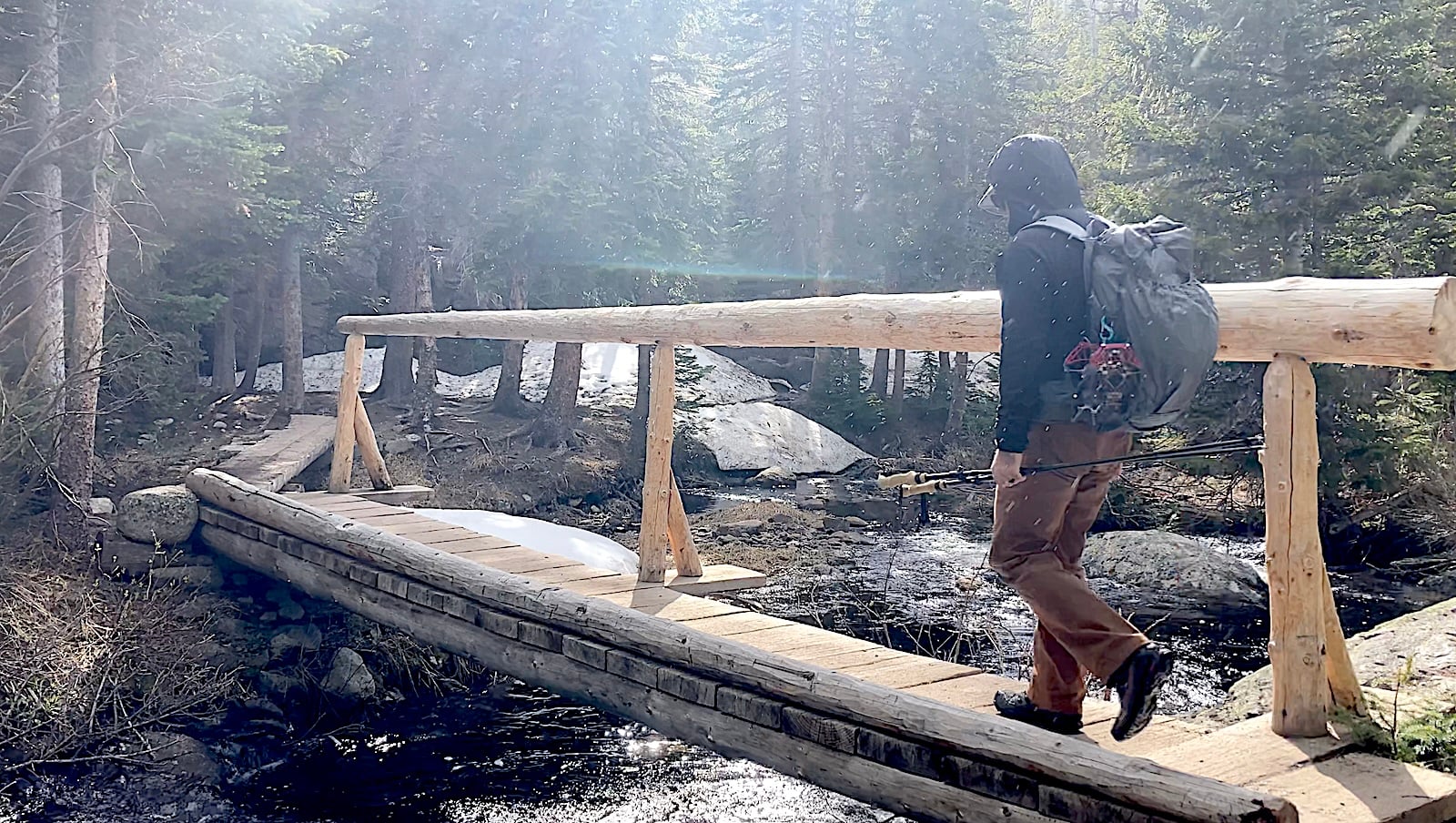 Every time I test and review a new frameless backpack, I learn something new. Such is the case for the Durston Wapta 30, a modern Aluula-Graflyte fabric frameless pack with a uniquely comfortable and padded harness and back panel that feels pretty great compared to more minimalist packs that define the ultralight frameless pack category. In light of this new review, I figured it was time to refresh and update our understanding of how load-bearing works in frameless packs - that's the subject of today's letter. A frameless backpack’s useful load limit is defined by the part of its design that begins to fail under increasing pack weight. That limit is different for every pack model, the weight and volume of its contents, and where those contents are placed (or how they are packed). This is why a manufacturer’s maximum-load rating provides limited - in fact, almost irrelevant - information. A 20-pound load of tightly packed, evenly distributed equipment can behave differently from a 20-pound load dominated by compact food, water, or climbing equipment. The scale shows the same weight, but the pack does not have the same shape, stiffness, or weight distribution. Several features help a frameless pack resist torso collapse: packbag geometry, compression straps, foam panels, fabric stiffness, and structural continuity between the upper pack and hipbelt. Their contributions to stabilizing your load are not equal! An underfilled pack may fold because its contents no longer "brace" the packbag. An overfilled pack may barrel outward, reducing contact with the back and moving part of the load rearward. Four liters of water adds approximately 8.8 pounds while occupying relatively little space. It increases the load without bracing much of the packbag. Advanced fabric claims about pack fabric "stability" can also be misleading. Various material properties contribute to packbag fabrics' resistance to structural deformation. Preventing torso collapse requires engineering beyond just the pack fabric, including components that help the packbag resist folding and compression-induced shape deformation. These factors depend not only on fabric properties but also on panel thickness and structure, pack geometry, construction methods (e.g., seam joins), and continuity of load-transfer components. Padding serves another function. Wider shoulder straps distribute force over a larger area and reduce pressure hotspots. A padded hipbelt can improve stability and resist slipping. However, unless these components are connected to a sufficiently stiff vertical structure, they may do little to reduce the total force carried by the shoulders. That's why structural discontinuities often become the controlling weakness in frameless packs. Stiff fabric, vertical foam strips, and lumbar padding provide limited protection if an unsupported section between them becomes a hinge. Once that area folds, the upper pack moves farther behind the wearer. The resulting leverage can be expressed simply: M = W × d Here, W is pack weight, and d is its horizontal distance from the torso's musculature center of mass, which is usually located in front of the hiker's spine, high near the sternum. As the load moves rearward or downward, the shoulders, back, and abdominal musculature must resist more leverage even though the pack has not gained weight. Packs that use advanced laminate fabrics, padded harnesses, and disjointed foam back panels improve durability, some stability, and pressure distribution. Under heavier loads, however, unsupported lower-back regions of frameless packs become a weak point that limits their load-carrying capacity. The pack’s strongest features cannot compensate for the loss of structural continuity at that location. A useful evaluation of a frameless backpack should identify which feature limits performance as the load changes. More padding, stronger fabric, or additional compression will provide little improvement unless it addresses the weakness controlling torso collapse. Explore Further
|
||
|
||
|
|
||
|
||
|
|
||
Also this weekForums - frozen water bottles and cold temperatures |
||
|
Originally sent as a Backpacking Light email newsletter. Subscribe to the Backpacking Light newsletter | Affiliate disclosure |