|
||
|
Presented with support from the Gear Swap  |
||
|
|
||
Wildfire, insects, tree damage, and campsite risk.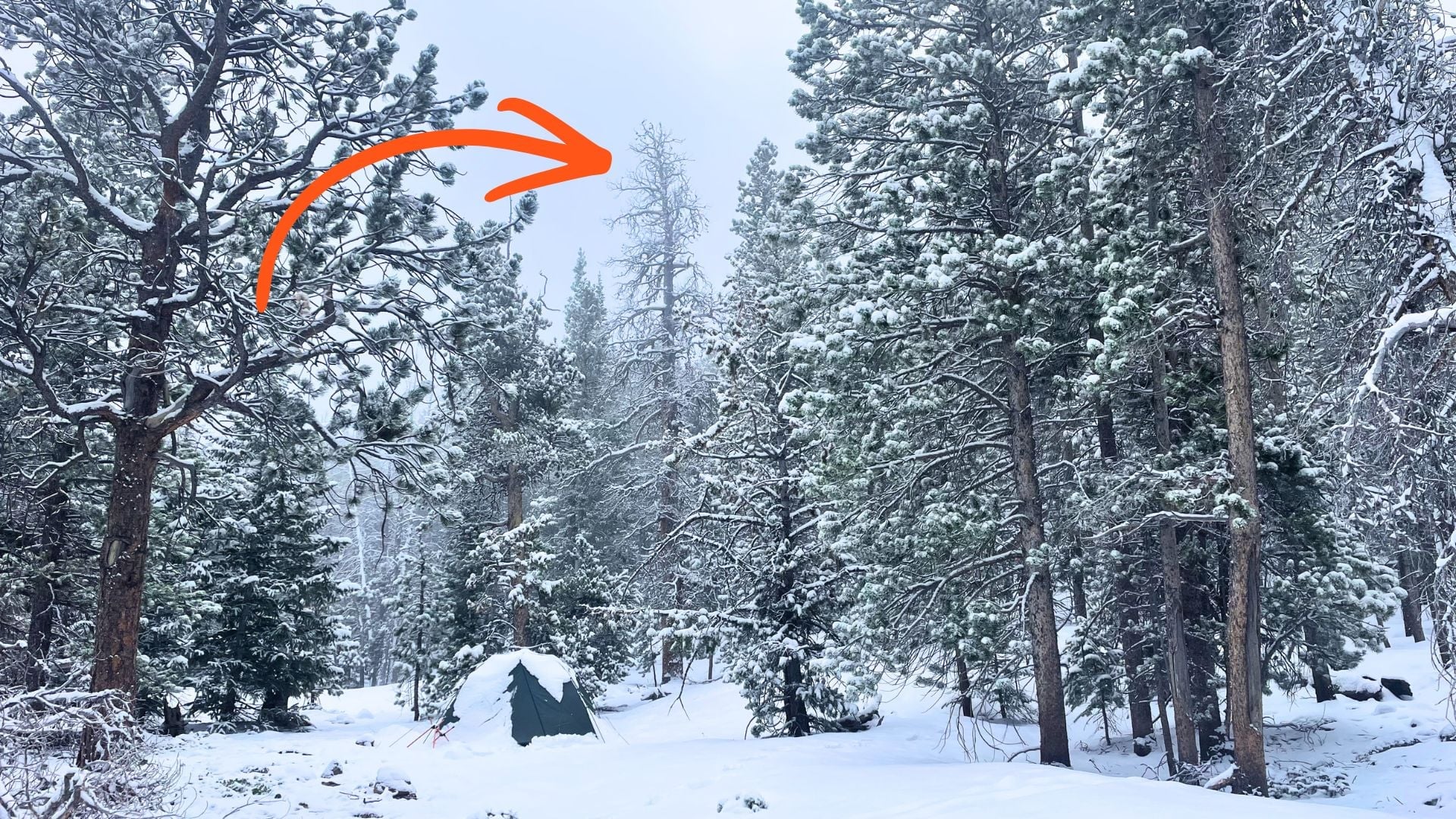 In August 2022, a visitor at Olympic National Park’s remote Elk Lake wilderness campsite was killed when a tree fell on his occupied tent (August 2022). The National Park Service reached the site by helicopter the next morning. In the White Mountain National Forest, a backpacker sleeping in a hammock was killed when the tree attached to his hammock fell and struck him (May 2021). On the Colorado Trail, a backpacker was killed when a tree fell onto her tent (August 2019). On the Pacific Crest Trail, a thru-hiker was killed by a falling tree while moving along the trail (August 2019). More recently, hikers have been killed or seriously injured by falling trees or branches on popular trails, including maintained routes in national parks and national forests. These incidents are uncommon. That is part of what makes them difficult to manage. Most of us have slept beneath trees hundreds of times without consequence, and repeated uneventful nights help us ignore overhead hazards. I learned this the hard way in a wildfire burn north of Yellowstone. A summer thunderstorm moved in while we were hiking through a standing forest of dead lodgepole pine. Wind gusts began moving through the burned timber, and then a sharp crack split the air. A large snag came down between me and my hiking partner. It reminded me that the margin between “nothing happened” and “fatal accident” can be very small. That experience changed the way I evaluate campsites. A good campsite is not defined just by flat ground, nearby water, wind protection, or a nice view. It is also defined by what can fall on you while you sleep. Tree failure is influenced by gravity, wind, saturated soils, snow and ice loading, fire damage, insects, fungal decay, root compromise, and time. Some warning signs are visible - dead standing trees, leaning trunks, hanging limbs, broken tops, exposed roots, charred bases, fungal conks, and recent blowdowns. Others are hidden - maybe inside the tree trunk or below the ground surface. Before pitching a tent or hanging a hammock, pause. Look up. Scan the fall zone. Evaluate every tree or branch that could reach your shelter if it fell. For hammock users, inspect anchor trees carefully, but don’t stop there - a healthy anchor tree does not protect you from a dead tree nearby. Finally, be conservative: if a questionable tree or limb can reach you, find another place to sleep. Learn more in our new article, Camping Under Trees: Hazard-Tree Awareness and Campsite Selection for Backpackers.
|
||
|
||
|
|
||
|
||
|
|
||
Also this weekREI Labor Dispute & the REI Union - Facts & Observations New Podcast: Live Free, Live Cheap, Live Outside Forums: Curving back panel of a pack: How much difference does it make? |
||
|
Originally sent as a Backpacking Light email newsletter. Subscribe to the Backpacking Light newsletter | Affiliate disclosure |