|
||
|
Presented with support from Helly Hansen  |
||
|
|
||
What are the limitations of ultralight raingear in mountain storms?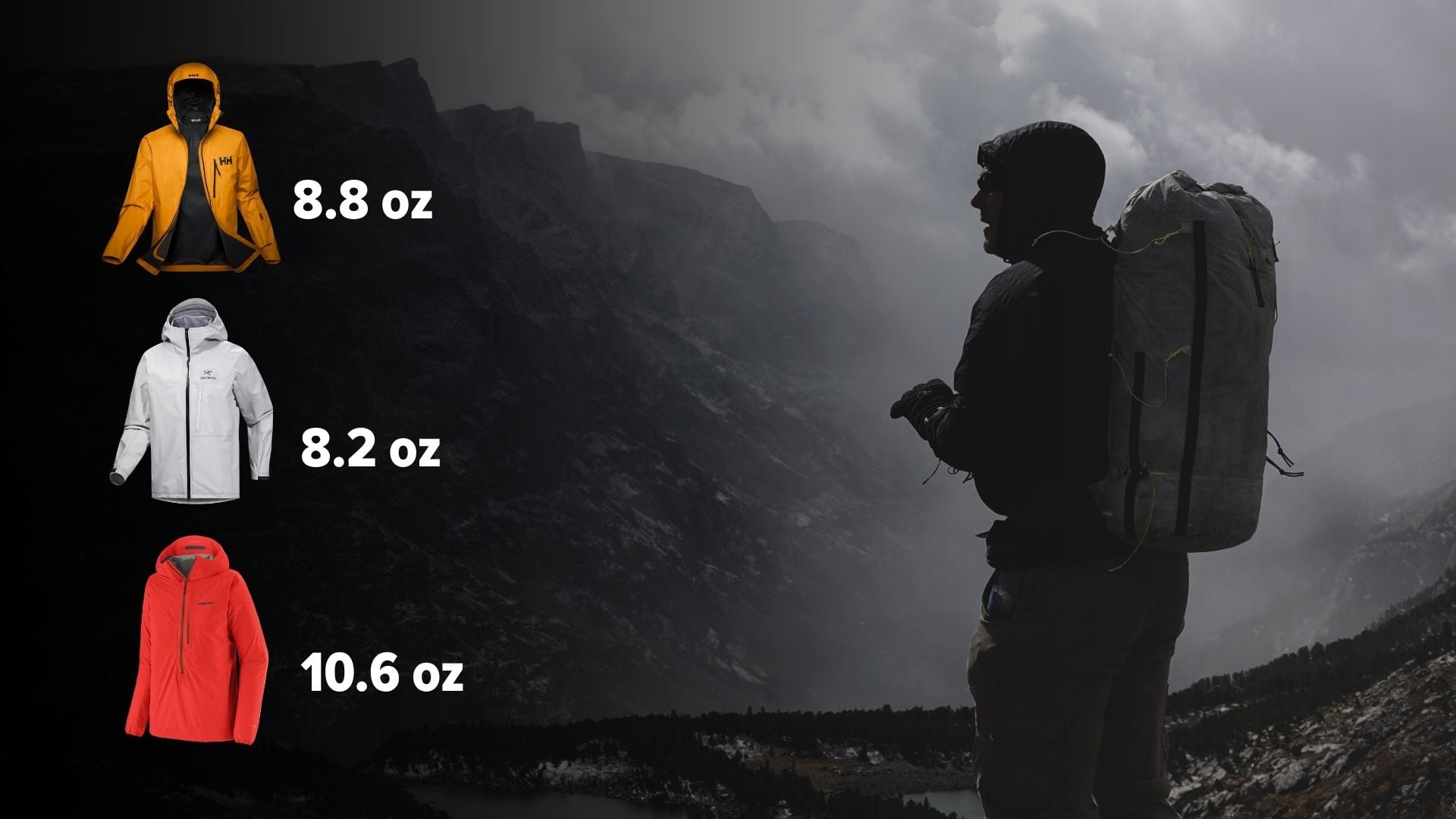 Our drive to seek a holy grail in rain jacket material (fabric) performance sometimes gets in the way of more practical decisions that have larger impacts when you're actually in a storm. We spend a lot of time studying moisture vapor transmission rate, durable water repellency, and nitpicking jacket ventilation features, but not enough time asking the question: "What if I have to suffer through a storm for hours on end?" Don't get me wrong - MVTR, DWR, and ventilation options are important - but they are smaller stories in the overall narrative arc about raingear. To address the question above, let's frame what we mean by "storm" so we're all on the same page. When I think of a storm, I think about four things: wind, temperature, precipitation, and duration. When high winds, cold temperatures, and heavy precipitation are present at the same time for many hours - now that's a storm! If you have to hike in these conditions for extended periods, you'll quickly recognize the limitations of so-called ultralight rain jackets. Light fabrics are not resistant to wind compression, so when a gust slams into you, the cozy layer of warm air trapped in your clothing billows out through the openings in your jacket. Light fabrics hold less DWR, which means when their DWR becomes overwhelmed, they saturate more quickly. Light fabrics are typically 2- or 2.5-layer WPB (waterproof-breathable) constructions, so the inside face is smooth and not very effective at distributing condensation across the fabric. This is important because the better you can distribute that condensation, the more moisture you can push through the WPB membrane. In addition, consider where you actually face these kinds of storm conditions. For me, they are at higher altitudes in the mountains. And often, I'm bushwhacking or scrambling off-trail to reach these locations. And I've damaged so many ultralight fabrics in these thorny, rocky environments that I have to consider fabric durability, too. I don't really want to carry a rain jacket that weighs a pound or more on a wilderness trip. So how do we get the performance we need at minimal weight? That's what I wrote about today in Rain jackets for mountain minimalism. See this new dispatch to learn why you might consider a rain jacket that is more durable, more protective, and more confidence-inspiring when you actually face a real storm.
|
||
|
||
|
|
||
|
||
|
|
||
Also this weekCamping Under Trees: Hazard-Tree Awareness and Campsite Selection for Backpackers |
||
|
Originally sent as a Backpacking Light email newsletter. Subscribe to the Backpacking Light newsletter | Affiliate disclosure |