|
||
|
Presented with support from Garage Grown Gear  |
||
|
|
||
Myth vs. reality: is down useless in wet conditions?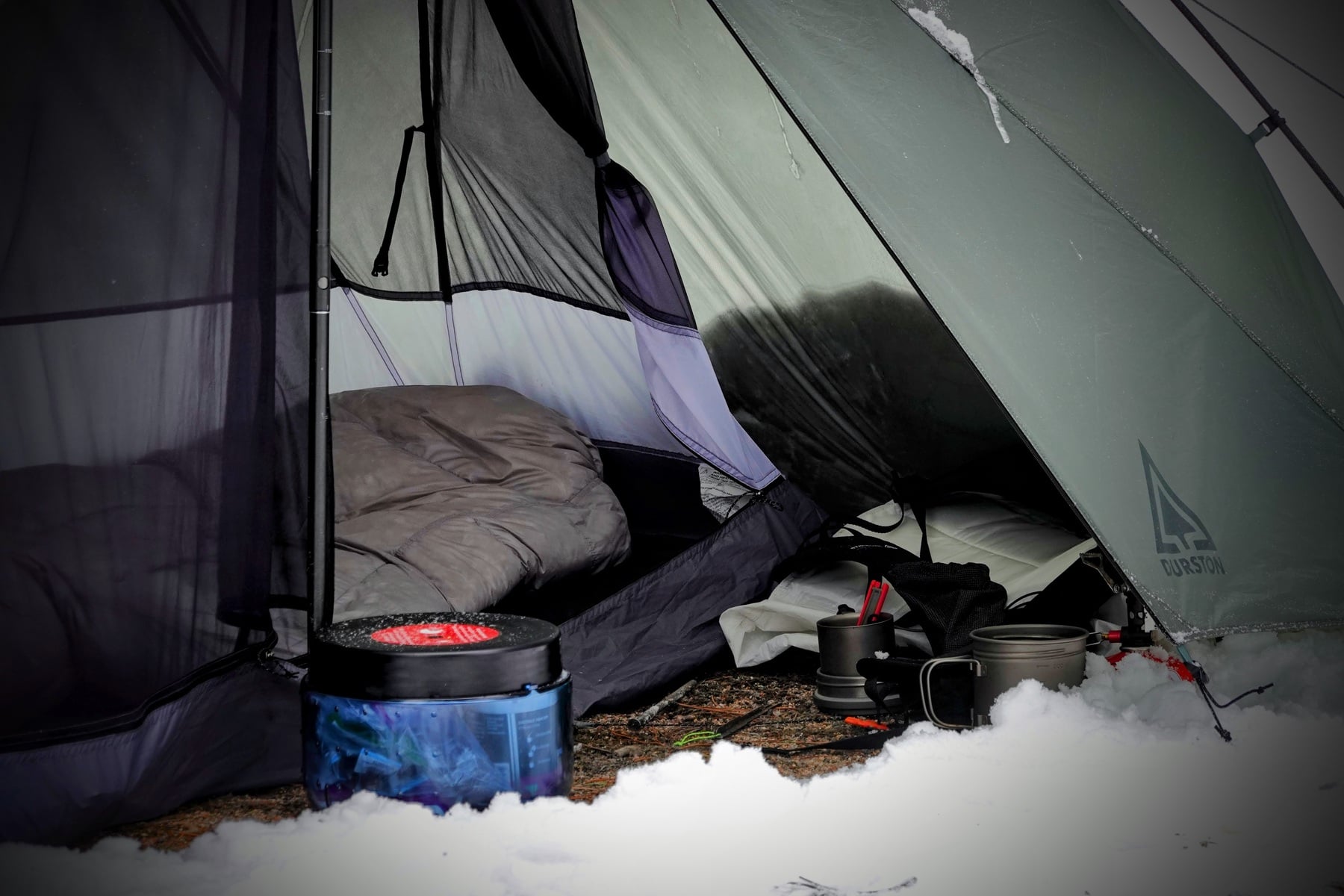 Few ideas in backpacking are repeated more casually than this one: “Down is useless in wet conditions.” It persists because it contains a kernel of truth: When down becomes saturated, it loses loft, and when it loses loft, it loses much of the thermal performance that makes it so compelling in the first place. That vulnerability is legitimate, and any serious discussion about insulation has to start there. But the leap from “down can fail when soaked” to “down is useless in wet conditions” reflects pretty sloppy thinking. Most backcountry decisions (like whether to choose down vs. synthetic fill, or a quilt vs. mummy bag design) are governed by conditions, systems, and judgment: shell fabrics play a role; packing discipline plays a role; shelter design plays a role; trip duration plays a role; condensation management plays a role. Even the difference between humid, damp, and truly saturated conditions plays a role. Down is not a universal solution, but neither is it disqualified the moment your weather forecast turns rainy. Key takeaways:
The bottom line is this: Down is not useless in wet conditions, but it is less forgiving of poor judgment.Acknowledge that distinction - because backpackers who rely on simplistic rules miss the deeper truth that insulation performance is always contextual: the best choice is not the one attached to the strongest myth! It is the one that reflects a clear understanding of the environment, the trip, and the discipline required to make the system work. Next step:The two biggest decisions you'll make about your sleep system is fill type (down vs. synthetic) and design style (bag vs. quilt). The pinnacle of ultralight of course is the down quilt. But choosing a down quilt (and enjoying the increase in weight and comfort performance from one) requires a little extra knowledge. If you want to go beyond the myth and understand how backpacking quilts actually work, our online course Backpacking Quilts: Technology, Design, and Best Practices goes deep into the materials, design features, performance tradeoffs, moisture management, and field-use best practices that determine whether a quilt succeeds in demanding conditions. PS: Have you already decided you want a down quilt? Then you're ready to compare options in our Down-Filled Backpacking Quilts Market Report.
|
||
|
||
|
|
||
|
||
|
|
||
Also this weekBackpacking Quilts: Technology, Design, and Best Practices |
||
|
Originally sent as a Backpacking Light email newsletter. Subscribe to the Backpacking Light newsletter | Affiliate disclosure |